Posted in musings, quotes

prayer for a new day

Sometimes the best prayers are short and simple, expressing in a few words what I struggle to communicate, capturing the essence of what I desire to offer to God and become in Christ without turning into a litany of praises or requests. And first thing in the morning, when I’m foggy from too-little sleep and worried about the day to come, a simple prayer can remind me of the perspective that truly matters.

“At the dawn of a new day, fill us with your mercy,
That the whole day may be a day of joy and praise.” – from the Divine Office

Isn’t that such a beautiful way to look at the beginning of a new day? That we may be filled with God’s mercy and so live out the day in joy and praise – that we may be filled with Christ and thus live in Christ and for Christ – that our unity with Him may be increased, that all the good that is in Him might be in us and in the world through us.

Posted in musings

gardening our hearts

When my husband and I started our backyard garden a few years ago, we overestimated the quality of our soil (well, I overestimated it) and made our garden soil mix with 50% native soil, 30% compost, 10% peat moss, and 10% vermiculite. I had actually found this percent mix recommended for particularly poor native soil and so thought it would work for our adobe clay.

I wasn’t entirely wrong, but quite a few seasons of plants have now struggled to grow deep roots through the hard earth, and been small and stunted as a result. I have only to compare the growth of the plants in my garden to those in my mom’s garden to realize the significant impact made by the poor soil.

IMG_4696
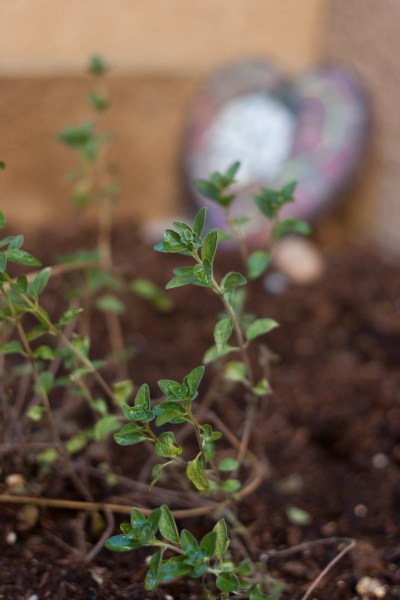
my oregano – a decent plant, but spindly compared to the massive bush in my mom’s garden, that has to be sheared back dramatically every few weeks to keep it from taking over

Each growing season, as we add more compost to the soil, it improves a little bit more, and eventually it may be as rich and soft and fertile as the soil in my mom’s garden was to begin with – but that process is going to take time, patience, and effort.

I think it is the same way with my heart – with all of our hearts, probably. We all start out in different places; some of us are more naturally inclined to virtue than others, some of us more easily bear the fruit of our beliefs, and some of us just need a lot more work before our actions take on the robust and fruitful nature of a plant in abundant health. We can all have the same seeds planted in us through books, experiences, relationships, and so on; we can all water those seeds in appropriate amounts through continued learning and the building of spiritual habits; but some of us will bear fruit in certain areas far more quickly and beautifully than others. It doesn’t necessarily mean we are trying harder – just that we had better starting material in that area.

For example, when it comes to sex, I started out with really good soil. I have no natural inclination toward sexual sins, and significant appreciation of the spiritual and physical mysteries of the marital act. It has always been an area that leads me to meditate on the incredible love of Christ for His Church, instead of an area of struggle and temptation. On the other hand, I have extremely poor soil when it comes to emotional regulation. My moods swing like a pendulum, and the negative emotions (anger, jealousy, suspicion, resentment, depression, and so on) linger and build up within me like a storm of darkness ready to break upon those closest to me. It damages my relationships, preventing me from becoming truly close to anyone, and wounds the people I love the most. So I can put in hours of prayer and concerted effort towards managing my emotional reactions and redirecting my thoughts and attitudes toward Christ, and still appear to have weak and scraggly plants in that part of my garden – but I can put almost no effort in to resisting sexual temptation and still enjoy healthy and thriving plants in that area. And these areas of strength and weakness are different for every person.

We can and ought to put in the time and effort to improve the soil in those struggling areas, and not just focus on improving the short-term health of the plants therein. How do we do this? By making everything we do be about Christ, centered on Christ, living in Christ, knowing Christ, loving Christ; by immersing ourselves in His word, by constantly coming to Him in prayer, by unifying ourselves to Him and to His people. If He is first, if He is all, everything else will find meaning and beauty in Him. If He is in us, He will be transforming us, mixing the rich compost of His life into the hard clay soil of our hearts, making us more like Him.

Posted in musings, quotes

stay with us, Lord – praying for faith

In a world that is culturally distant from God, in a society that tends toward individual isolation and values independence, self-sufficiency, skepticism, and cynicism, it can be hard to remember that God is always present with us, and even harder to feel that presence throughout the day. The urgencies and immediacies of each each moment cloud our awareness of Him, and focus our minds on the temporal and fleeting instead of the heavenly and eternal. The brokenness of our world makes it harder still to remember Him as a God both powerful and loving, because the pain of death, oppression, fear, war, terrorism, unemployment, sickness, and so on seem far more real and relevant than His high and unknown redemptive plan and purpose. Those things we see, are forced to see, time and time again; God, we have to take on a bit of faith.

And the Church, in her wisdom knowing how difficult it can be to rely on this invisible faith when the world we see is devolving into chaos and darkness, gives us these beautiful, simple prayers.

Christ rose from the dead and is always present in His Church.
Let us adore Him, and say:

Stay with us, Lord.

Lord Jesus, victor over sin and death, glorious and immortal,
Be always in our midst.

Stay with us, Lord.

Come to us in the power of Your victory,
And show our hearts the loving kindness of Your Father

Stay with us, Lord.

Come to heal a world wounded by division,
For You alone can transform our hearts and make them one.

Stay with us, Lord.

Strengthen our faith in final victory,
And renew our hope in Your second coming.

Stay with us, Lord.

(from Thursday’s Liturgy of the Hours)

That is what we pray for – His presence, His power, His love, His healing and transformation in our broken world – and it is what He has promised in His Word, so we know that one day, someday, our prayers will be fully answered and redemption fully brought forth. And in the meantime we pray for the faith to hold fast to Him when our sight and understanding fail.

Posted in family life, musings

grace in my inadequacies: striving for virtue as a mother of toddlers

Some days, as a parent, I just get so frustrated, so irritated, so impatient that it literally takes all I have not to yell at my kids. They usually aren’t doing anything wrong, either – just normal behavior that pushes my buttons.

Those are the days that remind me just how much I still need to grow in virtue and holiness.

Are my charity and compassion really so small that I can’t respond with a kind word and a helping hand when my toddler is whining for help wiping his nose because he’s sick and congested? It’s not loving, it’s not just, to snap at him every time just because I can’t handle the sound that he’s making because of how miserable he’s feeling – all it does is add to his sadness and upset by pushing him away from what should be his source of comfort and gentle love.

Are my temperance and self-control really so stunted that I can’t push back a meal or miss a little sleep because my boys need me for something that they can’t handle on their own? Can I not set aside my physical needs temporarily in order to take care of these little people who are depending on me for so much, and who in general have to bend to my schedule and my desires time and time again?

Is my joy so fleeting and shallow that the small irritants and storm clouds of everyday life are sufficient to wipe away my smile and bring a harsh edge to my voice? Am I really so far from the Root of happiness and peace that every small problem raises my temper or deadens my laughter?

Is my patience so short that I can’t deal with a toddler’s incessant questions or a baby’s irrational tears? How can I hope to teach them to love people well if I can’t love them well for who they are through their normal developmental needs?

And the hard answer to hear is yes, my virtues are that weak and undernourished, that immature and small. Sure, some days we have together are beautiful and by God’s grace I am living well in those moments, but in general – when I am tired, when someone is sick, when work is stressful, when Paul and I are having trouble communicating well, when I’m worried about someone I love – in general, in the normal stressors of life, my virtues aren’t strong enough to keep my feet in the path of holiness. At any rate, they still need the help of massive amounts of willpower and even more massive amounts of prayer!

My solace in those moments is knowing that the pain of striving towards virtue, the strain of denying my inclinations time and time again, the practice of coming back to God for mercy and grace hour after hour, will all result in an increase of virtue, in the same way that the aches and pains of exercise lead to greater strength. God wants us to grow in holiness, so His grace is extended for us for this purpose without stint or reservation – all we have to do is seek it and cooperate with it instead of pushing it away to pursue our own pleasures. It’s just a lot easier to say it that way than to actually live it out…

Posted in musings, quotes

the prayer of daniel

Daniel was one of the righteous men of his generation, the young exiles to Babylon. He kept the law of God, in spirit and in letter, despite the extraordinarily serious threats made upon him because of it. And yet, when he prays for his people, his nation, he makes no distinction between himself and them. He confesses for them, including himself in their number; he begs for God’s mercy, making no mention of his own righteousness or years of faithfulness.

Do we do this when we pray for our country, our churches, our communities? Or do we, in our prayers, distance ourselves from the ones we’re praying for? Do we see ourselves a step above them, separate from their problems and sins? Daniel could easily have done so, and yet he did not. Foreshadowing the intercessory mediation of Christ, he metaphorically took the sins of his nation upon himself and sought mercy at the throne of grace. As members of Christ’s earthly body, faced with the brokenness and sin of our nation, surely we can do no less, in our prayers and in our lives.


“O Lord, great and awesome God, who keeps His covenant and mercy with those who love Him, and with those who keep His commandments, we have sinned and committed iniquity, we have done wickedly and rebelled, even by departing from Your precepts and Your judgments. Neither have we heeded Your servants the prophets, who spoke in Your name to our kings and our princes, to our fathers and all the people of the land.

O Lord, righteousness belongs to You, but to us shame of face, […] because we have sinned against You. To the Lord our God belong mercy and forgiveness, though we have rebelled against Him. […]

O Lord, according to all Your righteousness, I pray, let Your anger and Your fury be turned away from [us]. Hear the prayer of Your servant, and his supplications, and for the Lord’s sake cause Your face to shine on Your sanctuary, which is desolate.

O my God, incline Your ear and hear; open Your eyes and see our desolations […]; for we do not present our supplications before You because of our righteous deeds, but because of Your great mercies.

O Lord, hear!

O Lord, forgive!

O Lord, listen and act!” (from Daniel 9:4-19)


Posted in musings

stifled prayer


I live my life with a wall around my heart.

It’s not that I don’t love people, or care about people – I just don’t want people to know my weaknesses. I don’t want to admit those weaknesses to myself.

When hard things happen, whether it’s a chronic struggle like mental illness in a loved one or working while my husband gets more time at home with the babies, or an acute problem like a sick baby or a lost iPod, my brain immediately starts calculating all the different options I have. All the ways I could respond to the problem, all the potential outcomes, all the strategies and decisions and backup plans. I want to be the strong and competent woman, who meets life with confidence and grace, and never lets her head fall under the waves.

And I bring that attitude with me before God.

I keep that wall up even when I pray. Walls tend not to be easily assembled and disassembled, after all.

Limerick has been dealing with a high fever since early Saturday afternoon and I didn’t think to pray about it until tonight (Sunday night). I was just so wrapped up in nursing him, taking his temperature, giving him fever reducers, making him comfortable, and wondering what was making him sick to think about it. The plans, the automatic response of confidence and control, took over. I didn’t doubt my ability to take care of him well, so I didn’t feel the need strongly enough to pray about it. Do you hear how strange that sounds? I believe in a God who can heal the dying, and I believe that He cares about every detail of life, and instead of taking my sick baby to Him I try to handle it all on my own?

My worry, my need to be strong and take care of the people I love, prevents me from doing what they need most: interceding for them to God, lifting them up to Jesus. My desire to keep things under control and handle situations calmly and competently interferes with what ought to be my first line of response.

Soften my heart, Lord, and tear down my pride. Let me come to You humbly at all times and in everything, not only when the need is too great for my own strength and intelligence; let me put my fears to rest trusting in Your providence. Loose my tongue and gentle my heart, that I might lift the needs of the world to You instead of trying to fix them on my own.

Posted in musings

some thoughts on prayer

Often, for me, prayer is a far more challenging spiritual discipline than things like Bible reading, church-going, or even fasting. It can feel forced, awkward, uncomfortable, or contrived at times, when I’m not sure what to say or how to start, and the number of things that I could pray about (whether meditative or petitionary) seems overwhelming.

There’s also something somewhat audacious in the whole act of prayer, particularly in intimate and personal Christian prayer: we are stepping into the presence of someone infinitely more powerful, more righteous, and with more authority than us. If meeting someone like the President or the Queen can make us anxious, how much more coming before the God of the whole universe? It can seem silly to bother someone so important with our small and trivial lives. Even though we as Christians are part of God’s family now, and He cares about every detail of our lives with tenderness and love, it can be hard for us to receive and accept that love and care.

I think, too, our own sin pushes us away from prayer at times. While repentant sin will typically bring me into prayer, sin problems that I kind of don’t want to admit or deal with will freeze my prayer life into silence with amazing rapidity. God has a way, simply in His holiness, of exposing those sins I’ve been hiding or denying, and that can be very uncomfortable or disconcerting!

But despite the discomfort, it is always worthwhile to pray, because prayer is the most relational of all the afore-mentioned spiritual disciplines. It is lifting our hearts and minds to God and remaining with Him in conversation and communion. How can we expect to know Him more, to really be God’s friend and child, if we don’t spend time sharing our heart with Him and listening to His heart? Relationships grow through time together, and with God, prayer is that time together.

A lot of people, with a lot more wisdom and experience than I have, have written about practical steps to improving prayer; I will just add that in my experience, structured meditative prayer is what helps me focus best and feel closest to God. The structure keeps me from feeling overwhelmed about everything I could or should be saying or praying for, and the meditative aspect gives the prayer more connection and communion, rather than leaving me feeling like I’m only shooting requests and needs up to God.

What types of prayer come most naturally and work most effectively for you?

Posted in musings, quotes

on being weak

My energy levels have been quite low yesterday and today because I took my last thyroid hormone pill on Friday morning and didn’t pick up the refill from the pharmacy until Monday night – so I missed three of my daily doses. I don’t normally think about it, but the rapidity with which my hypothyroid symptoms returned made me realize how dependent I really am on those little green tablets.

There’s a part of me that’s almost angrily frustrated about my need to take daily medication. I have this strong internal desire to be independent, self-sufficient, and essentially perfect, and here I have a daily reminder that on a basic physical level I’m rather more dependent and less self-sufficient than the average person: that a part of my body is incurably broken and I’ll be stuck treating the symptoms for the rest of my life. Every now and then I wonder if I could go off the medicine and miraculously have my thyroid kick back into gear, but every time I try I’m catapulted right back into the medley of incredible fatigue, poor memory, lack of concentration, and cold that define my hypothyroid experience. So dependent I am.

The silver lining is that I can see a few ways in which God might be using this defect in my body to bring about a greater good in my own life. I don’t think He caused it, because I don’t think He’s the author of disease and disorder, but I think He’s incorporating it into His redemptive work. At least, I hope He is, because I hope that He’s doing exactly that with every evil and broken thing in this world!

Maybe He’s using my physical weakness to teach me humility – because my intelligence, academic success, and mental quickness have left me prone to arrogance and pride, and this tangible flaw in my body (not just its appearance but its function, in some very crucial areas) serves as a reminder that my strengths and gifts are not of my own making, and that so much of who I am and what happens to me is outside of my control.

Maybe He’s using my physical need and dependency to teach me gentle patience – because it is so easy to become frustrated with my body, and that same part of me that reacts with frustration and impatience to my own needs is the part of me that responds to the needs and slowness of others with that same irritated reaction. If I could learn to treat my own body with grace and patience, taking its weaknesses into account and meeting its needs with kindness, it might be the first step toward treating my children with patience and kindness when they have inexplicable, irrational needs, or toward giving my coworkers time to process at their own pace instead of snapping at them for not understanding instantly.

Maybe He’s using my daily medicine to teach me daily gratitude – because life would be so radically different for me if I didn’t live in a time and a place where synthetic thyroid hormone replacement was readily available, or if I didn’t have the money to fill my prescriptions or visit my doctor. The chances are slim that I would have been able to become pregnant or carry pregnancies to term, and my impaired functionality would have hurt my career prospects and relationships as well. If I remembered that every morning when I swallowed that small pill – how everything I love and live for I could have missed out on without it, and how others who need it aren’t able to obtain it – it would make it hard to approach my life with resentment or indifference. The aura of genuine gratitude would suffuse it with beauty.

Without this physical brokenness (and this is probably even more true of the depression I struggled with off and on through high school, college, and especially during the first couple years of my marriage), it would be easy for me to rely solely on my intellectual strengths and never develop a heart of compassion or an attitude of tenderness toward the weak and needy. I can see the power of that temptation for me, and I’m glad for the events in my life that have showed me that it is a temptation, and not a good path to take. I’m reminded of a quote from the end of the book The Chosen, by Chaim Potok (and I don’t have the book myself so I had to find it on the internet, so hopefully it is correct!):

“‘I went away and cried to the Master of the Universe, “What have you done to me? A mind like this I need for a son? A heart I need for a son, a soul I need for a son, compassion I want from my son, righteousness, mercy, strength to suffer and carry pain, that I want from my son, not a mind without a soul!”‘”

If I’m going to be formed in the image of Christ, and carry on the task that He left us of reconciling the world to God, then like Him I’m going to need to live with compassion, righteousness, mercy – and most importantly, strength to suffer and carry pain. If I’m going to be loving people like Jesus loved them, then I’ll have to enter into their pain and their suffering and carry it for them as much as we can. How can I gain that ability unless I learn to meet my own suffering with humility and patience? I hope and pray that even though my suffering has been quite small in the greater sphere of things, it would still work to shape me in this way.

Funny how much can come from thinking about just one small daily pill 🙂

Posted in musings

what I learned from a catholic mom

It was an offhand comment.

“It’s just so hard to find time to pray.”

I was bouncing a baby on my hip and she was swinging a needy toddler up into her arms. We’d been talking about the general busyness of life, like most moms of littles, and about the struggle to establish routines, accomplish everything that needs to be done, and find time for things that mattered to us pre-kids. With a third baby on the way, she was wondering how she would be able to manage everything and still find time for what was most important to her.

IMG_2183
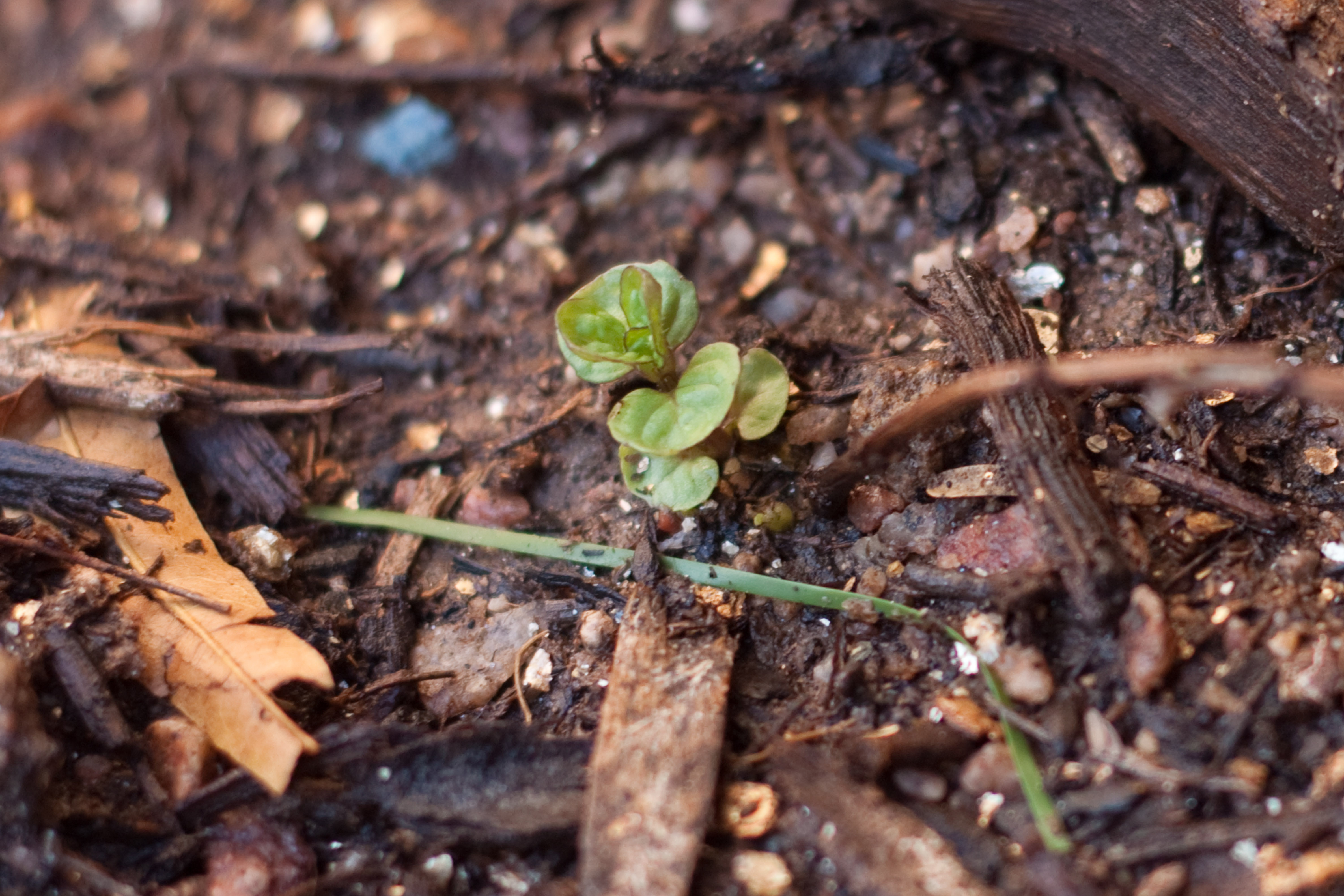
I thought the mint had died, but under the surface the roots must have held on, and now new life is coming up.

I’d had similar conversations with new moms in the past, when I was college and the staff women in my Christian student group all seemed to be having babies. But their phrasing was slightly different:

“It’s so hard to find time to read the Word”

They would describe their tips and techniques for making sure they read and meditated on Scripture daily, and worked it into the fabric of their home life. I drank it up. I am still thankful today for the wisdom I gleaned listening to their conversations. But I never heard any of them talk about how to pray as a busy mom – how to pray alone, how to pray with your husband, how to pray with your children. Either they all had awesome prayer lives and took it for granted, or it just wasn’t as central to their faith as reading the Word.

It sounds like the old argument – Catholics don’t care about the Bible, they don’t take the time to read from it, and their faith isn’t formed by the truth of it. And there may be something to that. I deeply love and value the reverence my fellow Protestants have for the Word of God, and it does seem like Catholicism doesn’t put nearly as much of an emphasis on personal Bible study.

On the other hand, the Protestantism I’m familiar with doesn’t put nearly the same emphasis on prayer. We struggle with prayer. We don’t know what to say, or how to say it, or what our attitude and motivation should be. We follow the guides and programs in the prayer-help books but give up because it feels too stifled, impersonal, or rote. We try to pray from the heart, in our own words, but sometimes our emotions dry us up and even the “Dear God” at the beginning is an effort. As a result, we feel guilty, and we talk about our time in the Word instead, because that is territory in which we have confidence and experience.

Catholic prayer, and I think high-church Protestant prayer, is different. People memorize and pray prayers that have been passed down through the centuries, in addition to their own personal thoughts and thanks and requests. I think those pre-written prayers can act as a springboard for the soul, a key to entering into more personal and intimate communion in prayer, and I think that is why it was prayer, not Bible study, that came to mind first for this woman.

IMG_2189
My mother-in-law made this heart for my garden! I love the imagery of beauty, virtue, and life (symbolized by the white rose) in the core of the heart.

“It’s just so hard to find time to pray”

What hit me with a flash when I heard those words was the centrality and importance of prayer to this mom. Prayer was the thing she desperately craved, the essential aspect of her faith that she didn’t want to let slip away. And why? Because prayer is our direct communication with God, where there is both giving and taking, talking and listening, unburdening our anxieties and sins and receiving His forgiveness and grace. Reading can become an intellectual exercise, whereas prayer is relational by definition. In addition, as I’ve discovered some of the traditional written prayers more commonly used in Catholicism than Protestantism, I’ve realized the power of having words to pray when my own words seem stilted and unwilling: it allows me to overcome my emotions or my self-consciousness and simply come before God to worship, to thank, or to petition. I don’t ever want to lose my love for the Bible, but I think it would be good to learn from this Catholic mom how to love prayer as well, and make it more central to my life and my walk with God.