Posted in musings

shelter from the shoulds

Sometimes it seems like there is a lot of pressure to do things for rather external and arbitrary reasons. Preparation for adulthood is a big one, for example – learn these math facts now so that you’ll be educated and prepared for your job as an adult; exercise and eat healthy now so that you’ll have better health when you’re older; practice a musical instrument as a child because you’ll regret not having done so when you’re older; and so on. Of course, if you attempted to prepare for adulthood in every possible way (even limiting yourself to a single culture), you would lose your childhood and probably wouldn’t be able to cover everything anyway…

Happiness is another oft-cited reason, and an even more arbitrary one, as the things which lead to a fulfilled and happy life for one individual can be radically different than the elements that are necessary for another. There might be pressure to get married and start a family when a person honestly does not want children or is not ready for the commitment of marriage. There might be a push to get off social media as a sort of “spiritual refreshment” when a person struggles to connect with their friends and communities through other means, so that the lack of social media pushes them into isolation.

And worst of all are the cultural “shoulds” – the things that people thing you ought to do, just because they are considered normal, or aspirational, or “good.” You “should” read these books, or listen to that music, or study American history in junior high, or clean your house with only vinegar and baking soda, or live in the city to fight suburban sprawl, or live in the country and try to be self-sustaining, or ride your bike as much as possible, or eat only these types of food, or dress in these types of clothes – just because that is what everyone else, in a large amorphous and vague blob, things you should do.

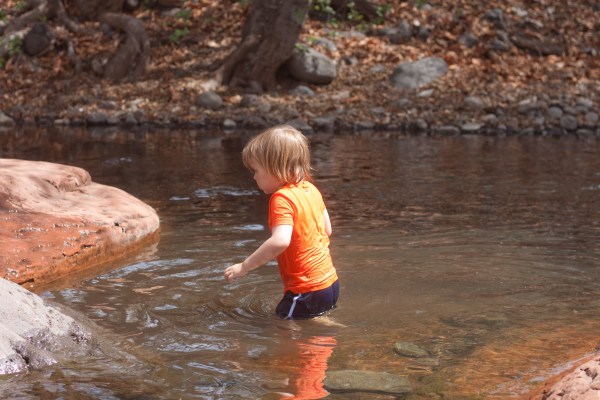
I’m trying to keep my kids sheltered from these “shoulds” for as long as I can.
IMG_8980

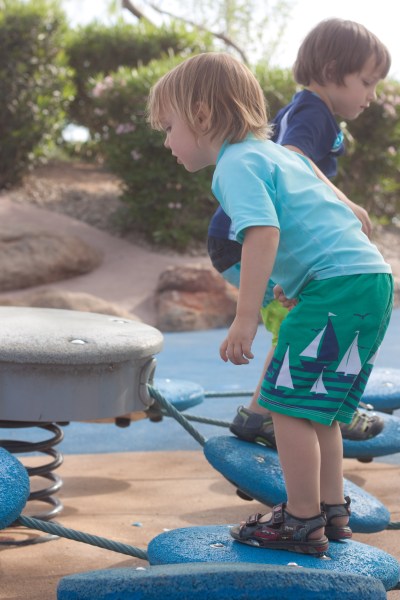
I want them to be free from that pressure long enough to gain confidence in who they are and in how they process the world.
IMG_8981

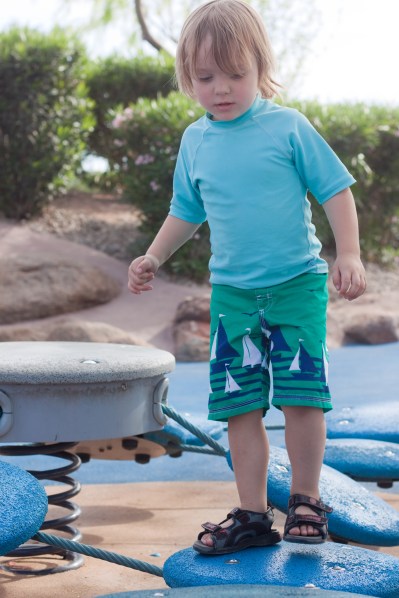
I want them to have the time and space to form their own goals, to explore their own interests, to decide what path makes the most sense for themselves, and to develop their own motivation.
IMG_8984

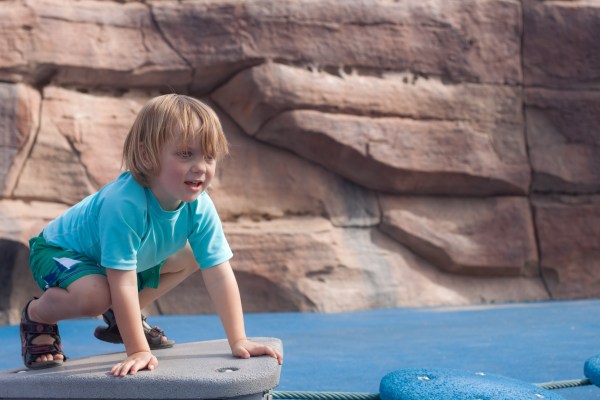
I don’t want them to be so exhausted from trying to live up to everyone else’s expectations that they have no margin left to imagine a future of their own choosing.
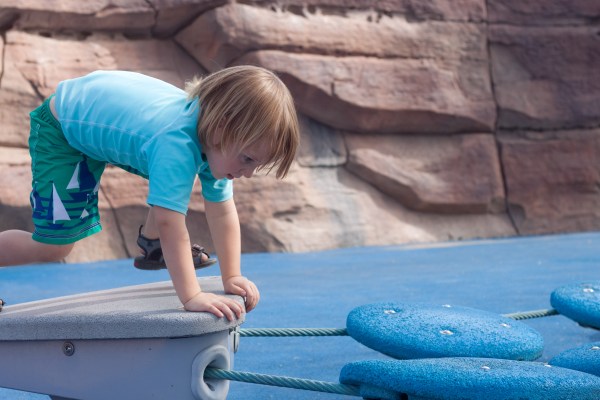
IMG_8985

I don’t want them to feel self-conscious about the judgment of others when they take a step backwards, or make a mistake, or pause to observe and analyze their course – the “shoulds” of perfection and speed are powerful and deadly.

IMG_8987

And whatever their goal might be – if it is finding a perch to sit on to study the world in its beauty and complexity, or taking a flying leap for the rush and satisfaction of a challenge overcome, or some path that never even occurred to me before they charted their course – I hope that they continue to live free and wild and bold and uniquely themselves, whether they accomplish that goal or not.

IMG_8989

(Images are of Limerick playing on a spiderweb-type piece of playground equipment. In each image he is a bit more confident in his body language. In the second-to-last image he sits on the corner looking away from the camera, choosing his next step; in the last image he is leaping from one step to the next, completely airborne.)

Posted in family life, information, musings

acceptance vs. awareness

I’ve been spending a lot of time on Pinterest lately, in an effort to avoid Facebook (and while waiting for my books on hold to become available!), and I’ve found some really encouraging, helpful, and inspiring posts! I’ve also found quite a few off-the-wall recipes that I’ve made to varying familial approval… but let’s not dwell on that.

I think the following two images which I found there are amazing examples of the difference between awareness of autism and acceptance of autism (the first was uploaded directly to Pinterest by a user, and the second is from the Thirty Days of Autism blog):

Notice how in the first poster only the negative effects of autism are mentioned: meltdowns, avoidance, tears, frustration, worry, and stress. Autism is an evil, something that one needs to fight through with hope and prayer, like a sickness that needs to be overcome and that left unchecked would destroy one’s life. (And if it were a sickness, like cancer, that would be more than fine! As it is actually a neurological and developmental difference that is always going to be part of who a person is, however, this attitude can feel like a personal attack on an autistic individual’s identity.)

In contrast, the second poster focuses on the unique behaviors caused by autism – things that are different from normal, but neutral rather than negative: parallel play, a need for space, deep focus and passion, love of technology, and stimming. Autism is portrayed as a part of who that family is – something for which they love each other, not something despite which they love each other. Acceptance gives them the freedom to be themselves, however autistic that self might be, while still receiving unconditional love and support in the midst of their individual needs and struggles.

Let’s just say I know which lens I’d rather be seen through – and therefore, which perspective I want to take when raising my differently wired child.

Posted in family life, musings

fear of change

After eight years of working in a genomics research center, I’ll be transitioning to being a stay-at-home parent a week from now. Technically I’ll be working eight hours a week, in a sort of consultant role, which will keep me connected to the science – but it will still be a big change. It’s what I’ve been wanting ever since Rondel was born almost four years ago – but as it approaches, I find myself becoming more and more anxious.

I like my job, and I am good at my job. My supervisor respects me and my opinions; the researchers who rely on the services our facility provides respect me and my scientific knowledge and experience. I know what types of problems are most likely to arise, and I have tools and strategies for troubleshooting them. And I know that if I put in time, effort, and energy, I will have a successful outcome.

To be totally honest, I really like having the respect of other professionals whose opinion I value and who do innovative and important research. It gives me self-confidence: I may be a complete wreck if I have to call my doctor to schedule an appointment, but when I sit down with a researcher to discuss their experiment and figure out the best plan for them to take moving forward, I am completely at ease. It also gives me a sense of identity and self-definition: when acquaintances ask what I do, I can tell them about the science and feel that I’m doing something of worth, something that uses my talents and gifts, something beyond just staying at home and cleaning and cooking like any other person could do.

At the heart of my nervousness about the transition, then, I think, is a fear of losing that respect and identity – of becoming part of the crowd, no one in particular, no one with any valuable skills or gifts to offer my community. When I spend time with other moms, I feel so inadequate in the areas they are gifted in: my home is rarely clean, laundry and meals happen on an as-needed basis rather than with planning, small talk eludes me, playdates terrify me, schedules and extra activities overwhelm me, my children are dirty and wild. My mind is usually lost in a book, or an idea, or a project, instead of focusing on the people around me. I say nothing and feel isolated, or I say too much and still never manage to connect with anyone else. I simply don’t have the skills that these other women have, and without them, I’m not sure where I can fit in or belong in the mom world (especially the homeschool mom world… those women are so organized that I give up just at the thought of trying to be like them).

In the workforce, in academia, where everyone is a bit weird and everyone is valued simply for the expertise they offer, I knew where I fit in and I knew how I could flourish.

In this new world, I’m afraid I won’t ever be able to flourish – and that in my lack of flourishing, I will stunt my children’s future as well.

I’m not going to let my fears make a decision for me, when I believe on principle that a self-directed education is ideal for children, and when I observe pragmatically the stress that a classroom environment would add to our family life. I’m going to choose to let my love for my family be the motivating factor here instead!

But I’m still afraid.

Posted in family life

his hands were dancing

Hands are useful communicators.

Sometimes we use them deliberately, pointing at an object of interest or gesturing to show how large or small an item is.

Other times they are less intentional – for example, someone may scratch their head or rub their chin while thinking, subtly communicating to others that now is not a good time to interrupt them, or that the pause in the conversation doesn’t mean they aren’t paying attention!

Sometimes we are able to communicate emotions or needs with our hands faster than we are able to share them verbally.

My husband and my mom will both notice when my hands drift to my arms and start picking (a sign of escalating tension or anxiety, typically), and try to address whatever is going on; it would be very difficult for me to break into the flow of the conversation to bring up my anxiety until I was much closer to a meltdown.

Another good example of this is from Rondel the other afternoon, when he saw a bee near Aubade in the kiddie pool and started flapping his hands frantically until I came over and asked what was wrong; he told me later that his hands were telling me that he needed me. The worry of the moment made it difficult for him to access the relevant words, but his hands were able to alert me that something was going on.

Probably my favorite expression of hand communication, however, comes from a moment when Rondel’s hands were demonstrating a thrill of joy.

We were stopped at a red light waiting to turn left out of our neighborhood, and the boys asked me why we weren’t moving. “We’re waiting for the light to turn green,’ I explained, and showed them where to watch for the green light. When it finally turned green, Rondel’s hands went crazy waving around – and a minute later, when he had calmed down, he told me (referring to himself as “you”) that “Your hands were dancing because you were so excited that the light turned green!”

His hands were dancing.

I can’t really think of a more beautiful way to express the unadulterated, uninhibited demonstration of joy and excitement that is Rondel’s happy hand flapping. His hands were communicating to me the rush of pleasure that he was feeling, allowing me to share in it more deeply than a verbal declaration would have accomplished.

Posted in family life, musings

stepping outside of routine

Change is hard. Routines give life structure and reduce anxiety. This is probably especially true in a partially autistic household…

But sometimes, you have to swallow your fears and set out into the great wide somewhere, without knowing what might happen, even expecting that something may happen for which you are utterly unprepared.

IMG_8777

And then, sometimes – more often than your fears would lead you to believe – there is freedom, and there is joy.

IMG_8870

There are places and times when the beauty and the wonder overcomes the discomfort of uncertainty or freezing water, and happiness can reign uncontested.

There are moments when the lure of the next rock over proves greater than your apprehension about the deep pool that lies between you and it, and moments when crossing over through your fears ends up being one of the best parts of your day because that thing you were so worried about is actually something you love, that brings out the adventurer in your soul.

IMG_8865

IMG_8868

It takes a lot of energy to step outside the normal and comfortable patterns of everyday life; I’ve discovered that I need to plan for a day of rest and recovery afterwards. But the thrill of living more fully, more expansively, less bound by our anxieties and routines, is very often worth it.

And for me, the scent of the clean air, the caress of the warm sun, the rhythm of the flowing water, the strength and grace in every line of plant and rock – those things are always worth the effort it takes to find them.

(Many thanks to the friends who made this possible by inviting us along and giving me a safety net to quiet my anxieties! I wouldn’t have gone without the assurance of helping adult hands, since my husband wasn’t able to come along, and now I know that I am capable of handling this kind of adventure on my own in the future. Your support was invaluable for the moment as well as for the moments that are still to come.)

Posted in musings

the unknowability of parenting outcomes

When I was very small (no more than six years old), my mom had a serious talk with me about my temper. Anger, she told me, was like a dark spot inside me, and if I held on to that anger I would be allowing that dark spot to grow and spread (at least, that is what I remember of the conversation now, over twenty years later…).

I didn’t bring this story up with my therapist when she was asking me why I thought anger was such a negative thing… I didn’t want to be a parent-blamer when I have such amazing parents! But it did make me wonder – how many of the well-intentioned discussions I have with my kids now, trying to help them understand the world and themselves and other people, will be internalized in an unhelpful way?

For example, tonight Rondel was being incredibly loud for no reason at all while I was lying down with the boys for bedtime – he was just trying to keep himself in a high-energy state by making random noises non-stop. I had asked him to be quiet multiple times, to no avail. Finally I turned to him and said that I couldn’t make him be quiet, that it was his choice – and that he could choose between being selfish and inconsiderate or kind and helpful. “And the choice you make,” I told him, “will affect the type of person you are becoming. So think about what type of person you want to be.”

“You want to be helpful” he replied. And he was silent after that (aside from asking for more water), snuggling up to me and letting his brother fall asleep in peace.

In the moment, my explanation worked and the boys fell asleep. I think the overall principle is a good one as well, and one I try to use for myself; it is paraphrased from C. S. Lewis. But I don’t know how that will settle down into the mind and heart of a four year old – if it will be a healthy motivator or a source of anxiety and shame in years to come.

Oh well.

I suppose all one can do as a parent is to try the best one can in the moment and pray that it will turn out alright!

“…many parents, educators, and therapists prioritize academic achievement over instilling happiness, even if it greatly increases stress. In fact I have heard proponents of some approaches take issue with the idea of emphasizing happiness, arguing that for children with autism, it is far more important to develop skills than to be happy. In other words, instead of measuring happiness, we should be measuring skills.

“Not only is this way of thinking misguided, but it misses the point. Children – and all human beings – learn more readily when they are happy. They retain information more effectively when they feel positive emotion. When we try to learn under persistently stressful situations, we retain less, and it’s more difficult for us to access what we learned. But when we’re feeling a positive emotion, we’re more primed for a learning experience, and our learning is deeper and far more effective.”

– Barry M. Prizant, Uniquely Human

because academics isn’t the ultimate end

Posted in family life

little problems, big feelings

We had some frustrations, today, as we went about our normal adventures.

Someone was upset to the point of tears because the cars in the lane next to us were moving and we weren’t and this child didn’t understand why (they had a left turn arrow…).

Someone broke down because their brother finished the bag of goldfish, even though they’d been able to eat an equal amount.

Someone sobbed and wailed in the grocery store because they were thirsty but didn’t want to drink from the water fountain.

Someone screamed and threatened because their brother put in the puzzle piece they wanted to do (make that two someones…)

Someone ran across the playground hiding their face in their hands because I wouldn’t let them push another kid off of the equipment they wanted to use.

Honestly, most of these moments involved fairly trivial triggers, at least from my perspective. It’s been a long time since forgetting a cup for my water and having to use a fountain instead brought me to tears… But for my children, these “little” things have a big impact. Something in their world isn’t functioning the way they expect or want it to, and it throws everything off kilter emotionally.

And when it does, I have the incredible privilege of being able to support and comfort them without being pulled underwater by my own equally strong emotions, since the things that bother them no longer affect me in that way. I can be the pillar of strength and the promise of unconditional love in those moments when they are falling apart, using those struggles as an opportunity to connect with them and deepen our relationship, instead of mocking or shaming them for “overreacting” to something so small. All I have to do is remember how vastly different their perspective is from mine, how much less experience they have to understand the world around them, and how little control and independence they have in their lives, and respond to them accordingly.

Posted in information, musings

Autism Acceptance Month

Did you know? April is officially Autism Acceptance Month!

(It’s ok, I didn’t know either until this year. Really the only month I ever remember is Black History Month in February.)

But this year I plan to do something about it! (Not sure exactly what yet, in the offline world, although Chris Bonello of Autistic Not Weird has some good ideas here.)

You may have heard some of the larger autism groups promoting April as Autism Awareness Month, and as a result wonder why I am using the word “Acceptance” instead.

Well…

It is because when I search for “vocal stimming” to find out what forms it takes and how it feels to those who do it (since I do not share this aspect of Rondel’s behavior), the entire first page of search results is geared towards how to make the stimming behavior stop.

It is because the majority of websites that refer to stimming, outside of autism advocacy pages, do so in an incredibly depersonalizing way, discounting the significance of the behavior to the autistic individual and seeing only the oddity of the action in a neurotypical world.

It is because most people have already heard the word autism and know that rates of diagnosis are increasing. The “Awareness” part of the job has already been done!

It is because no amount of “services”, supports, or therapies for autistic children will be sufficient in the long run if society isn’t able to reshape itself to accommodate the autistic way of being – those children all grow up to be adults, after all.

It is because the neurotypical world will lose out on all the beauty, humor, and insight that can come from a different way of looking at things if it keeps trying to fit everyone into a single narrow acceptable mold.

It is because, one day, I hope that every child and every adult will have the freedom to be different – to be openly and proudly autistic, ADD, introverted, extroverted, etc. – without inviting bias or feeling shame.

And after all, autism does not involve a breach of the moral code. There are no objections I can think of to the existence and self-expression of autistic people besides the differences that may make neurotypicals uncomfortable or inconvenienced. Maybe if the neurotypical world could meet the autistic world with genuine acceptance and unconditional love (autists already bend their whole lives around neurotypical systems, after all), the two could create a greater whole.

Posted in family life, musings

the value of a diagnosis

As we proceed with Rondel’s diagnosis (since the school district is unable to provide an actual medical diagnosis in their evaluations), we’re using an innovative diagnostic app developed by a local children’s hospital, which involves capturing multiple videos of Rondel’s actions and interactions in specific situations. I like the concept a lot, as it lets the doctors see into Rondel’s everyday life and observe him unnoticed for far longer than would be possible in an office setting! However, as I’m going through the videos to trim and upload them, I keep wondering if the specialists will see the differences that we believe are present – or if they will tell us that his struggles are due to something like poor parenting. Maybe if I were stricter, or reinforced acceptable behaviors more consistently, or provided him with a more stable routine, or cleaned up our diet, or or or or…

IMG_8588

…then maybe he would be fine, maybe he would be normal, maybe he would fit in with all the other kids instead of sticking out uncomfortably.

He just isn’t so significantly different that it’s obviously a medical problem to a layperson. His differences are hidden, partially masked, behind his gregariousness and intelligence and creativity, until he’s used up all his energy on coping and he falls apart. So when people see him melting down or acting out, it’s easy for them to assume he is doing so willfully, or to think that he is simply being “spoiled” and “self-centered.” Even I, who see him every day, wonder sometimes if the difference is truly there, all the way down, no matter what, or if I could find some parenting technique that would work better for him and “catch him up” to his peers.

But I wonder that about myself also. Do I fail to maintain relationships or engage in neighborhood community-building because I am selfish, lazy, and don’t care about other people? If I were a better Christian, could I overcome my introversion? Many people do, after all, and are able to make time to recharge themselves. So am I guilty of using my social anxiety as an excuse to cover up for my vices or inadequacies?

Similarly, before I was diagnosed with depression (and honestly sometimes still), I would tell myself that if I just tried harder – if I prayed more, exercised more, ate better, spent more time in self-care, spent more time with close friends, practiced the right mental exercises, etc – I could get through the negative feelings and be fine. Getting the diagnosis was one of the best days of my life, because of what it meant to me: that I wasn’t an awful person taking advantage of the people around me, just a sick person who was trying as hard as possible to find joy and light but needed some extra help.

IMG_8585

And my hope is that a diagnosis will be a similar gift to Rondel: a confirmation that his differences are real, and valid, and significant; a reminder that some things will be harder and it will be ok to seek and use help and support; and a shield against the barbs of guilt and shame that always accompany deviations from social and cultural norms. The alternative – refusing to acknowledge and name the neurological differences that give rise to his behavioral differences – is only a recipe for disaster as he grows older and begins to notice his differences without a framework for comprehending and addressing them. How much better to provide him with a framework of informed understanding, acceptance, support, and unconditional love!