Posted in book lists, family life, information, wwlw

what we’re learning wednesday: episode 6

Due to his love of rain and his constant desire to know exactly when things are going to happen, Rondel has begun to ask me questions about the weather constantly. And because I never properly learned about the weather to begin with, there wasn’t much I could tell him.

So we did what we always do when faced with a topic of ignorance and armed with a thirst for knowledge: we went to the library and came home with books!

There are surprisingly few books about clouds, and no books that I could find at our library specifically about Arizona or desert weather, at least not at my kids’ comprehension level. But these three are not bad, and we’ve learned a lot from them.

Look at the Weather, by Britta Teckentrup, is a beautiful, artistic book, filled with gorgeous atmospheric drawings, leading questions and statements about the personal impact of weather, and interesting scientific facts about weather. Each page tends to have only a few sentences, so although the book is very thick it doesn’t take nearly as long to read as one might expect. It will walk you through the build-up to a storm, for instance, painting the gradual accumulation of clouds slowly, until you almost feel the tension of it around it. But it will also give you tidbits of very fascinating information – I never knew how hail was formed until Teckentrup explained it here, for example!

The Man Who Named The Clouds, by Julie Hannah and Joan Holub, is really more of a biography of Luke Howard, the man who invented the precursor to our current scientific classification system for clouds, than a book actually about clouds – but there is a serious amount of scientific information included. I particularly appreciated the diagram towards the end of the book illustrating the current cloud classification system, and we’ve been attempting to classify the clouds we see when we are out and about each day (we saw mostly cirrus clouds today; Rondel is holding out hope for some cumulonimbus clouds since they are the type of rain clouds we typically get with the monsoons!). Overall this book was a bit above the boys’ heads, and not completely aligned with their area of interest, but by skimming and omitting while I was reading it aloud we managed to get a lot out of it anyways. On a second read through I will probably include more, depending on how it seems to be holding their attention.

Clouds, by Anne Rockwellis probably the book best-suited for answering Rondel’s questions about clouds at his level. But I haven’t read it with him yet! We’ve been distracted with the other books, and he’s caught the virus the rest of us have been passing around so we’ve been a bit preoccupied with that. This book also has instructions at the end for creating a small cloud in a jar, and I’m looking forward to doing that with the boys. From reading the book on my own, this should reinforce the information we gleaned from The Man Who Named The Clouds, and be a short, easy way to soak up more weather-related knowledge. The Let’s-Read-And-Find-Out series, of which this is a part, has been in my experience a good source of basic knowledge on any science topic we happen to have questions about.

While we continue enjoy these books, I’m going to continue searching for books about our local weather; we live in a fairly unique ecosystem, and I’d love to learn more about the weather patterns and seasonal changes specific to the Sonoran Desert. Please let me know if you have a good resource on this!

(And if you were curious about how hail is formed, here is what Britta Teckentrup has to say:

“Hail is caused when the wind sweeps raindrops up into higher, cooler parts of a cloud before they get a chance to fall. They freeze in the cold air. When the ice droplets begin to fall, sometimes the wind catches them and sweeps them to the top of the cloud again. They can cycle up and down inside the cloud several times, adding layers of water and ice as they go.

“Eventually, the ice balls become too heavy for the wind to carry upward, and they fall as hail.”

So the stronger the wind, the bigger the hail can get! Now I understand why we typically only see hail in our craziest, most intense storms – only they have strong enough winds to lead to the formation of hail.)

Posted in family life, hikes

hiking with littles: tonto natural bridge state park

As part of the Maricopa County reading program this summer, we all received passes to the Arizona state park system, and I’d been looking for a chance to use them (we’re saving some for Boyce Thompson Arboretum in the fall). Then I was reminded about the Tonto Natural Bridge just outside of Payson – the largest travertine bridge in the world.

Travertine is a form of limestone, calcium carbonate deposited at the mouth of mineral springs; travertine bridges like the one at Tonto can be formed when a travertine dam across a canyon (in this case Pine Creek Canyon) is eroded by water over time. For a detailed and illustrated explanation, visit the Arizona State Parks page about it here!

I hadn’t been to Tonto in at least 15 years, so I didn’t remember how difficult the trails were, but I did remember how beautiful they were, and how breathtaking the natural bridge was, so I decided to try it. We drove up early one Monday morning, making the ascent into Payson and then the steep descent into the Tonto valley. It is like a hidden vibrant green gem surrounded by dark pine-covered slopes; with the clear startlingly blue sky overhead, it was beautiful beyond my ability to capture with a camera (at least with three little kids running every direction at once!).

We did the Waterfall Trail first. This is a short trail (300ft one way) down a series of steps to a small waterfall running down a moss-covered side of the canyon.

The steps are quite steep. This isn’t a good trail for someone with poor knees – and Aubade needed to be carried most of the way down because the steps were too tall for her short legs. She was able to clamber up, however! The trail also gets very slippery down by where the waterfall splashes over it; the railing will keep you from tumbling down the canyon wall, but good shoes and attention to footing are important also (or you can be barefoot like Limerick was for the majority of the time… he does a lot better when he can feel the ground directly).

After we came back up from the waterfall, and realized just how short of a trail it had been, we decided to try the Pine Creek Trail – a half mile loop down the creek bed to the natural bridge. Does that sound easy? It did to me as well, until I saw that 75% of the hike consisted of bouldering through the creek with occasional arrows for guidance. But hey, if bouldering proves too difficult there is always the creek to play in, so we went for it.

The first part of the trail is very easy – smooth paths and steps down to the creek. Aubade was able to handle most of this on her own, except for a few of the bigger steps. Several of the native trees are signed along the way, so we were able to identify and learn about the cypress tree, comparing its thin peeling bark to the thick checkered bark of the juniper tree, noticing how much larger its berries were, and feeling its sticky resin.

When the trail first reaches the creek, there is a shallow wading pool perfect for little kids to play in! We stayed here for quite a while before moving on, and again on our way back; I think there are only a few things in life that Aubade enjoys more than playing in running water, and she could have stayed here happily for hours. Limerick, however, was eager to climb, and Rondel wanted to see how far he could hike and try to reach the bridge. So onward we went!

It was on this hike that I realized how lucky I had been at Ellison Creek that Aubade had taken a nap on the drive up; here, she wasn’t as rested, and almost fell asleep during an emergency nursing break halfway down the creek. Fortunately she was able to recover and enjoy the rest of the hike, but I was seriously regretting not using the hiking child carrier backpack for a while there. (She dislikes it, and also likes to hike herself where possible, so it tends to mean I’m just carrying unnecessary weight, but she may have fallen asleep in it.)

I also was very grateful that I had remembered a backpack for the water bottles as there is no way I could have made it over the boulders carrying both Aubade and a water bottle in my hands. There were times when I had to lift her over a tricky spot and then climb up myself – and then, at least once, lift the boys up next! So this is definitely not an easy hike, despite the short overall distance, and I wouldn’t recommend it if your children don’t enjoy scrambling up and over boulders.

Mine do, fortunately, so we made it, in the end, to the bridge.

IMG_0503

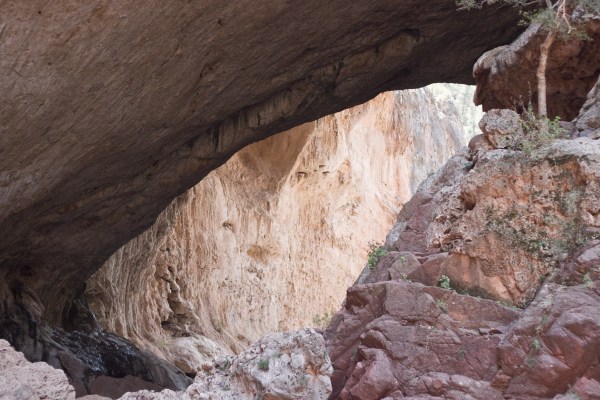
It is stunning. Too high and wide to get a good shot of in its entirety, from where we were in the canyon (we didn’t go all the way under it as I remember those rocks being extremely slippery – I had to be coached down so I wouldn’t fall when I was quite a bit older than my kids are now – and we were already all worn out). But we stayed and admired it for a while, one of those wonders made by the joint efforts of hard rock and moving water, and then made out way back from whence we came.

This was a difficult hike (the ranger who gave us our parking pass emphasized that the trails were “strenuous”), and I was so proud of all three kids for pushing themselves up the final stretch back to the car, when they were just about exhausted. Limerick was especially tired, being smaller and younger than Rondel but hiking the whole trail independently unlike Aubade, but he kept going without complaining all the way back to the car, and rode home in a very well-earned glow of accomplishment (not to mention a much-needed nap). However, despite the difficulty, I would wholeheartedly recommend this hike, and the entire state park, for anyone with experienced or determined young hikers, or who has extra adults to help carry a tired child. It is a truly unique and beautiful place.

To reach Tonto State Park from the East Valley: Take the 87 north through Payson; turn left on Nf-583 (it is well-marked with a sign for the state park) and continue to the park entrance. The park is open beginning at 8am in the summer and 9am in the fall through spring.


Posted in sqt

{sqt} – in which everyone gets sick

As usual I’m joining the seven quick takes link up at This Ain’t The Lyceum today – head over and read some of the other blogs!

  1. I missed out on the book theme last week, but I did have a very exciting book moment this week: my mom (who is a professor at the local community college) came home with a big cardboard box full of books that another professor was giving away, and told me to take anything that looked interesting. They seemed brand new and were non-fiction spanning the spectrum from memoir to science to investigative journalism. In other words, they were a treasure trove and I selected quite a few of them… I’ve started hinting to my husband that we need to put shelves up high on the walls because we have no more floor space for another bookshelf!
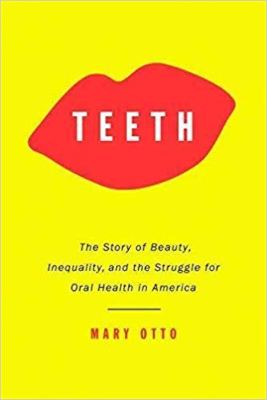
  2. The only one of these books that I’ve had a chance to finish so far is Teeth: The Story of Beauty, Inequality, and the Struggle for Oral Health in America, by Mary Otto.41ydn0xVu3L._SX331_BO1,204,203,200_The book is primarily about public health policy, and explains quite a bit about both the history of dentistry and the current state of dental health access and expense. But it covers this potentially dry topic in a manner that is both rationally and emotionally powerful, drawing the reader in through stories of individuals affected by societal pressure for “perfect” teeth or by societal neglect of oral health. Before reading this, I had never realized the extent of either the available cosmetic dentistry services or the overall risks of poor dental health (I guess I live in a comfortable middle-class bubble here…), and I was surprised and saddened by much of what I learned. This book does not engage in a lot of philosophizing; it accumulates stories and statistics and allows the reader to come to their own conclusions.
  3. Another thing I have discovered this week is that drawing my own conclusions about medical issues is probably not a great idea, as they are likely to be wrong. Most of us have been sick this week, and Aubade had a cough and seemed miserable, so I called in to the doctor to ask for a refill on her Albuterol. The doctor asked us to come in (that is, the triage nurse called us at 3:25 and said that they wouldn’t refill the medicine without an appointment and that she had an opening at 4:00; we live 20 minutes away and the kids were in various states of undress and hadn’t had an afternoon snack yet), so we drove down there (and miraculously made it with three minutes to spare!) only to discover that Aubade wasn’t actually wheezing and thus didn’t need the Albuterol, but did have pinkeye and a double ear infections. Oh, and also that Limerick was extremely wheezy and did need the Albuterol, and had a higher fever than Aubade despite not feeling warm to my touch at all. So now they’re both drugged up, I’m nursing a sore eye, sore ears, and a headache, and Rondel is getting cabin fever from being cooped up all day with sick family.
  4. To occupy our time while quarantined in the house, we’ve been playing a lot of homemade board games, both on the number boards and with a rainbow-colored board game path we designed together (Rondel came up with a set of rules that are consistent, creative, and fair – I was really impressed). There are giant foam dice everywhere (we only have two, but they are always getting thrown around and lost and re-found), and the little animal toys we’ve been using as game pieces keep disappearing and reappearing and getting dumped out in the hallways, and the Duplos have literally made their way into every single room of the house such that walking around is an obstacle course (mostly afflicting poor Aubade who keeps tripping on them). Cleaning not only seems futile but requires a lot more energy than I have available being sick myself…
  5. We’ve also started coloring, drawing, and writing more again, since we’re stuck sitting around! Rondel even told me he wanted to learn how to write his letters, and persisted at it diligently until we left for swim lesson. He still switches hands when he writes, and he seems to see the parts of the letters instead of how those parts fit together to make a whole (his first “A” looked like a UFO before I verbalized for him a different way of perceiving and drawing it), but he did surprisingly well! Limerick is able to copy the letters well but doesn’t really pay any attention to direction and more often than not draws them sideways or upside down or reversed, without realizing it.
  6. Another thing that went surprisingly well was hiding tofu inside the popsicles I make for the kids, to increase the protein content (since they like to eat them as meals). It ended up just contributing a slight nutty flavor, which went really well with the peach-vanilla blend I was using. I loved it as a smoothie and the kids ate up all the popsicles!
  7. Also from the popsicles I’ve learned that frozen pineapple whips up in a food processor like egg whites or cream. If you process it with a little bit of milk it gives you something almost identical to whipped cream, just a bit more airy, that literally melts in your mouth. It is so good – I just want to eat it all plain every time I make it as a popsicle base. And I imagine if you used a non-dairy milk it could be a pretty decent whipped cream substitute!

I hope you all stay healthy and have a great week 🙂

Posted in wwlw

what we’re learning wednesday: episode 5

This week, we’ve been playing math games!

While Aubade takes her naps, I’ve introduced the boys to dominoes (just the number matching beginner version – they aren’t quite ready for the multiples-of-five scoring version yet, but I wanted to lay the foundation for it as it is one of my family’s traditional games) and to war with playing cards. For war, we mess with the rules a bit by either playing addition war, where we pull two cards at a time and the person with the highest sum wins, or subtraction war, where we again pull two cards but the person with the smallest difference wins. (Multiplication war – highest product wins – and division war – smallest remainder wins – are other possible versions of the game but Rondel isn’t able to do that math quickly enough yet for the game to stay engaging and fun.)

I thought it might just be a fun novelty, but the boys have both really enjoyed it. Handling the cards, especially with our old sticky set, is good fine motor work, and the game itself is great math practice since the symbols on the card allow the boys to count to the answer if they need to. I also spent one game writing down the rounds in math language, to introduce the boys to symbols like “-“, “+”, “=”, “>”, and “<“; they liked the greater and lesser than signs the best, of course, because they are alligator mouths trying to eat the bigger number!

When we play games like these, Limerick gets super excited every time he figures out what his sum or difference is, and Rondel gets super excited every time he wins the round 😛 It’s interesting to see Rondel developing a sense of competitiveness, though I’m definitely grateful that he still has no negativity associated with losing. It’s also interesting to see how little Limerick seems to care about who wins or loses: he just loves the process of playing the game, and I wonder if that is connected more to his age/developmental stage or to his personality.

A note to add is that we don’t approach these games as a “math lesson” or as “doing math.” It’s just a way to have fun together – to incorporate Rondel’s newfound love of games (thanks to speech therapy) and Limerick’s passion for numbers. Especially at their age, it is far more productive to follow their interests than to try to force them into something they don’t want to do or aren’t ready to learn yet!

Posted in family life, musings

getting through a bad day

Sometimes motherhood is the hardest thing I’ve ever set out to do. Sometimes I wake up already tired, already touched out from a night of nursing a sick baby, already talked out from a friend’s birthday party the day before, wanting to do nothing but bury my head in a pillow (or maybe a book) and isolate myself from the world around me until my equilibrium has sufficiently recovered. As everyone knows, of course, parenting doesn’t typically allow for such unplanned luxuries.

Sometimes every interaction is a battle not to yell or speak harshly. Sometimes the worst part of me wants to scream until everyone feels as awful as I do. Sometimes I can’t even handle the baby sitting on my lap with a book because I’m so sensorily overloaded that my skin crawls at the touch. Sometimes I pray for peace and gentleness and stumble again into anger the next minute.

Sometimes I look at my child and the tears in my own eyes – at my own imperfection, at the horrible way I’m acting – are mirrored in theirs.

Somehow we make it through the day anyway, with lots of apologies along the way. We get outside, if we can, and the calming influence of the outdoors leads to laughter and connection and positive strength. We read our bedtime books and the kids still ask for their “Pookie kisses” of Sandra Boynton inspiration. I tell them what I saw in them that made me proud, and apologize again, and we snuggle to sleep. And at last, the closeness of their bodies to mine can be felt as love by even my chaotic mental processor.

And I remind myself that these bad days are few, and that tomorrow is another opportunity to be compassionate, gentle, self-controlled, loving, present, and joyful with my children – to put in again the hard work of cultivating the fruit of the Spirit, and hopefully do a better job of it. I will fail, and the kids will fail, and I pray that we will in our failures learn both to be humble and to forgive, both to self-advocate when we are overwhelmed and to serve unthanked when we see others overwhelmed, both to grow closer to God who is alone perfect and who gives unending grace and to grow closer to each other even as our sin threatens to tear us apart.

Posted in family life, hikes, information

hiking with littles: ellison creek

Before my husband and I were married, we hiked a lot, for most of our dates actually. It was one of our favorite ways to spend time together – we both love the outdoors, I liked having a way to be with someone I loved without the stress of normal small talk (since the activity determined the body language and visual focus), and it’s really just a lot nicer to do anything when you’re using your body and surrounded by beauty. (We even rented a remote cabin and just hiked around for a week for our honeymoon).

So, ever since we started having babies I’ve been waiting for them to be old enough to hike with us! And honestly, I’ve been waiting even more for them to be old enough to hike with just me – for them all to be able to hike well enough that I only have to carry one of them at any given time, and can even have some time without carrying any of them.

Now, at last, we’re finally there.

After giving them a taste of wildlife and the natural environment at Saguaro Lake, and realizing that they loved it, I began searching for easy or short hikes up in Payson that we could explore together while the weather is still too hot in the valley. Payson is less than two hours from our house, but the environment is very different: mountains, pine forests, narrow creek beds and rocky waterfalls, berry brambles and grapevines, etc. When it’s over 100F here, it’s in the 80s up there, with the shade from the trees, the breeze down the canyons, and the cool water to make it even nicer.

The first real hike I attempted was at Ellison Creek, at the Water Wheel crossing just north of Payson. The day use area is easy to find, with a fee of $9 (check the National Forest Service for up-to-date information, especially with regards to closures during fire season before the monsoons) and a vault toilet that it ridiculously clean.

When we arrived, I had trouble locating the trailhead, so we played in the creek for a while first, swimming in a little pool and climbing the rocks in the area (all three kids love climbing).

When we came up from the creek to have a snack, I found the trailhead. It is actually well-marked, with flash-flood warning signs and a memorial to people who have died in this creek from flash floods. This is not the most comforting way to begin a hike in monsoon season with a forecast of rain in the early afternoon, and because of the history of the location I would recommend hiking this creek at a different time of year or on a day without expected rain; if that isn’t possible, just be very aware of the weather at the moment and turn around to leave the creek area if you feel a cold breeze and see the thick clouds of a storm head rising over the mountains.

The trail begins relatively flat and smooth, and even Aubade was able to walk along here for a long time. We took some time to “stop and smell the roses” – Rondel was especially fascinated by the small insects living inside the huge white flowers of the sacred datura, and examined every blossom carefully. Just so you know, these plants are toxic and hallucinogenic, so make sure no one ingests them if you are hiking with small children. They are certainly stunning, however!

After a short while, the trail became harder to follow as it went through more rocky areas – over boulders and up ledges. I mostly decided upon our direction by guessing which path over the rocks would be easiest for small legs, and was rewarded whenever we happened upon a sandy area with footprints letting us know we were still on the trail.

We eventually stopped at a high point of the creek, where a rippling waterfall cascaded over the stones across from us and a little pool collected in a cup of the rock where we could play. The trail continues from here up to a larger waterfall that I believe has a staircase and a large swimming hole underneath, but at this point I saw rain clouds coming in and needed to turn around and get out of the ravine quickly.

Up there on the high rocks, surrounded by pine forest, with only the sound of wind, water, and birds, is fairly close to perfection in my opinion, and the kids thought so too: only showing them the rain clouds and explaining the potential risk to them convinced them to leave.

Obviously we made it out safely; the rain hit us at the parking lot while we were eating lunch, and we got to enjoy it for a few minutes before heading out for naps. All in all? A perfect introductory hike for my three adventurers, and an incredibly refreshing day for me out of the city and away from the noise and people and pressure of everyday life.

To reach the Water Wheel day area from the East Valley: Take the 87 through Payson; turn right on Houston Mesa road and continue for 7.5 miles. Water Wheel Crossing parking area will be on your right.


Posted in family life, sqt

{sqt} – school, summer, splash pads, and schedules

I’m joining This Ain’t the Lyceum today for the Seven Quick Takes link up! Head over and read some other interesting, humorous, and uplifting thoughts from the past week 🙂 The topic this week is supposed to be book-related but I didn’t know until too late – still, I’m looking forward to reading about other people’s recent reads!

  1. Almost every school in our area is back in session (some have been for several weeks already), but the highs are still over 100 most days, we’re still in the middle of monsoon season, and it just generally feels like summer. Kids are walking past our house every morning towards the elementary school in their put-together outfits with their backpacks full and my three are hanging out in their underwear eating popsicles and asking to watch a movie…
  2. The quite enjoyable side effect of school having started again is that all the fun places to cool off in the heat are mostly empty! The splash pads, for example, are no longer crowded! And we have some epic splash pads near us. This week we’ve been exploring the Cloud at Kiwanis since we’re in the area for swim lessons anyway:

    How cool is it to have a splash pad that thunders and pours like a rain storm at the end of each cycle? Rondel would get so excited every time the thunder started, just running around waving his hands, and Limerick would tell me, “the rain is starting, the rain is starting!”

  3. The other nice thing about this splash pad is the large non-sandy playground adjacent to it, ideal for my skinny kid who gets cold after five minutes in the water. Being a climber by nature as well, Limerick tends to spend most of his time on the playground, returning to the splash pad periodically to cool down again. He doesn’t always like me to take pictures of him (which is why I often have more of the other two), but he was quite proud of himself for climbing up to the top and hanging in all kinds of crazy positions!

    4. I’ve noticed that all my kids will try to copy each other if they notice one of them doing something new or different. They do so, however, in wildly different ways. When Rondel saw Limerick swinging off the metal pole, he wanted to do exactly that same thing, and tried to climb up the swirly metal ladder – but his anxiety and fear of heights kept him from going quite as high, and I had to coach him back down (which is actually something I’m super proud of him for – not too long ago he would have panicked so much I would have had to lift him down). Aubade, on the other hand, picked a nearby ladder so she wouldn’t have to wait for the boys to clear off theirs and headed up, making it to the top repeatedly and trying again even after falling from the top rung.

  4. Rondel and Aubade’s primary differences (sweet vs. fierce, cautious vs. fearless) show up in their pretend play at the park too (Rondel here is a baby inside an egg about to hatch. I am not sure what is going on inside Aubade’s mind!)
  5. Swim lessons (the reason we’ve been at Kiwanis) are also a lot less crowded once school starts. The boys are in a class together with only three other kids, and they love it! Aubade hangs out with me on the sidelines and we get some silly mommy-daughter time, and the boys learn new skills, play fun games, and get to be in the water. I think they would swim every day if they could, and they’re getting better all the time. I’ve been impressed also with how well the instructor is able to help five bouncy 3-5 year olds focus and practice during the lesson!

  6. As Rondel’s scheduled activities increased, and as the summer tended to be less predictable overall, I noticed that he was asking me very frequently when certain things would take place, and how many days away they were, and so on. So we made a visual schedule for him so he can see when things are going to happen each day of the week! We have regular events like church, speech therapy, and swim lessons, as well as more flexible events like grocery shopping, going to the library, and playing at the park. I still need to print out the names of the days of the week (I still can’t believe I forgot to do so in the first place), and then I’ll share the whole thing here. It has been so helpful for him, and he loves checking it to establish his place in the week and figure out when different things are going to happen.
  7. Speech therapy, which I so casually mentioned in point 6, could be a whole post of its own! For now I’ll just say that we’ve done three weeks of it, so there isn’t much noticeable improvement, but Rondel loves it and has acquired a passionate interest in board games as a result of it 😛 In lieu of any actual kid-friendly board games in the house he’s been racing animals across the couches by rolling dice – we should probably make a decent board of our own out of cardboard or buy a commercial game somewhere…

I hope you all had a great week! I’d love to hear anything that stood out or made you smile 🙂

Posted in wwlw

what we’re learning wednesday: episode 4

Rondel and Limerick are very different academic beings. Rondel’s first love is stories – he tells them, he listens to them, he invents them, he demands them, he constantly (since before he could talk) brings us books so he can hear their stories too. He soaks up facts about animals, and then populates his worlds with monsters generated from conglomerations of the different animals he loves. Limerick, on the other hand, has always been intrigued by symbols and patterns. He knew all (and could write most) of the letters and numbers by 18 months, spent a good 6 months nearly inseparable from a Duplo pattern board he created, and currently puts a lot of energy each day into creating symmetrical designs and exploring the world of numbers.

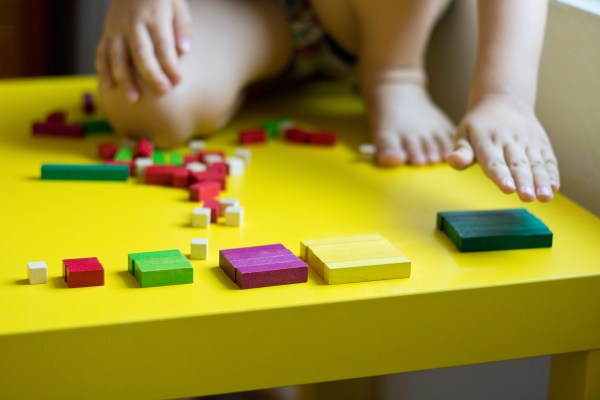
When we introduced Cuisenaire rods (a really great math manipulative, by the way – I grew up using these with the Miquon math curriculum and have always felt that they gave me a strong conceptual foundation in mathematics) for the first time this week in preparation for more kindergarten-type activities, this difference in their inclinations was immediately evident.

Limerick went through each color rod, noticing how long each one was as compared to the small white unit blocks. When he reached the longest rod, he began to line up the smaller rods next to it, to see how he could split it up. Ten is ten groups of one, he realized, and five groups of two, but when you try to split it into groups of three you end up with one empty space.

We made squares (one group of one, two groups of two, three groups of three, etc.) and talked about the difference between the perimeter of a shape (how long all the edges are, put together) and its area (how many white unit squares could fit inside it).

IMG_0239.jpg

Meanwhile, Rondel was using different sizes and color of blocks to retell the story of the Three Little Pigs with house-building fleas and a predatory lion (I think he chose fleas because they are too small to see, and he didn’t have any prey animal toys on hand to use with the lion figurine). He went through all the steps of the story with sound effects and drama, creating and destroying as necessary, completely immersed in his imagined world.

When the boys play together, I see these inherent differences leading to growth in each of them. Rondel’s love of imagination draws Limerick along with him into wildly creative and unrealistic pretend games, while Limerick’s fascination with numbers and patterns motivates Rondel to learn the vocabulary and concepts of math also. It makes me glad all over again that they have each other to grow up with.

So what are we learning, this Wednesday? We are learning about how numbers work together, how they split apart and recombine in consistent ways. We are learning about the trial and error it takes to finally build a house that can keep out a powerful lion. And we are learning about each other, and how we can help each other learn in grow in different ways.

Posted in book lists, family life

book-based activities: troll cupcakes!

The main branch of the Mesa public library system – our family’s current go-to library – does an excellent job of displaying children’s picture books to catch the attention of kids and parents alike, and additionally of rotating those picture books to highlight different excellent choices every week. I’m sure if I went to the library two days in a row I would notice at least some of the same options on display, but with our current 1-2 week interludes they are always all unique. With three little ones to keep an eye on, it is much easier for me to grab a few of the display books that look promising than it would be to scan the shelves (although I try to do that too, usually when we’ve found an author we enjoy).

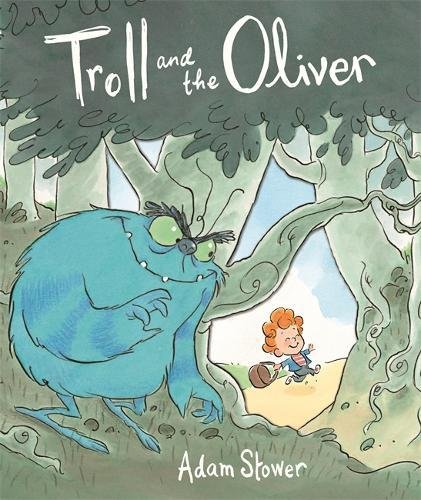
On our most recent trip to the library, we noticed a book that caught my eye for both its artwork and the clever twist hidden in its title: Troll and the Oliver, by Adam Stower.

trolloliver

It’s just a little thing, using the article for the person in the story instead of the monster/troll/villain, and it made the boys laugh too.

The story is that of a troll attempting to catch a small boy named Oliver, who continually eludes him while singing songs about it. At the end of the book, after a hilarious turn of events, the two of them discover that trolls love cake, and they end by baking cakes for all of the trolls in the woods. And after the story ends, the author includes a recipe for cupcakes, along with ideas for decorating them to look like trolls! Needless to say, my boys were adamant that troll cupcakes had to happen.

So, with a few alterations to the recipe (which had no leavening agent – is that normal?), and a trip to the grocery store for some cupcake topper decorations, we made it happen!

IMG_0253.jpg

I have a tendency to let myself get carried away in the current of the kids’ excitement, so per their request we made twelve different colors of frosting (one for each cupcake) so that each troll could be truly unique. Rondel made sure that everyone got to pick the colors they wanted without choosing a color someone else already had, Limerick discussed the intricacies of color mixing, and Aubade tried to eat the frosting by the spoonful every time I glanced away from her.

Somehow we managed to get frosting on all the cupcakes without completely covering the kitchen in it, and we even were able to decorate the cupcakes instead of simply eating all the decorations plain first! (You should see the kids when we decorate Christmas cookies… the vast majority of the sprinkles seem to end up inside them rather than on the cookies.) Rondel decorated all of his, Limerick and Aubade each did one, and I did the rest. Aubade ate hers before I got a picture, unfortunately… although to be honest it is good she ate it right away because she had managed to lick the whole top of it before I frosted it!

Aren’t they adorable? The fuzzy ones have shredded coconut for their fur – I liked especially the texture from the extra wide flakes. I do think overall that either slightly bigger cupcakes (these were quite small, even on top) or slightly smaller decorative objects would make things easier, as would slightly moister frosting (and more of it per cupcake) to help things stick.

All in all it made for a fun morning, if also a lot of dishes 🙂 Rondel is already asking when we can make them again, and it’s only been three days! And I have to say, tying a book into normal life in such a fun and memorable way can only serve to make reading even more appealing and exciting than it already is.

What are some of your favorite picture books to bring to life, and what do you love to do with them?

Posted in musings

rereading 1984

I first read Orwell’s 1984 when I was 12 or 13, in 8th grade, around the 9/11 terrorist attack, and I read it again, in high school, but I hadn’t read it since until this year because of the intense emotional memories I have associated with it. As a young teenager reading the novel, I missed a lot of the subtlety and was simply struck with the horror of a system that was so completely in control of people that it could torture and brainwash them into not just obedience to, but complete assent with and even love of that system. Having grown up in a privileged and comfortable environment, it was difficult for me to comprehend that there could be a society so completely without hope, or that there could be people and governments in the world who inflicted suffering intentionally for their own twisted pleasure – I don’t think the possibility had ever occurred to me before.

Reading the book again now, however, it came to me that the book is (in a backwards, dystopian way, of course) about the nature of humanity and the priceless value of human dignity. Even in the most absolutely totalitarian state fathomable, in a society where all the biological and spiritual impulses of the person are quelled or redirected into emotional and political reactions, humanity bubbles up in quiet wondering, solitary dissatisfaction, fearful reconsiderations. One of the most hopeful moments of the book, to me, was one in which Winston simply observes another human being, noticing all the things that are most beautiful and universal about her, drawing to the forefront her dignity and unique humanity:
“Tirelessly the woman marched to and fro, corking and uncorking herself, singing and falling silent, and pegging out more diapers, and more and yet more. He wondered whether she took in washing for a living or was merely the slave of twenty or thirty grandchildren. […] As he looked at the woman in her characteristic attitude, her thick arms reaching up for the line, her powerful mare like buttocks protruded, it struck him for the first time that she was beautiful. It had never before occurred to him that the body of a woman of fifty, blown up to monstrous dimensions by childbearing, then hardened, roughened by work till it was coarse in the grain like an overripe turnip, could be beautiful. But it was so, and after all, he thought, why not? The solid, contourless body, like a block of granite, and the rasping red skin, bore the same relation to the body of a girl as the rose-hip to the rose. Why should the fruit be held inferior to the flower?

“[…] He wondered how many children she had given birth to. It might easily be fifteen. She had had her momentary flowering, a year, perhaps, of wild rose beauty and then she had suddenly swollen like a fertilized fruit and grown hard and red and coarse, and then her life had been laundering, scrubbing, darning, cooking, sweeping, polishing, mending, scrubbing, laundering, first for children, then for grandchildren, over thirty unbroken years. At the end of it she was still singing.”

Of course for Winston it is all just a temporary interlude, this quest for truth, beauty, and individuality. When every action is observed, it is difficult to step out of line and escape for long – and Winston has no idea of where to look for help, or what actions to take, except to follow the confused and tangled pathway of his beaten-down heart and neglected spirit. It is inevitable that he should be caught, and broken, and converted, no matter how he tries to resist. And while they are torturing him, they share with him one of their secrets – the truth, to be honest, of the opposite aspect of humanity from what Winston saw in the poor washer woman. For humanity has ever been a two-sided coin: created in perfection, fallen into all kinds of cruelties and apathies.

“‘Power is not a means; it is an end. One does not establish a dictatorship to safeguard a revolution; one makes the revolution in order to establish the dictatorship. The object of persecution is persecution. The object of torture is torture. The object of power is power.

“‘[…] How does one man assert his power over another, Winston?’

“Winston though. ‘By making him suffer,’ he said.

“‘Exactly. By making him suffer. Obedience is not enough. Unless he is suffering, how can you be sure that he is obeying your will and not his own? Power is in inflicting pain and humiliation. Power is in tearing human minds to pieces and putting them together again in new shapes of your own choosing.'”

It isn’t hard, these days, to think of all kinds of situations in which those words ring true. It is the expression of our worst impulses as parents, teachers, or employers. It is present every time innocent or ignorant people are tortured for information, or held without trial, by countries that claim to be just. It runs insidiously through the background of every attempt to rationalize policies that are needlessly harsh, or that sacrifice human dignity to efficiency and social order.

In the end, of course, Winston dies loving Big Brother. Thirteen year old me was shell-shocked by that for a long time. I have an inkling of an understanding, now, how hopelessness can finally drive a person so far down that they sabotage their own being to escape its torment. But when we live in a society that still claims to value justice and mercy, it is our crucial purpose to hold fast to Winston’s initial realization that there is beauty in everyday family ties, in the resilience of the human person enduring in love. It falls to us to close our eyes and ears to the seduction of power, and (as much as lies in our power) to prevent our society and government from falling prey to those sirens. For us, in the real world, where hope still lives, the loss of all that is good and true and beautiful about humanity is not yet inevitable.