Posted in book lists, family life

book-based activities: troll cupcakes!

The main branch of the Mesa public library system – our family’s current go-to library – does an excellent job of displaying children’s picture books to catch the attention of kids and parents alike, and additionally of rotating those picture books to highlight different excellent choices every week. I’m sure if I went to the library two days in a row I would notice at least some of the same options on display, but with our current 1-2 week interludes they are always all unique. With three little ones to keep an eye on, it is much easier for me to grab a few of the display books that look promising than it would be to scan the shelves (although I try to do that too, usually when we’ve found an author we enjoy).

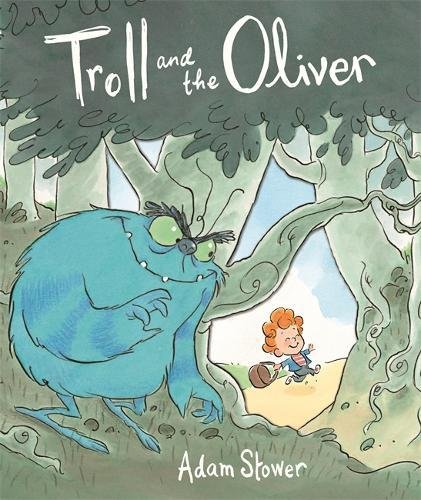
On our most recent trip to the library, we noticed a book that caught my eye for both its artwork and the clever twist hidden in its title: Troll and the Oliver, by Adam Stower.
trolloliver

It’s just a little thing, using the article for the person in the story instead of the monster/troll/villain, and it made the boys laugh too.

The story is that of a troll attempting to catch a small boy named Oliver, who continually eludes him while singing songs about it. At the end of the book, after a hilarious turn of events, the two of them discover that trolls love cake, and they end by baking cakes for all of the trolls in the woods. And after the story ends, the author includes a recipe for cupcakes, along with ideas for decorating them to look like trolls! Needless to say, my boys were adamant that troll cupcakes had to happen.

So, with a few alterations to the recipe (which had no leavening agent – is that normal?), and a trip to the grocery store for some cupcake topper decorations, we made it happen!

IMG_0253.jpg

I have a tendency to let myself get carried away in the current of the kids’ excitement, so per their request we made twelve different colors of frosting (one for each cupcake) so that each troll could be truly unique. Rondel made sure that everyone got to pick the colors they wanted without choosing a color someone else already had, Limerick discussed the intricacies of color mixing, and Aubade tried to eat the frosting by the spoonful every time I glanced away from her.

Somehow we managed to get frosting on all the cupcakes without completely covering the kitchen in it, and we even were able to decorate the cupcakes instead of simply eating all the decorations plain first! (You should see the kids when we decorate Christmas cookies… the vast majority of the sprinkles seem to end up inside them rather than on the cookies.) Rondel decorated all of his, Limerick and Aubade each did one, and I did the rest. Aubade ate hers before I got a picture, unfortunately… although to be honest it is good she ate it right away because she had managed to lick the whole top of it before I frosted it!

Aren’t they adorable? The fuzzy ones have shredded coconut for their fur – I liked especially the texture from the extra wide flakes. I do think overall that either slightly bigger cupcakes (these were quite small, even on top) or slightly smaller decorative objects would make things easier, as would slightly moister frosting (and more of it per cupcake) to help things stick.

All in all it made for a fun morning, if also a lot of dishes 🙂 Rondel is already asking when we can make them again, and it’s only been three days! And I have to say, tying a book into normal life in such a fun and memorable way can only serve to make reading even more appealing and exciting than it already is.

What are some of your favorite picture books to bring to life, and what do you love to do with them?
Posted in family life

and just like that he’s five

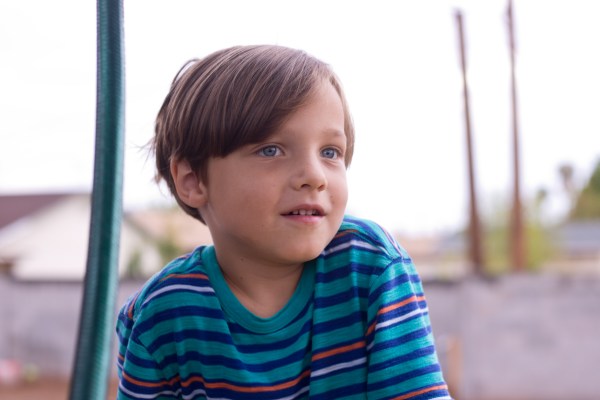
This month, my baby boy turned five years old. Five years ago now I heard his choked little cry before the nurses cleared out his throat, and saw his little round and red face scrunched up at me for the first time. Five years ago I fell completely, deeply, in love with this tiny new person, and he fell completely and deeply back in love with me (as babies are wont to do; the reciprocity is helpful for both parties 😛 ). And as he grows older, and as I learn more about him as he comes to understand himself and discover the world around him, I find that I only love him even more.

IMG_0113

It is so wonderful to watch him as he grows in every way – social, emotional, intellectual, spiritual, and physical. This year he has begun singing, albeit in more of a “sustained talking” manner to borrow from The Music Man, and even sung Happy Birthday to his Bisabuela Carmen on the phone for her birthday! He is learning how to compromise and be flexible when playing with others (though I think people never stop needing to improve here), and how to establish rules and set patterns that minimize the chances of unexpected necessary compromise or change. He and Limerick have begun to do things in alternating patterns – who gets to snuggle with me at bedtime, for example, or who gets to pick first when they’re selecting toys – so that the negative event isn’t a surprise and the positive event can be anticipated. He even told me the other day that sharing (by which he meant both of them drawing from the same pile of toys) was hard for him, but when they could sort the toys into two piles first it made it a lot easier for him to play with Limerick, and I was proud of his self-awareness.

He has a keen and accurate memory, often reciting back to me his favorite books, or using phrases he’s heard from me in conversations with others. He’ll also take a plot line or a story from a book and alter it ever so slightly to make a new story – for example, retelling the tale of the Three Billy Goats Gruff with a different animal like a pig or a cow for the main character. As the elements of the story become more comfortable to him, he’ll start altering them even more: building bridges with his toys and having a T-Rex lie in wait underneath them, for instance. It is so fascinating to me to watch his play incorporate the events, stories, and discussions of his life, giving him the chance to explore, process, and understand them in more depth.

He is an ardent collector of both facts and things, storing up information in his database of a mind, and storing up found treasures in a many-compartmented fold-open fishing box that he received for his birthday. Anything interesting or strange or beautiful, whether a concept or an object, is bound to end up in his collection, to be catalogued, admired, and shown to others with the excitement of revealing something precious and wonderful.

He is quick to anger, a trait he inherited from me, but his temper is paired with a compassionate heart. He is quick to apologize, and is often angry not on his own behalf but because someone else is hurt. I have seen him yell at Limerick because Limerick made Aubade cry; I have been lectured by him if I have been too rough and made Limerick upset; and he will physically attack anyone who hurts someone he loves. Unlike me, he seems willing to let his anger go as quickly as it comes – but like me, he can be moved to tears by the plight of even a fictional character (he was so devastated when he realized Littlefoot’s mother dies in Land Before Time… he tried to deny it and ended up crying in my arms.)

He is probably going to lose his idiosyncratic pronunciations of words soon, as he grows older, and I’m going to miss a lot of those. I mean, he’ll be easier to understand, but the way he says “booga” for “beluga” makes me smile every time I hear it 🙂

He has become an adept builder this year, with Viahart brain flakes as well as with Duplos, Legos, and wooden blocks. He can make representative animals with Duplos that are as good as anything I can create, and invents dragons and monsters with the brain flakes that incorporate features from around the animal kingdom – crest feathers, spikes, beaks, wings, tails, and so on. And everything he builds has a voice and a name and a place in his imaginary world for the day; he has shown little interest in the symmetrical shapes, stars, and patterns Limerick and I design.

And of course, he loves animals (though, as he would say, not as much as swimming or Mommy) – animals close and tangible, animals at the zoo, animals in books, animals in movies, animal toys, animal pretend games. He remembers which animals give birth to live young and which lay eggs; he remembers which animals hunt and which prey they are able to catch; he remembers what size many animals are, and which animals live near each other. Sometimes if I don’t remember some detail about an animal, but suspect that it had come up in one of the documentaries he loves, I’ll ask him about it, and more often than not he’ll know the answer. He also creates his own animals, absurd menageries of bears as big as a million houses, or monster fish who can hunt blue whales, and regales us with tales of their adventures.

IMG_0109

His energy and imagination are abundant and bursting with life – which is pretty much just how things should be when a person reaches five years old – and he knows how to lose himself in happiness and wonder. It’ll be exciting to see where this next year takes him!

Posted in sqt

{sqt} – seven quick thoughts from a quick week

I’m linking up with This Ain’t the Lyceum today – head over and read some more!

  1. I’ve been tapering off my antidepressants over the past month and a half (my doctor recommended trying it after a year, and I waited until warm sunny weather would give me some help), and I think it’s going well! I have noticed some old thought patterns re-emerging, but they aren’t strong and all-consuming, and I’m equipped to process them effectively thanks to therapy. I should be completely off by the end of August, and probably due to my long and slow journey away from them I’ve avoided the unpleasant symptoms one can experience when abruptly messing with one’s serotonin pathways 😉
  2. Aubade had yet another dermatology appointment this week and we finally had good news: it appears that her mysterious rash is gone for now (or at least controlled without continued daily use of heavy steroids), and her skin is healthy. We’ll keep an eye on it in case it was triggered by some allergen or environmental factor that might be an issue again next spring, but at least for now she should be comfortable and unmedicated except for moisturizing cream.
  3. In case anyone else needs allergen-free lotion, we’ve been using Vanicream and I like it a lot. It doesn’t have lanolin in it, which can apparently irritate or trigger some people, and it’s probably all completely artificial, but it has a good feel and has definitely helped Aubade’s rash of mysterious origin.
  4. In non-medical news, I got a new camera!! My old DSLR was 8.5 years old and still working great, but there have been some advances since then 🙂 and it is nice to have the added pixels in the sensor especially in low-light settings. The boys have even posed for a me a few times (or at least, smiled at the camera and then asked to see themselves).IMG_0174
  5. It has been hot here, and humid since we’re in between waves of the monsoon, but we have to get out of the house so we’ve been playing a lot out back with the hose. We’ve rigged things so the hose will spray on the slides and the large wading pool will tuck underneath the slides, so the boys can go up and down the slides endlessly to much splashing underneath the mist.
  6. I’m attempting to babysit two little girls from church a few days a week, Limerick and Aubade’s ages; we had our first afternoon together this week and it went so well (despite my bone-crushing anxiety the night before)! All five kids played together well, in kind of a parallel play sort of way, and there was only one instance of quarreling the entire time. I’m sure it won’t always be that smooth and easy, but it was a good start, and left the boys anticipating the next playdate rather than dreading it. From the other mom’s perspective, it’s a chance for her to work and pay off debt; from my perspective, it’s a chance for my boys to make friends and practice social skills in a low-stress environment, and an opportunity for me to contribute monetarily a bit more to the household. Maybe I wouldn’t care about that so much if I were an excellent homemaker… but I’m really not 😛 In fact it’s tempting to use some of the extra income to pay someone to clean the house every other week or so…
  7. We qualified for ESA funds for Rondel for the year! In Arizona, if a “special needs” student (one who would have an IEP) isn’t enrolled in a public school, they are eligible for a certain amount of money to use for curriculum and therapeutic services. Since we’re homeschooling, we can use some of it for some good books and manipulatives, and since health insurance can be finicky about approving therapy, we can also use it for his speech therapy. It’s not a huge sum of money, but it’s enough to be very helpful with things. The eligibility criteria are very specific, but if you meet them the application process is very simple and straightforward, so I would encourage any homeschooler in Arizona with a developmentally delayed child to look into it.

How has your week been? What do you do to cope with the summer heat? What resources have you found in your state/country to support the needs of differently wired students, especially outside the public education system?

Posted in family life, information, sqt

{sqt} – here comes the monsoon!

People who don’t know Arizona well speak of our weather dismissively (particularly the summer weather). It’s hot enough that significant numbers of people head north for the summer, while compensating for their insecurities by arguing that their northern humid summers are actually worse. Even people who live here but have never had a chance to really get to know the seasons tend to treat the summer as a penance to be endured, a payment for the gorgeous winters, spent holed up inside thankful for air conditioning and swimming pools.

I will not debate the wonders of air conditioning and swimming pools 🙂

But I do think that Arizona summers are inherently beautiful and wonderful – they are just a lot more difficult to understand and fall in love with than most seasons in most other places. Maybe I identify with them a bit…

And now, we are fully entered into the most glorious part of summer: the monsoon season, the summer rains, the desert’s wet season. So to celebrate, here are seven quick takes about this season that I feel is so sadly neglected, forgotten, and dismissed.

  1. April, May, and June are without a doubt the official “dry season” here. The average monthly rainfall drops to 0.25 inches for April and plummets to 0.04 inches for June (which is another way of saying that every few years there will be rain in June, but don’t count on it). While daytime temperatures steadily climb throughout these three months, reaching 110 easily by mid-June, the lows stay in the 60s and 70s so mornings and evenings are still cool and comfortable. And as long as you stay hydrated, the highs are tolerable also. I have commuted by bike through the summer (coming home around 3-4 in the afternoon) and never felt more alive.
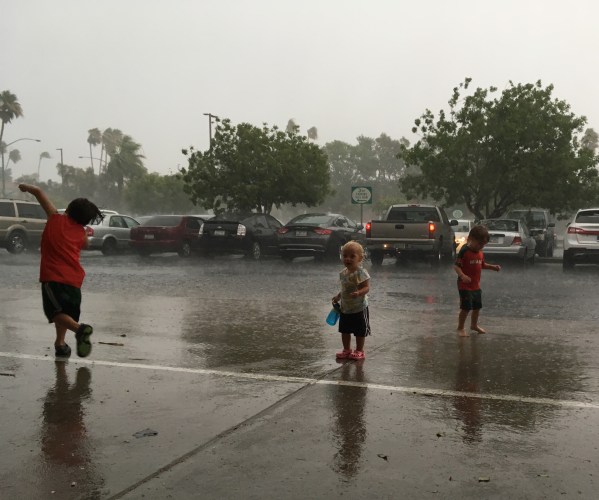
  2. Right when you start to feel that the heat has been going for too long – when the ground is cracking and the plants look thirsty even with irrigation – clouds start to blow in over the horizon. The dates are variable, but it is typically in early July. You step outside one morning and your glasses fog up like you’ve somehow teleported to Miami in your sleep. That afternoon you get an emergency alert on your phone for dust and poor visibility, and 30 minutes later when you look out the window all the trees are bowing low, the sky is slate gray, and the air is slanted lines of water. There may even be hail. This is when every child who isn’t chained down dashes outside to run and dance until they are soaked to the skin and shivering with the unexpected cold.

    FullSizeRender
    This was Monday, at the library. I glanced up and saw the rain and threw all the books in a bag and told the kids to run outside because IT’S RAINING GUYS IT’S RAINING! Don’t judge – we hadn’t seen rain since February!
  3. Remember the dust alert I mentioned above? They are triggered by impending dust storms (also called haboobs), and here’s what they look like from an aerial perspective:
    Massive Haboob hits Arizona
    This was the storm that hit us Monday. Photo credit Mike Olbinski, from this article.

    When I was a kid I used to go out in every dust storm I could just to feel the thrill of the wind and dust flying into me. Granted, it’s not the best if you’re asthmatic, and it spreads Valley Fever, but it can make you feel the power of wild nature even in a suburban backyard so it’s pretty awesome. There are also some funny side effects of having so much dust in the air – this week my coworkers all had to leave the lab in the middle of the storm because a fire alarm thought the dust from the haboob was smoke from a fire and went off!

  4. The ground, not having been rained on for five months, is understandably unprepared for such a torrential downpour. Roads flood (although they drain quickly once the rain stops), and any narrow places in the desert will also flood. Canyons or washes (essentially the drainage channels of the desert) are the worst places to be when it rains, and people have been killed in the sudden flooding. So if it starts to get cloudy and a cool wind blows, climb to high ground as fast as possible. In more developed places, you end up with lakes instead of yards 🙂
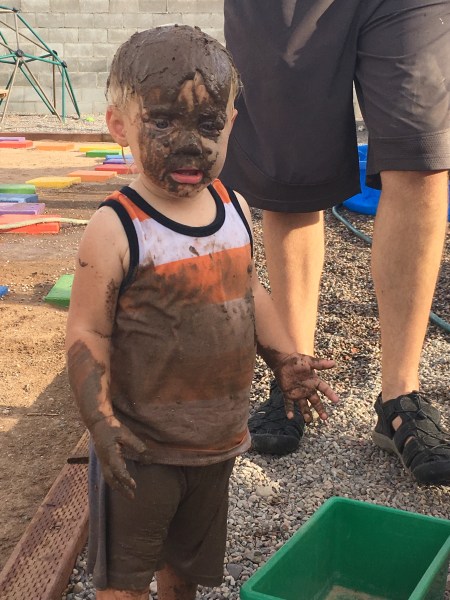
  5. Monsoons come in systems, so you’ll be hit with a huge storm like the one above from Monday and then have smaller rainstorms for the next few afternoons. It’s sort of like earthquakes and aftershocks. This week, we had the major storm on Monday and we’ve had at least a small shower every day since. Four consecutive rainy days after five months of nothing! It’s a change in pace, to say the least. It’s also necessitated a lot more cleaning up as mud gets everywhere. If I lived somewhere with wetter weather, I think I would need a mudroom!

    IMG_3601
    Considering she voluntarily became this muddy with only splash-over from the kiddie pool to help her, you can imagine what happens every time it rains…
  6. The wet monsoon season typically lasts through early September, although the actual storms only come every couple weeks. In between, it is just hot and humid. The humidity right now is 44% and even though it is 9:30pm and the sun has been down for over an hour it is still 91 degrees. So while June fits the Arizona stereotype of “dry heat”, we definitely see more of a humid heat in July – slightly lower highs because of the clouds, but significantly higher humidity.
  7. I have discovered that while there are many, many good picture books about the changing seasons in other parts of the world – books about leaves changing and falling off, books about animals preparing for hibernation, books about the first snowfall of winter, books about flowers blooming in the spring, etc. – there are very few picture books of any sort about the desert seasons or even the desert animals inhabiting those seasons. It is to the point that I am seriously contemplating writing my own to try to fill the gap! It’s like me as a woman reading a book with a strong female lead, or an African American child reading a book where the people in the pictures look like her. This is the place, the environment, the habitat that my children know, where their roots run deep, and while all the other places are fascinating and the books about them are wonderful, a book that resonates with their lived experience – with their home – would be special in a different and treasured way.

I’m joining the SQT link-up at This Ain’t The Lyceum today so head over and read the other blogs! Also, if you live in a place with under-appreciated or non-standard seasons, please share! I’d love to hear other people’s experiences 🙂

Posted in wwlw

what we’re learning wednesday: episode 1

As a way to document our unschooling journey in case we need records or information for doubtful friends and family, as well as for our own memories, I’m going to showcase once a week some of the things we’ve been learning. It may be through conversations, books, TV, exploration, or more (and I’ll try to mix it up week to week!), since our goal is to be whole-life learners. Hopefully it may also provide some ideas for others, especially when I’m sharing resources we love!


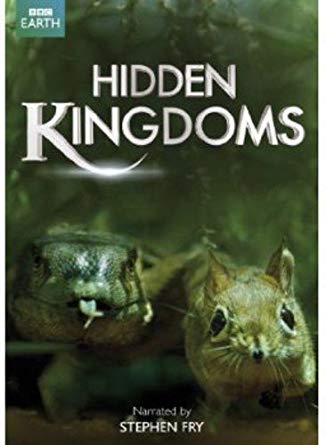
In a search for a new animal documentary that Rondel “hadn’t even seen one of yet!”, we discovered BBC’s show Hidden Kingdoms.

hiddenkingdoms

I know this show generated a bit of controversy because it is more scripted and less observational than a typical nature documentary – but almost because of that it is an excellent introduction to these animals for people (especially young children) who may not have enough background information about them to appreciate something purely observational. These episodes showcase the unique abilities and challenges faced by its “stars” in a very compelling way, while still remaining biologically accurate. And the extra feature at the end of each episode, explaining how they filmed parts of the show, is fascinating in its own right!

Some of our favorite facts:

African sengis create trails in the grass for themselves to make it easier to run away from predators or catch prey – it is essentially a maze that they know by heart. (All of Rondel’s current imaginary animals are now building trails for themselves in the grass too.)

Arizona grasshopper mice are immune to scorpion venom and will fight, kill, and eat scorpions! They also howl to claim their territory, somewhat like wolves. (All three kids will now run through the house howling in a very high and squeaky way, telling me they are grasshopper mice.)

When chipmunks fight, they move so fast that the human eye can barely make out what is going on, but in slow motion you can see incredible twists and turns they are performing in midair. It’s absolutely amazing.

Marmosets (monkeys small enough to sit in your hand) who live in cities are often pursued by street cats, but are typically agile enough to escape. (Rondel uses stuffed animals to imitate this, constantly telling me how so-and-so escaped through his “amazing agility”.)

All small animals move at a much faster pace than large animals. They run faster compared to their body size, their metabolism is faster, and so on.

Without dung beetles, the African savanna would be pretty disgusting! It’s so neat that a creature exists whose purpose is simply to clean up (and eat) other animals’ poop, making the world better for everyone. They may appear small and lowly, but they are determined, strong, resourceful, and crucial for the ecosystem. Hmm… that may be a good object lesson someday 😉

What have you been learning this week? I’d love to hear about any fascinating, weird, exciting, or unexpected fact you’ve learned – or about any great resource that has facilitated your learning!

Posted in family life

an oasis in the desert

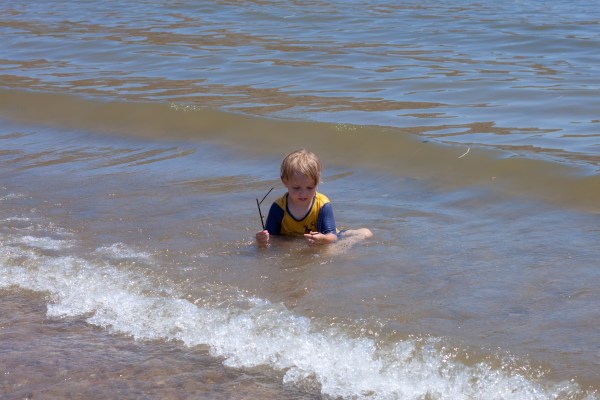
I took my children to the lake last Thursday.

Yes, even here in the desert we have lakes! They are mostly manmade and act as water reservoirs… but they also serve as beautiful oases, especially when temperatures start rising.

IMG_9519

My sister-in-law joined us for a couple hours with her four kids, which was especially good when Limerick got in too deep and started panicking and needed me – that extra pair of adult eyes and hands makes a big difference sometimes. It was also fun for us just to spend time with them! But we stayed after they needed to leave and it was equally wonderful in different ways.

IMG_9554

I mentioned our day trip to someone and they instantly reacted with the words, “what a chore!”

I still haven’t been able to figure it out.

It isn’t a chore to spend time outside, in the natural unbuilt environment, enjoying the beauty of creation. In fact, it’s something I’m constantly striving to do more often! I want my children to love and respect the natural world, to feel connected to it and desire to protect and preserve it; they won’t if they are never exposed to it. And we were so lucky on this particular day to be visited by a herd of wild horses. I mean, how often do you get to see large wild animals like that? We were all in awe – even Aubade kept pointing and exclaiming in wonder as they moved through the water.

It isn’t a chore to take my children out on an excursion – at least not this type of outing. Rondel and I both struggle in crowded indoor environments, or in highly structured populated activities, because of the constant sensory bombardment and social expectations. Limerick and Aubade are both still noisy constantly-moving little people (as they should be!). So when we’re outside, away from the artificial stimuli and the obscure social norms of the city, free to make the sounds we want to make and move our bodies in comfortable ways without bothering anyone, it is incredibly relaxing and refreshing.

It isn’t a chore to be with my children, to let go of my own pursuits and just focus on them for an afternoon, enjoying the small details of life with them. They remind me how exciting a lake bed scattered with shells can be; they delight my heart with their surprised laughter at things that are now old and familiar to me. After you’ve been to the beach a few times, you anticipate the way the waves knock into you; when you’re only 1 or 3 or 4, each new wave comes as a surprise and a gift.

IMG_9614

And it certainly wasn’t a chore to watch Rondel and Limerick playing together for hours, intent on their exploration of this new world, sharing it with each other as best friends do. On the contrary, it was a gift for me as a parent to see my children growing and deepening in their relationship with each other in such a natural and unforced way.

I know these days are fleeting. For only these few years will I have such a strong influence on their lives, and such a deep connection; I don’t want them to stay little forever, but I do want to live these years with intentionality. Of course it takes a bit of planning and organization to take three small children to the lake for the afternoon. But the riches all of us reap as a result far more than outweigh that work of preparation. For us, places like this are more than just real and physical oases in the desert: they are also oases of renewal for our souls.

Posted in book lists, family life

literary explorations – traveling the world with picture books!

Inspired by the great resource Give Your Child The World, a globally-inspired picture book anthology by Jamie C. Martin, as well as by Rondel’s fascination with animals from around the world, we had a sort of Africa focus in our home a couple weeks ago. Martin is actually hosting a virtual book club spending one week on each world region over the summer, which I’m attempting to keep up with, but I’m woefully unprepared for Asia this week…

Anyway, Africa was a great place to start since most of Rondel’s favorite animals live there, and it was a natural connection to then begin reading stories involving those animals and the people who live near them. We also experimented with some African recipes (there is a huge variety of cuisines across the continent, so we were barely able to explore any of it and it still felt like a lot!) and crafts (but my kids don’t do so well with directed crafts). Of the books we could find from Martin’s recommendations at our library, two really stood out as our favorites: Bringing the Rain to Kapiti Plain, a Nandi folktale retold by Verna Aardema; and Wangari’s Trees of Peace, a brief pictorial biography of Wangari Maathai, a Kenyan Nobel Peace Prize laureate who helped restore land degraded by irresponsible logging (and in the process helped maintain peace and prevent poverty in her home country), by Jeanette Winter.

The biography of Wangari is written at a level that even Limerick, at 3.5, can understand and follow along with, so many of the details of her life have obviously been omitted – this is just the general arc of her story. But those spare elements have been woven together, with the help of beautiful images, to create a compelling narrative. Every time we read it (which was often, since Limerick kept requesting it), Rondel would be devastated when Wangari returns to Kenya after studying abroad to find the forests cut down, the village women walking miles for firewood and food, and desert encroaching upon the arable land. The boys’ eyes would widen, riveted on the book, when Wangari stands “tall as an oak” to protect the remaining forests, when the government officials beat her and jail her for protesting their course of action. And at the end, when millions of trees spread across Kenya again, the boys would be all smiles and laughter, imagining the birdsong in the forest. So I would highly recommend it as a brief introduction to Wangari and modern Africa for young children.

In addition, it has given me a point of comparison when talking with the boys about current events in our own country. When Wangari is jailed, the book tells us that “Right is right, even if you’re alone,” and the whole story demonstrates how the right thing to do can sometimes be the opposite of what the government or people in authority want to do. So when the boys heard our president talking for a few minutes before I changed the radio station (I usually only listen to talk radio when I’m alone in the car), and asked questions about what he was saying, I could explain his position and then also explain how I thought it was wrong, morally wrong if not legally wrong, and how his power and authority didn’t make all of his beliefs or actions morally right and good. And I was able to tell them that unlike Wangari, people like us would be able to peacefully protest those wrong things without fear of imprisonment, because our nation makes space for differing opinions and protests (ideally, of course, but since they’re 3 and 4 they get the idealized version on some things still).

Wangari cared deeply about her country – she loved it – and that’s why she was able to work for its improvement with such persistence, devotion, and passion. She started with small things she knew she could do (like physically planting new trees to replace the harvested ones), and let her love guide her into bigger and bigger forms of activism. And when I look around me and see people cynically apathetic about this country, it makes me want to instill in my children a love for their country and a passion to make it better, in small personal ways and perhaps even in big political ways. It is only with the love and dedication of people like Wangari that we can heal our culture, our environment, and our world; I’d much rather my children be like her than like the enforcers of government authority who beat and imprisoned her.

At this point I’m doubtful that any other picture book we find for this book club will influence our family quite as much as this one has! But every one we’ve managed to find so far from Martin’s anthology has been worth a second read at least; we’ve learned a lot, and we’ve laughed a lot, and we’ve filled our home with beautiful pictures and stories, and there isn’t much more to ask for from a picture book 🙂

At the time of posting, Amazon has Give Your Child the World available on Kindle for only $0.99! It is a resource worth far more than that.

Posted in family life, sqt

starting our summer strong

Because Rondel was in zoo camp every morning this week (which, by the way, was a major success – he absolutely loved it), I got to spend some more focused time with Limerick and Aubade, and they got to spend more time playing together. Normally, Rondel does most of the talking and directing when the kids are playing, so I was curious what would happen in his absence; what happened was that Limerick filled in the gaps quite easily and just about talked non-stop, especially towards the beginning of the week. And it was nice to have the chance to listen to him without having to simultaneously try to listen to Rondel… it can be a bit much when they are both talking to me (and demanding a response!) at the same time.

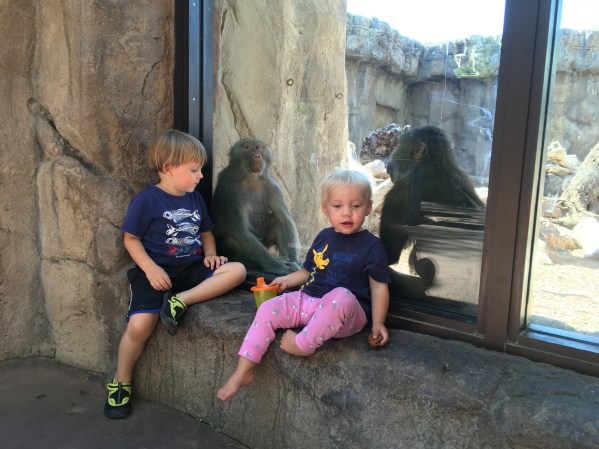
  1. On the first day, we stayed at the zoo and watched the Andean bears for a long time. Limerick decided he would be an imaginary creature called a buck bear, and spent at least thirty minutes describing this animal and its habitat to me while Aubade slept. (It is very much an atypical bear, as it has sticky feet like geckos and gills like a fish! Rondel never lets him get away with such aberrations from reality 😛 ). He also was brave enough to sit right against the glass next to the baboon! He’d been watching Aubade interact with her for a while, and had clearly wanted to see the baboon up close himself, but had been too scared to do so. I was proud of him for getting closer even though he was nervous.IMG_3386
  2. On the second day, we came home and just hung out together. We cleaned, we read books, we played with stuffed animals – it was relaxed and fun. (Also, that night we received Rondel’s official diagnosis of autism, after several weeks of waiting.)
  3. On the third day we did more of the same, but stopped in Downtown Mesa on the way home to explore the musical instruments in front of the IDEA Museum. We used to visit there all the time when we lived within walking distance, when Rondel and Limerick were Aubade’s age, but she hasn’t gotten to experience it very much, and judging from her reactions she was very glad we went!

    Yes, I let her choose her own clothes and accessories… apparently oversized T-shirts pilfered from her brothers and metal chain VeggieTales necklaces are in fashion in the 18 month old set these day 🙂 She is so opinionated about what she wears – and always ridiculously cute in it, no matter how off-the-wall it may seem at first.

  4. On the fourth day of camp we rested in the morning but took Rondel with us down to IKEA in the afternoon! IKEA may be a store, but my children seem to think it is a giant playground. Every couch needs to be sat upon, every pillow smushed, every stuffed animal hugged, and every bed snuggled in. We were just there for some curtains, but we lingered everywhere (and let Aubade take a nice long nap in her carseat in the shopping cart en route!). Then I kept my momentum going long enough to hang and hem the curtains, and make a curtain and valance for the kitchen sink window with some fabric I found in my stash.IMG_3475Here they are all pulled back! Those are south-facing windows… and it’s summer in Arizona… so the curtains haven’t been spending too much time open like this. Even just the white fabric over the sink made a noticeable difference when I first hung it up. And I impressed myself (and probably my husband too) by managing to actually complete a project!
  5. The last day of zoo camp I missed out on drop off, pick up, and sweet time with the littles because it was my husband’s day off and my day to go in and work. Not quite as fun, or not fun in the same way, but I did get to consult with a colleague from a different core facility and develop a project and sample tracker for their instruments and workflows, which was both interesting and satisfying. Since I’ve started working such limited hours, and partly from home, my position has shifted a bit away from the biology lab work to the information systems behind the lab work, and I’m finding it really engaging.
  6. It feels like we began the summer at a sprint, and I think it is just going to keep on this way as we have swim lessons and a visit from my sister in June, and my parents are funding a second session of zoo camp for Rondel as a birthday present in July. But honestly the heat is so intense that having planned activities helps prevent me from doing nothing but lounging around the house eating ice cream! Not that ice cream is a bad thing, necessarily… I finally jumped on the nice cream train this summer, one night when Rondel was emotionally collapsing over the absence of ice cream in our house and I knew there were tons of frozen bananas just calling to me. The plain vanilla flavor isn’t my favorite, but the chocolate peanut butter version tastes like decadent chocolate ice cream, with the added bonus of being healthy enough that I can serve it to the kids for lunch and become the coolest mom ever. I don’t really have a recipe, but in essence I just blend up frozen banana chunks in the food processor, with a bit of milk if necessary, and then add in a huge scoop of peanut butter and a couple tablespoons of cocoa powder. We’ve made at least three batches in the past two weeks, and would have made more if we hadn’t run out of bananas and had to buy more, wait for them to get nice and overripe, and then wait for them to freeze! My skepticism regarding this whole concept has been removed by the goodness of nice cream.
  7. And zoo camp itself? Well, every morning Rondel cooperated with me to get dressed and eat his food, he ran ahead into the group to participate, and he greeted me back at the end with endless excitement, ready to tell me about everything he did. He got to pet, hold, and feed a huge variety of animals (from bunnies and boa constrictors to sting rays and giraffes); he drew pictures; he played games with other kids; he got to bring home a sting ray tooth that he sifted out of the sand in a pool; and he got to see so many animals that he loves. In short, he got to practice social skills and adaptability while also being in one of his favorite places in the world, getting to spend time focused on animals without any distractions. I just wish I had pictures!

What are your favorite ways to deal with the heat, especially with little kids? They don’t approve of me just lying in the sun soaking it up, but running around when it’s 100 degrees outside gets tiring fast! And do you have any awesome plans for the summer?

Linking up with Kelly at This Ain’t The Lyceum today!

Posted in family life, information, musings

responding to an autism diagnosis

We received Rondel’s clinical report today, with his official diagnosis of autism spectrum disorder. It was definitely not unexpected, and in many ways it is a huge relief to finally have it on paper with a physician’s signature and notes.

But it is also very hard to read through the report and take in the medical assessment of my child, who I see in all his brilliance and originality and intelligence, and who is being evaluated in light of his struggles and deficits. It is the very embodiment of the pathology paradigm, particularly given the list of recommendations at the end of the report that includes ABA, a therapy that is consistently attacked by autistic adults who experienced it as children. It reminded me of why we used the NODA app for diagnosis in the first place: so that Rondel wouldn’t need to be exposed to the pathology mindset, but would still be able to obtain a diagnosis for support, self-advocacy, and understanding. I just forgot that I as the parent would still have to deal with all of that negativity on his behalf, and buffer him against it.

In an ideal world, doctors could still assign the autism label without calling it a disorder. There are definite differences between the way the autistic mind functions – in the way it perceives the world, in the way it processes information, and in the way it prefers to interact with other people and objects – and the way the majority of minds (neurotypical minds) function. What people often miss, including doctors and therapists, is that the autistic wiring comes with its own unique strengths as well as its own unique weaknesses. A diagnostic process that sought to exist within the neurodiversity paradigm rather than the pathology paradigm could look for examples of both these strengths and these weaknesses, to generate a complete picture of the individual, and to help develop specific plans of support for the individual. In other words, for example: you have autism, and so you struggle with sarcasm and implied humor, you have difficulty reading facial expressions, social interactions and small talk take a lot of energy because of how hard you have to work to keep up and fit in, and certain noises and smells make you want to curl up into a ball or run away – but you also have a mind like a steel trap, the ability to make connections between information and ideas, unique ways of solving problems, and intense loyalty towards the people you are attached to. How can we craft your daily routine to take advantage of your strengths without putting too much pressure on you in your areas of weakness? That would be useful and practical support, without pathologizing the condition.

The pathology paradigm shows up in other places than the medical profession, though. Even a shift in the diagnostic process would take a while to seep through the culture – and until the culture changes, a diagnosis of autism is still going to be met by attempts to sympathize over the tragedy of it, doubt (because your child doesn’t look like he has autism), pseudoscientific “cures”, and even blatant disbelief.

What I wish I could tell everyone I know is that I am not sad or upset at all by Rondel’s diagnosis. His mind is different, and it is different in a beautiful and wonderful way. Will he struggle in a neurotypical society because of those differences? Probably so. But with love and practical support, he can also flourish and give to the world using his unique gifts and talents. He has the focus and the interest to immerse himself deeply in a topic and absorb everything there is to know about it. He has the imagination to see past the status quo and envision new ways of being and doing. And he has support around him to help develop his emotional awareness and executive functioning (two things that were a struggle for me well into adulthood).

What I wish everyone knew is that autism doesn’t just look like one thing. It might look like a mostly non-verbal ten year old communicating in one or two word phrases, dumping out every toy box and taking apart every Duplo tower, standing with the outdoor curtains blowing against his cheek to calm his body down, dancing to his favorite music videos, wanting to be part of the social action around him even as it overwhelms him. It might look like a very verbal twelve year old swinging endlessly because the sensation is so enjoyable, singing the same made-up song over and over again because the repetitive loop is comfortable and fun and transitioning to something else is hard, identifying what day of the week any date falls on, and communicating the love of God in profound and beautiful words. It might look like a four year old melting down because the color he used on his picture doesn’t look the way he expected, talking nonstop to manage auditory input, mimicking the meter and pattern of books and songs in his own games with new characters and situations, wanting a parent to snuggle with him every night at bedtime, or demanding animal documentaries at every possible moment. It might look like an adult struggling to focus on assigned tasks at work because their mind is stuck on other less-prioritized projects, getting into arguments with their spouse because of missed non-verbal cues, falling apart at movies because the emotions and sensations are just too strong and overwhelming, crying because they are running fifteen minutes later than they wanted, or developing a new system of project tracking for their lab from scratch and becoming a source of expertise without formal training because of their analytical skills and desire to learn.

Labeling all of those individuals as autistic helps them to obtain the support they need for the shared weaknesses that accompany the condition (weaknesses partially but not entirely due to living in a neurotypical society), but it doesn’t predict what they will do with their strengths and how their lives will play out. We are just as unique as neurotypical individuals in that regard! I believe – and this is why I think the neurodiversity paradigm is so critical – that if we can stop thinking of neurodivergence as disordered we can create better conditions for autistic and other neurodivergent individuals, a culture where all people can receive support in their areas of weakness and be given the opportunity to explore, develop, and contribute in their areas of strength.

What I wish everyone could see is that the autistic way of seeing and perceiving the world is also beautiful. That a person’s thoughts and feelings are equally valid whether they prefer to speak them, write them down, sign them, or use an assisted communication device. That the same processing circuits that cause us to flap our hands or scratch our arms or chew on our clothes to stay regulated are the same ones that allow us to retain incredibly detailed information and connect seemingly unrelated data in relevant and insightful ways. That the honesty and authenticity that keeps us from betraying or lying to the people we love makes up for our tendency to laugh at the wrong moments in a conversation or our inability to pick up on all your sarcasm or implied humor. That while we may experience and exist in a different way than you do, our differences do not make us less than you.

As an autistic adult (without an official diagnosis yet) raising an autistic child (now with an official diagnosis, hooray!), my plan for “treatment” consists mostly of helping Rondel to understand himself and to understand the world around him, cope with the things that are difficult and embrace the things that give him passion and fulfillment; and of prizing the wonderful individual that he is, and giving him the support he needs (right now, practically, speech therapy and mindfulness practice) to keep his areas of weakness from overshadowing and hindering his talents and strengths. It does not and will never include considering him to be disordered because his mind doesn’t function within that narrow range deemed “normal” or “typical” by the DSM.

Posted in family life, sqt

{sqt} – our random happenings

For the quick takes link up this week, some moments and thoughts that were really too small to make up a whole post on their own 🙂

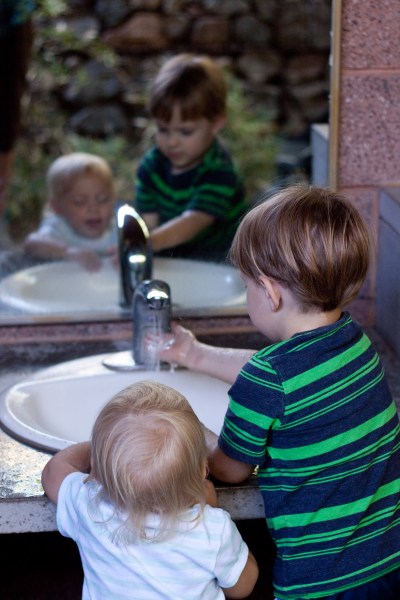
  1. As Aubade grows older, her relationship with Limerick is really beginning to flourish and deepen. He took a while to adjust to having a younger sibling around, but recently he has taken on the older brother role more consciously. If he sees her lying down he will lie down next to her and snuggle; if she is playing with something he will join her; if she is struggling with something he will try to teach her or help her. He will also tell me how cute she is and how much he loves her, and will describe to me all the things she does that make him laugh. She in turn follows him around, wrestles and dances with him, randomly comes up and hugs him, and wants to play with everything he is playing with.

    IMG_9361
    Aubade and Limerick using an automatic sink, backs to the camera, faces reflected out-of-focus in a mirror behind the sink
  2. Non-toy items are apparently the best things to play with these days. Currently, all the forks are spread out on the kitchen table as a herd of fork monsters. They use their long sharp teeth to fight each other to establish dominance, I’ve heard.
  3. Limerick has a significant dislike for shoes, which is somewhat inconvenient now that the pavement is too hot to touch every afternoon. He has one pair he will tolerate when necessary but he takes them off every chance he can find (such as at the zoo, until a zoo volunteer told us it was against zoo rules).
    IMG_9388
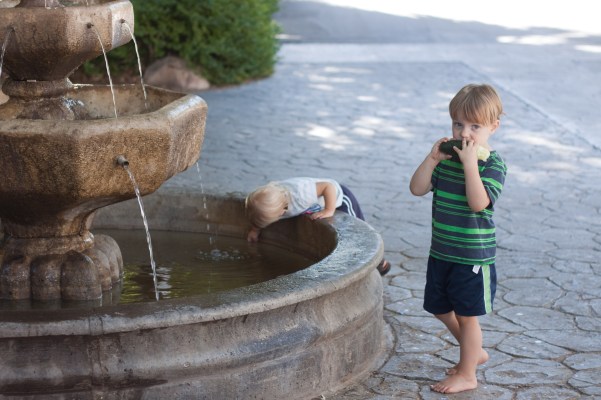
    Aubade is leaning into a large stone water fountain; Limerick, next to her, is looking at the camera while taking a bite out of a cucumber.

    Also, he likes to eat cucumbers like most people eat apples. I’m not going to try to persuade him otherwise!

  4. Rondel’s hair is so long. As in, almost shoulder length! I’m going to be sad when he finally asks to have it cut, I think.
  5. Our anniversary was this weekend! Seven years so far, with four homes, three kids, two jobs, and one degree along the way. We celebrated by having dinner as a family and spending most of it apart with one of us handling a meltdown and the other feeding the two remaining kids. How is that for real life? We are planning on doing something together when my parents are available to babysit, however 🙂
  6. I should not be allowed to go shopping on my own with the kids: I can’t resist when they ask for certain things. In other news, we now have a child-sized floating stuffed turtle that can double as a pool raft that will be living (and swimming) at Grandma’s house…
  7. A couple nights ago I was putting the boys to bed and they both plastered themselves up next to me, to the point where I started to feel panicky. Little kids have high physical touch requirements, and that can definitely be hard for me sometimes. But at other times I think to myself, when will I ever again have the opportunity to give and receive so many hugs and kisses and snuggles every day? And the spontaneous exuberant hug of a toddler is hard to match.

Head on over to This Ain’t The Lyceum for the rest of the {sqt} link-up today!