Posted in family life, phfr

{pretty, happy, funny, real} – a big announcement!

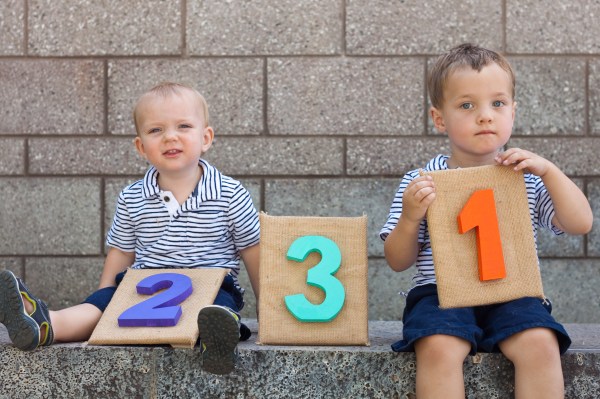
Well, the boys and I managed to finish our teaser project from last week, and while it didn’t turn out quite as nicely as my Pinterest-addled mind envisioned, I’m still pretty happy about it 🙂

{pretty}

IMG_4959

{happy}

IMG_4956IMG_4954

The second picture has better smiles, but something about the first picture just seems fitting for two boys expecting a new sibling! Rondel’s somewhat suspicious face says, are you sure this is such a good idea? – while Limerick just looks slightly in shock! So I can never decide which one I like better…

{funny}

Of course, most of our takes ended up along these lines:

IMG_4952
L: Mom! It fell off again!
Me: Stop pulling it off then!

It would have been cute as well to have me holding the number 3, but that would have required another photographer so it wasn’t logistically going to happen this week. Another pair of adult hands would have simplified the process greatly though! No sooner would I position the kids and run back to the camera than they would start scooting around or becoming distracted by everything around them. I just considered myself fortunate that they were mostly happy throughout the proceedings 🙂

{real}

They were much happier when I let them run wild on the little walls and hills and explore the number boards in their own way! I have no clue how professional photographers get toddlers to look so good in posed pictures.

So… the details? Our new little one will be arriving sometime around Christmas, and we are so excited to welcome him or her into our family. I’ve been significantly moodier and queasier with this pregnancy so I have my suspicions that it may be a girl, but we’ll have to just wait and see – it could be that I’m just out of shape so my body is protesting more 🙂

I am beyond excited to be able to walk through this Advent season with Mary, growing heavy with child, pondering the mystery of the Incarnation as the mystery of new life blossoms within me (and probably aching for the pregnancy to be over like she must have been at the end as well!). It just seems like it will be a special way to experience Advent and Christmas, a new way to see the wonder and the gift of the baby Jesus. Hopefully I will be able to hold to that instead of letting stress and busyness run my days.

Head on over to the link-up at Like Mother, Like Daughter to share in each other’s everyday joys and struggles!

Posted in family life, phfr

{pretty, happy, funny, real} – some crafting with the toddlers

The boys being very excited about painting for various and sundry reasons, I pulled out my previous finger paint recipe and took the boys outdoors with some paper and sponge brushes. (A cornstarch-based edible paint would probably be less messy and sticky, but I didn’t have enough cornstarch to make it work. So condensed milk it had to be.)

{pretty}

IMG_4908

IMG_4915

IMG_4933

I mixed up just the primary colors to avoid ending up with just a brown mess, and I love the way the different colors combined on the paper, brushes, and sidewalk. It was also interesting seeing the different ways the boys painted: Rondel using wide sweeping strokes on the paper, blending the colors together thoroughly and without subtlety; Limerick flinging the brushes in the air above the paper to make fine strings and drips of paint below, far more into the process than the product.

{happy}

Rondel absolutely loved everything about painting. He loved mixing the different colors, testing the different brushes to see what they produced on the paper, and creating something from the raw materials available. He didn’t complain once about the stickiness of the paint, even when it dripped on his legs or when he decided to paint with his fingers to see how it compared to the brushes – which is a huge deal for this little boy who is (or used to be?) so sensorily sensitive. He also didn’t panic or get upset with Limerick at all, even when they wanted the same brush or color paint. It was good to see him so involved in the process of creation that he was able to tune out or ignore the physical discomforts of a hot sidewalk and sticky paint as well as the emotional distraction of a younger brother sharing the brushes and paints.

{funny}

Limerick dove into the painting process with his characteristic no-holds-barred exploratory attitude (which is one of the things I enjoy most about his personality!), dripping paint off his brush onto the papers and sidewalk with intense interest in how the paint flew and fell, with the side-effect of becoming very sticky and colorful himself… and then suddenly he realized how sticky he was and fell apart, attempting to cling to me with wriggly snuggles in his upset. Being set in the bathtub cheered him up considerably 😛

{real}

In addition to their free play exploration painting, the boys helped me with one of my projects with some acrylic paint on wood. But since I haven’t yet finished the project, all you get are the teaser photos 🙂 I promise you it’ll be a good one when it’s done, and I hope to have pictures of the final product up next week!

Head on over to Like Mother, Like Daughter today for the link-up and share your captured moments of everyday contentment with the rest of us!

Posted in family life

night-time parenting and my need for grace

My worst parenting moments are typically in the middle of the night when one of the boys is taking an uncharacteristically long time to fall back asleep after waking. It’s a combination of three difficult factors: my tiredness, the unexpectedness of the problem, and the baby’s insomnia. I could probably handle things with more grace if only one or two of those factors was involved, but together they are a deadly trifecta to my parenting calm. Because I’m tired, it’s harder for me to assess the situation and come up with a solution; because the wakefulness is unexpected and not a normal event, I have no routine already in place to deal with it; and because the baby is also tired and out of sync with his normal routine, he typically can’t express what exactly is bothering him and keeping him up. Limerick has been known to scream for a good 30 minutes straight before managing to sob out that he wants a bottle of milk instead of a bottle of water, for example, which is a far cry from his communicative daytime self.

It is in those moments that I most desperately need to turn to God for help. That is when I am most helpless, most frustrated, least buoyed up by my own reason, most emotionally and physically fragile and worn out. And yet I don’t often find myself searching for grace and peace at those times. The immediacy of the problem blots out everything else from my mind, unfortunately.

And that is one of the reasons why it is so important for me to bathe my parenting in prayer in all the other moments – to keep praying for grace, wisdom, patience, and strength even when everything seems to be going well, so that when things get hard and my sleep-fogged brain can’t see past the crying baby, I’ve already asked God for the help I’ll need to get through it with love. I have to cultivate my relationship with Him, my dependence on Him, through all the easy times, the happy times, the normal times, so that my anchor and foundation are already secure when the challenges arise. It would be foolish to think the challenges would never come, and even more foolish to think I’d be able to handle them without a consistent effort to walk with God.

So tonight I think I’ll be preemptively praying for patience, wisdom, and compassion, just in case Limerick is up for hours in the night again – and maybe that will help me when I can’t see past the irrational tears and my body is crying out for sleep. If the Spirit is there reminding me of the reasons Limerick might be up (last night he was in some sort of pain and it took a dose of Tylenol to settle him down), helping me find solutions, helping me think despite my fatigue, maybe I won’t get so frustrated with my little guy, and will be able to better respond with gentleness and love, just like God consistently responds to me even when my complaints and tears make no sense at all in the light of the bigger picture that He can see.


Posted in musings

gardening our hearts

When my husband and I started our backyard garden a few years ago, we overestimated the quality of our soil (well, I overestimated it) and made our garden soil mix with 50% native soil, 30% compost, 10% peat moss, and 10% vermiculite. I had actually found this percent mix recommended for particularly poor native soil and so thought it would work for our adobe clay.

I wasn’t entirely wrong, but quite a few seasons of plants have now struggled to grow deep roots through the hard earth, and been small and stunted as a result. I have only to compare the growth of the plants in my garden to those in my mom’s garden to realize the significant impact made by the poor soil.

IMG_4696
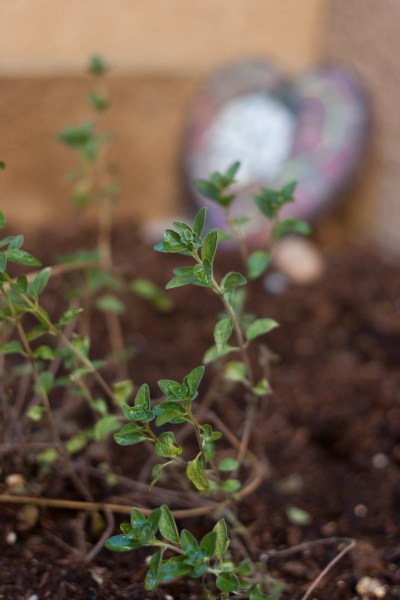
my oregano – a decent plant, but spindly compared to the massive bush in my mom’s garden, that has to be sheared back dramatically every few weeks to keep it from taking over

Each growing season, as we add more compost to the soil, it improves a little bit more, and eventually it may be as rich and soft and fertile as the soil in my mom’s garden was to begin with – but that process is going to take time, patience, and effort.

I think it is the same way with my heart – with all of our hearts, probably. We all start out in different places; some of us are more naturally inclined to virtue than others, some of us more easily bear the fruit of our beliefs, and some of us just need a lot more work before our actions take on the robust and fruitful nature of a plant in abundant health. We can all have the same seeds planted in us through books, experiences, relationships, and so on; we can all water those seeds in appropriate amounts through continued learning and the building of spiritual habits; but some of us will bear fruit in certain areas far more quickly and beautifully than others. It doesn’t necessarily mean we are trying harder – just that we had better starting material in that area.

For example, when it comes to sex, I started out with really good soil. I have no natural inclination toward sexual sins, and significant appreciation of the spiritual and physical mysteries of the marital act. It has always been an area that leads me to meditate on the incredible love of Christ for His Church, instead of an area of struggle and temptation. On the other hand, I have extremely poor soil when it comes to emotional regulation. My moods swing like a pendulum, and the negative emotions (anger, jealousy, suspicion, resentment, depression, and so on) linger and build up within me like a storm of darkness ready to break upon those closest to me. It damages my relationships, preventing me from becoming truly close to anyone, and wounds the people I love the most. So I can put in hours of prayer and concerted effort towards managing my emotional reactions and redirecting my thoughts and attitudes toward Christ, and still appear to have weak and scraggly plants in that part of my garden – but I can put almost no effort in to resisting sexual temptation and still enjoy healthy and thriving plants in that area. And these areas of strength and weakness are different for every person.

We can and ought to put in the time and effort to improve the soil in those struggling areas, and not just focus on improving the short-term health of the plants therein. How do we do this? By making everything we do be about Christ, centered on Christ, living in Christ, knowing Christ, loving Christ; by immersing ourselves in His word, by constantly coming to Him in prayer, by unifying ourselves to Him and to His people. If He is first, if He is all, everything else will find meaning and beauty in Him. If He is in us, He will be transforming us, mixing the rich compost of His life into the hard clay soil of our hearts, making us more like Him.

Posted in musings

wrath

I wonder if everyone has a specific vice (as in, a tendency towards a general category of sins, vs. a specific sin itself) that proves most challenging for them, most difficult to remove, most damaging to their relationships and their own souls.

Mine would have to be wrath.

Misplaced, disproportionate, uncontrolled anger, strengthened by self-righteousness, latching onto my soul with bitterness and smoldering resentment.

The kind of flaring, volcanic passion that makes me, with all my gentle parenting ideals, wanting to slap my kid as hard as I can because he keeps laughing in my face and climbing out of bed when everyone is exhausted and needs to go to sleep.

The kind of all-consuming, fiery emotion that leaves me unable to focus, unable to work, unable to pray, unable to give back and build into the lives of others around me until I can manage to fight it off or sleep it off.

The kind of suspicious bitterness that remembers a past grievance and holds onto it forever, always expecting a repeat of the offense, never trusting completely again once the other person has made a mistake or sinned against me, withholding true forgiveness.

The kind of irrational reaction to events that responds as if every inconvenience or misunderstanding were a personal attack or insult or rejection, that makes me want to burn bridges between friends simply because of a chance word or my perception of the expression on someone’s face.

When I imagine being free of the presence and power of sin in my life, when I imagine what it would be like to be holy, the biggest change I envision is the disappearance of this dark and ugly anger, the liberation of my soul from its clutching tentacles. It was this vice that led me to pray the sinner’s prayer at 7 years old, that impelled me to more deeply fall in love with God at age 12, that continues to both be the bane of my existence and the thing that pushes me back to God asking for His mercy and forgiveness. Is there some way that these passions, in me and in others, can be redeemed and used for good? I don’t know. That kind of transformative power isn’t something I can picture right now, but maybe it is one of the incredible gifts God has in store for us. All I know is this: that my wrath is set to destroy me and everything I hold most dear, and that I need to pray, as so many have prayed before me:

Lord Jesus Christ, Son of God, have mercy on me, a sinner.

Posted in musings

choice, identity, fatalism, and change

Sometimes the homosexual movement (and, I think, our culture as a whole) strikes me as a bit fatalistic – as if our identities were set in stone and nothing we do or choose can change them, only repress and mask them.

There is a sense in which this is true, of course; I doubt that I could change my sexual attractions, or my intellectual curiosity, or my Jekyll and Hyde combination of loyalty and jealousy. Those things form part of my personality and natural identity. Further, the core tendencies of our being seem to remain constant factors over the years. My primary identity no longer rests in my intelligence and academic prowess, but I still value my intelligence and operate out of confidence in it; on the negative side, I am no longer so frequently controlled by my anger, but it is still an ever-present struggle to be master over it. So both my strengths and my weaknesses remain with me, and although I try to favor the former over the latter in how I live and in what I express outwardly, they both form part of my essential personal identity.

On the other hand, there are deep things about myself that are chosen and could in theory change: namely, my religious and philosophical beliefs, my worldview. These beliefs are what informs my identity and causes certain aspects of it to develop and mature (or, on the contrary, atrophy and fade) over time. A belief that integrity and courage matter pits itself, in the core of my being, against my innate shyness, distaste of conflict, and anxiety. The belief of a Catholic nun that she has been called to celibacy for Christ sets itself against her natural sexual desires – for even the celibate have sexual identities, that they choose to set aside in the service of some belief. The belief that humility is valued by God over pride wars within me against my self-confidence, arrogance, and secret insecurities. The belief of an atheist in the value of independent free-thinking might war against his inner desire for an authority to trust or a guidebook to follow. So too, I would imagine, for the traditional Catholic or conservative Evangelical, the belief that homosexual actions are inherently disordered would set itself against some of the deepest desires and attractions within them.

These deeply held beliefs are not able to change our identities like a switch, or even, in many cases, like the gradual dawn of the sun. But they are able to guide and shape those identities – to prune and direct them as we grow. In my examples above, most of the traits and aspects of identity being fought against are not inherently bad and could be considered good given a different set of core beliefs (it is not hard to think of cultures and religions that place a much higher value on harmonious conduct than on the confrontation brought on by principled courage, or to call to mind worldviews that consider respect for authority far more important than critical thinking). So why choose to not embrace those aspects of our identity just as much as some other aspects? Again, it goes back to the framework of belief, the set of principles, that we have chosen to believe and to take as our truth. And that can change. It very often does change over the course of a person’s life!

So the language of identity need not be as fatalistic as it sometimes sounds. Perhaps we cannot ever truly change our identities without some great trauma or damage to ourselves, but we can shape their trajectory, giving more weight to some aspects and less to others. We can still choose the beliefs we hold, even if we cannot choose the components that make us up. For me, this is a great hope! I am not bound forever to the shyness, the anger, the jealousy, or the intellectual impatience that form a part of my identity, personality, and character – or, more accurately, I am not bound to be forever ruled by them. Their share of my life can decrease as the things I value more are increased.

What I have left out in this consideration is, of course, the reality of the changing power of the Holy Spirit, and the ability of Jesus to make us truly new creations in Him. I wanted to try to look at the questions of identity and choice from a less uniquely Christian viewpoint. But where I do find the most hope for personal change, as well as (rather surprisingly) the most grace for what I am right now, is in the transformative and redemptive plan of God. For that is what Christianity proclaims: that from the inside out, in the very center of our identity, we shall be changed, and everything that is wrong or disordered or confused or dead within us shall be removed, and what is good shall be made to flourish in ways we never dreamed.

Posted in musings

principles vs. rules: parenting checklists and the pursuit of holiness

There are a lot of practical things I can do to help my family and take care of our home. I can keep the house relatively decluttered, I can make sure the clothes and linens are clean, I can cook good healthy food for our meals, and so on. On the next level up, I can take my boys outside to run around and explore, I can read them good books to capture their imaginations, I can spend quality time with them just being silly and creative, and so on. On a still higher level, I can pray with them, share with them the stories of redemptive history, bring them with me to Jesus when life is hard, and so on.

The list of possible beneficial and important things to do on any one of those levels is so long as to be overwhelming.

Life is complex and multi-layered, because it is made up of (often messy) relationships between (hopefully growing) people – and when we take that complexity and try to reduce it to a list of “should’s” and “ought’s” and “do’s” and “do not’s”, we find that the list has grown enormously in an attempt to cover all the different facets and situations a person might face. It just isn’t possible!

Maybe that is why, in the sermon on the Mount, Jesus decided to give us a calling to godliness, a set of principles to aspire to, instead of a moral rulebook. God had given Moses the law, and although it was designed for the specific situations dealt with by a specific group of people at a specific time, it was still incredibly long and detailed. With the new covenant, then, it wouldn’t have been feasible to extend that law to fit all the changing situations of the future world – so instead God chose to call us into a holiness that transcends the righteousness of the law, not by disregarding it, but by writing those moral principles on our heart instead of writing a list of moral rules on stone for us to follow.

So the unwritten lists of what makes a good parent aren’t the standard that really ought to matter for me. If we don’t get outside one day because we’ve been resting, or working on conflict and attitude, or recuperating from being sick, or enjoying each other’s company baking and reading and building, it’s not the end of the world, no matter what all the natural parenting advocates say. If we have boxed macaroni and cheese and fish sticks for dinner instead of an organic from-scratch meal, I haven’t committed a sin.

But if I let my anger control me, so that my relationships with my children are marred by resentment, harsh words, and bitterness, I have sinned. If I am lax with my own tendencies toward sin, petting my propensity towards gluttony by giving myself the last cookie before bed, fanning my vainglory by checking my WordPress stats one last time before shutting down the computer, or stoking the fires of my envy by scrolling through the Facebook statuses of my friends, so that those sins gain a greater foothold in my heart, I have sinned, even if I have broken no written rule, because I have let something interfere with my pursuit of God and my desire for holiness. If I let laziness and self-centeredness dominate my spirit, and if those things are the reason for the convenience food and lack of outdoor play I give my boys, then I have sinned – even though those same actions might be a sacrificial labor of love from another mom in another situation.

The principles Christ gives us are at once simpler to enumerate and more difficult to obey, because they demand all of us, and apply to every aspect of every situation of our lives. It’s overwhelming in a different way than those crazy lists that grow longer in my head every time I read a new piece of parenting advice! The difference here, though, is that Jesus offers us grace to grow in holiness – we don’t have to accomplish it on our own, although we do have to keep getting back up and trying again each time we fail and repent and are forgiven. And He promises that one day, some day, we truly will be holy from the inside out, and be able to live out those principles from the sermon on the mount as though they were our nature. For they will be our nature, and we will be a new creation, and all the mundane details of our lives (even doing the laundry and cleaning the bathrooms!) will be suffused with the glow and beauty of holiness, a light that we can see dimly even now as we strive to walk with Him.

Posted in links, musings

fighting the fear of rejection

The deepest fear of the human mind is abandonment.

That statement was dropped ever-so-casually into a talk on Neuroscience and the Soul that I was listening to this week, and it stuck with me.

If our greatest fear is that the people we need won’t be there when we need them most, is it any wonder we try to keep our needs and burdens to ourselves, to avoid that letdown?

If we’re terrified that the people closest to us – the people we long to trust and by whom we need to be loved – will walk away if they knew our deepest selves, it is any wonder that we feel lonely and isolated, unable to truly share ourselves lest we suffer their rejection?

And I think about how our fear of abandonment, instead of being assuaged and lessened by deep trustworthy relationships over our lives, is actually strengthened and confirmed by our experiences.

The baby left to cry himself to sleep learns that he is just too much, too intense, too needy – that no one, not even the people he needs and loves the most, can handle his full range of emotion and personality.

The preschooler sent to her room to tantrum, isolated from her support system when she is most overwhelmed by her own emotions, learns that her anger and disappointment are going to cut her off from the feelings of love and security she craves.

The child bullied at school, dealing with intense rejection from his peer group and unsure of how to fit in and make friends, who then goes home and finds no sympathetic or listening ear, learns – writes deeply into his psyche – his own inadequacy and worthlessness.

We learn, as we grow, that the intensity and depth of our needs, the power of our emotions, and the uniqueness of our personalities contain things that no one else cares enough about to deal with – that the cry of our hearts for unconditional love will go unanswered. So teenagers hide their fears and questions and doubts and struggles from their parents because they’re afraid of being shot down and pushed away again. Spouses keep secrets and avoid topics of conversation because they’re afraid of conflict and disagreement leading to rejection and separation. We isolate ourselves so that we can avoid abandonment – we choose self-inflicted loneliness over the loneliness that whispers in our ears, “no one loves you; no one will ever love; you are not worthy of love.”

I remember in the early years of my marriage sitting in the car reciting psalms to myself before I could bring myself to go into our apartment, because I was so afraid that this beautiful relationship I had would suddenly and inexplicably fall apart – such is the depth and irrationality of this human fear of abandonment.

It takes incredible courage to open our soul to another, to risk this most fierce and desolate pain. We’re so often callous and insensitive to those are daring it, perhaps in ignorance, perhaps in self-protection – for to love another imperfect person unconditionally is also one of the most difficult things we can do. And yet this mutual dance of daring and difficulty, of risk and response, is where we can begin to redeem our broken covenants and communities.

Let us love each other with Christ’s love and allow ourselves to be loved in return; let us strive to know each other with grace and open our hearts to be known intimately in return. There is no great beauty without great labor and at least the risk of great pain.

Posted in family life, musings

grace in my inadequacies: striving for virtue as a mother of toddlers

Some days, as a parent, I just get so frustrated, so irritated, so impatient that it literally takes all I have not to yell at my kids. They usually aren’t doing anything wrong, either – just normal behavior that pushes my buttons.

Those are the days that remind me just how much I still need to grow in virtue and holiness.

Are my charity and compassion really so small that I can’t respond with a kind word and a helping hand when my toddler is whining for help wiping his nose because he’s sick and congested? It’s not loving, it’s not just, to snap at him every time just because I can’t handle the sound that he’s making because of how miserable he’s feeling – all it does is add to his sadness and upset by pushing him away from what should be his source of comfort and gentle love.

Are my temperance and self-control really so stunted that I can’t push back a meal or miss a little sleep because my boys need me for something that they can’t handle on their own? Can I not set aside my physical needs temporarily in order to take care of these little people who are depending on me for so much, and who in general have to bend to my schedule and my desires time and time again?

Is my joy so fleeting and shallow that the small irritants and storm clouds of everyday life are sufficient to wipe away my smile and bring a harsh edge to my voice? Am I really so far from the Root of happiness and peace that every small problem raises my temper or deadens my laughter?

Is my patience so short that I can’t deal with a toddler’s incessant questions or a baby’s irrational tears? How can I hope to teach them to love people well if I can’t love them well for who they are through their normal developmental needs?

And the hard answer to hear is yes, my virtues are that weak and undernourished, that immature and small. Sure, some days we have together are beautiful and by God’s grace I am living well in those moments, but in general – when I am tired, when someone is sick, when work is stressful, when Paul and I are having trouble communicating well, when I’m worried about someone I love – in general, in the normal stressors of life, my virtues aren’t strong enough to keep my feet in the path of holiness. At any rate, they still need the help of massive amounts of willpower and even more massive amounts of prayer!

My solace in those moments is knowing that the pain of striving towards virtue, the strain of denying my inclinations time and time again, the practice of coming back to God for mercy and grace hour after hour, will all result in an increase of virtue, in the same way that the aches and pains of exercise lead to greater strength. God wants us to grow in holiness, so His grace is extended for us for this purpose without stint or reservation – all we have to do is seek it and cooperate with it instead of pushing it away to pursue our own pleasures. It’s just a lot easier to say it that way than to actually live it out…

Posted in musings, poems

side by side in the common good

What is the duty of the person who sees injustice, oppression, or need, and has some ability to protest or make amends?

Is it to step daintily around the problem, hoping that the filth and blood will leave your feet unstained?

Is it to click a few “Likes” on a Facebook page, or write a vaguely angry status, and then move on to happier thoughts without even a prayer?

Is it to give thanks for your own more comfortable situation, and avoid the suffering that your happiness may not be lessened by their pain?

Of course not.

It’s easy to see that, on paper; it’s harder to see it happening in your life, everyday, in the major decisions and the small choices: in your quickened steps and averted gaze as you walk past the homeless man with the cardboard sign; in your fear of personal heartache that prevents you from fostering or adopting a child in need; in your unobtrusive isolation from the other in jobs, neighborhoods, and churches made up of people who look and think like you. Every little thing builds up, until one day you have completely blinded your mind and numbed your heart to the ache of the world around you, content in your own personal happinesses, and you don’t even realize the small and withered thing you have made of yourself and your life – your one precious and beautiful life, that could have been a source of good to better the whole world.

In the 1950s, a poet named Maurice Ogden wrote a poem called The Hangman about a village where everyone is murdered, one by one, by an ominous hangman of whom they all live in fear. Each time another is hung, the rest of the villagers sigh in relief and continue with their lives, until at last only the narrator of the poem is left – and he realizes that the hangman has now come for him as well:

“…’I answered straight and I told you true,
‘This scaffold was raised for none but you.

‘For who has served me more faithfully
‘Than you with your coward’s hope?’ said he,
‘And where are the others who might have stood,
‘Side by your side in the common good?’

‘Dead,’ I whispered; and amiably,
‘Murdered,’ the Hangman corrected me.
‘First the alien, then the Jew…
‘I did no more than you let me do.'”

“Side by your side in the common good” – for we are not solitary and independent creatures, no matter how much our culture values individualism and autonomy. We need each other. We need to receive help from each other, and we need to give help to each other, both for the common good of our community and for the private good of our own soul. It is so easy to let our fear and our desire for comfort and convenience shutter us away from the needs and gifts of other people, especially people not quite like ourselves, but it leads to broken homes, neighborhoods of strangers, and the general fragmenting of society that is so painfully being put on display this election season.

I write this not as someone who is living this out well, and has the answers figured out. To be honest with you, I’m only just beginning to see how my own fear and selfishness have prevented me from following God boldly in the midst of a broken and hurting world. Will you come join with me, hand in hand, to learn again how to share our hurts, carry each other’s burdens, and sing each other’s songs of joy and of lament?