Posted in family life

fighting the terrible Jiboo

“And what would you do
If you met a Jiboo?”

I’m reading Dr. Seuss’s Oh the Thinks You Can Think for our bedtime story, at Rondel’s request, and because the baby’s already sleeping instead of tiredly fussing in my lap, I’m letting the boys’ comments and questions slow the story down. I pause here to let them answer the question posed by the book, a dark shadowy creature standing on a moonlit street on the pages before us.

“I would knock it over!” Rondel proclaims.

“What if it is friendly?” I ask. “Do you think Jiboos are friendly or scary?”

Rondel looks at me uncertainly, pondering.

“Maybe if they are friendly they like playing games, so you can knock them over in a fun way,” I suggest.

“No, they don’t like games. They don’t like anything.” Rondel declares.

“What do they do?” I ask. “Do they chase people and gobble them up?”

He nods, solemnly (this isn’t our first time through the book… he’s decided Jiboos are man-eaters long before now).

“That’s scary!” I say. “I would run away and hide, then, if I saw a Jiboo.”

“I would take its head off so it couldn’t eat anyone!”

“Wow, you are so brave! You would be the hero, then – you would rescue everyone from being eaten by the Jiboo!”

“I am brave!” His shoulders lift a little – I can see the idea of being the brave hero, the defender of the weak, taking root in his mind; he is thinking about the goodness of force when used for justice and protection, though of course not in so many words.

I used to be uneasy discussing violence and physical force with the boys. Well, to be honest, I still am uncomfortable with it. I don’t want them to rely on violence to solve their problems or settle their disputes, and I definitely don’t want them glorifying brute force. But I do want them to grow up into men who intervene when a woman is harassed or objectified, who protect the weak, who stand up for the oppressed, who would be willing to lay down their lives for the innocent. So when they express courage in the service of others, even if it’s in very physical ways or just in their hypothetical imaginary worlds, I want to encourage that. We can dive into the nuances of non-violence as they get older and see that power comes in many forms. For now, they can fight the Jiboos to protect those who can’t fight for themselves.

Posted in family life, quotes

different

Learning to love ourselves, to be humble enough to admit our limitations, to truly appreciate the gifts our differences bring while also being willing to accept help and healing for the most painful ones, gives us greater mental, emotional, and spiritual health. […]

We are so often encouraged to fit into the boxes of academic achievement, intellectual prowess, recognizable achievements, personality profiles, status, money, power, external significance—to perform, to fit in the box, to be acceptable. Yet our wonderful God loves us unconditionally, now and forever. We do not have to work to please Him. He values us for what is inside our hearts—our character and integrity, our ability to love, to be faithful, to help others, and to show compassion. Our individual personalities are a gift of His design so that we might add color and variety to the world. And He can use our unique combination of circumstances—even the painful ones like mental illness—for our good and His glory.

Sally Clarkson, Different

One of the most romantic and wonderful things about my husband is that from the very beginning of our relationship he has valued me for my character and heart more than for my intelligence and knowledge. I’ve always been smart and been perceived as smart, and while it wasn’t a difficult appearance to maintain (because, at least when it comes to academics, I am quite smart), it always left me feeling somewhat empty when that was all people would see. Intelligence was a gift, a talent, but not me. So when I found this man who loved me for who I was, who saw all the other aspects of my character and personality and delighted in them, I was profoundly and deeply touched. It helped me understand God’s unconditional love; it helped me begin to love and accept myself as God made me; it is helping me now learn to love my children with that kind of acceptance and delight in all their uniqueness – even when those unique traits are difficult to understand or tame.

Different is a book written by a mother and son together, telling the story of a different and difficult childhood and the love and acceptance that carried their family through their struggles. After reading the first chapter (available here) and listening to an interview with both authors on the Read Aloud Revival podcast (available here), I’ve decided that I need to get my hands on the whole book and read the rest of it! I want to learn how to love my children as they are, while still guiding them towards maturity; I want to learn how to help them flourish best without coddling or overprotecting them. I want to stop listening to the critiques and judgments of the ignorant world and start listening to the needs and dreams of my children’s hearts: it was God who made them with those needs, God who gave them their deepest longings and most beautiful dreams, and I am only His steward, raising these children for a time, so who am I to ignore their truest selves or demand that they be other than He created them to be?

Posted in musings, quotes

the social underpinnings of racism: Trump and the 1950s

In the wake of Trump’s ascension to the presidency, a lot of people like me were left wondering how so many Americans could be so angry and feel so wronged that they were willing to tolerate blatant racism and misogyny in their leadership. There’s been a lot of confusion and a lot of anger, and not a lot of dialogue; each side tries to defend its beliefs by reciting wrongs against itself, or attempts to seize the moral high ground and demonize its opponents instead of listening to their grievances. It’s one of the reasons I’ve had to severely limit my social media time…

But as I was reading The Family Nobody Wanted, by Helen Doss, written before the height of the Civil Rights Movement, in the aftermath of the Japanese internment camps of WWII, I came across a passage that seemed quite relevant today:

First, prejudice is a contagious disease, as easily caught as measles, the babe from his parents, the school child from his playmates, the adult from his fellow workers and neighbors. To compound the social tragedy, prejudice once caught is hard to cure, since it unwittingly serves a number of morbid purposes. When a man is picked on by his boss, he can slam home and take it out on his family, and frequently does; however, a more socially approved outlet is to turn around and release the feelings of hate and anger on those of a minority racial group. If denied certain yearned-for opportunities and privileges, there is a devilish quirk within man which gives him perverse satisfaction in seeing that at least one segment of the population enjoys even less opportunities and privileges than he.

If a person feels socially or mentally inferior, has a persecuted feeling that society is crushing down on him, it is easy to bolster waning self-confidence by convincing himself, “At least there are whole groups of people socially, mentally, economically inferior to me.” Worse yet, he will try to keep minority groups in a deprived and subjugated position, to prove what his ego wants to believe.

Psychologists and psychiatrists have long told us that bottled-up feelings of aggression and anger can be dynamite to the happiness and well-being of the individual who refuses to recognize real causes behind his maladjustments. Multiply these fearful and emotionally tense individuals by thousands, by even millions, and you have social dynamite… Hostility will be exploded in any area where society permits it…

War has always been a socially glorified outlet for pent-up angers and frustrations of whole peoples. In America, our Negroes have provided another scapegoat, and so we have had race riots, Jim Crowism, and the Ku Klux Klan. On the West Coast first the Chinese, then the Japanese, provided another handy outlet for our inner tensions, and we have had discrimination in jobs and housing, an Orientals Exclusion Act, and the “relocation centers” of World War II.

The anger and other negative emotion of the dissatisfied people who voted for Trump is real. Many people felt disenfranchised, ignored, stuck in a world they didn’t ask for, unable to change their fate, feeling like their communities and families were broken. And Trump acknowledged those emotions when most other politicians were oblivious to them. Would these people on their own have decided to take out their anger on immigrants, women, and other minorities? I’m not sure; in many cases, I don’t think so. I know a lot of good people, who care deeply about human dignity and equality, who voted for Trump for one reason or another, trying to look past his faults. But Trump himself has most definitely established those groups as “acceptable” targets for the pent-up anger of anyone who feels ignored, overlooked, or under-appreciated; he has made them the scapegoat of the failures and frustrations of the majority.

Like it or not, whether you as an individual are racist or not, Trump has bolstered the cause of racism by making it more socially acceptable once again; he has directed the force of social anger towards some of the most vulnerable and unrepresented groups of all; he has given hostility a safe place to explode, and so set our country back in its fight against racism and for the equality of all. Racism is in so many ways a systemic issue, not an individual issue; that is why the attitude of the president is so powerful and influential. That is why it matters so much, especially now, to speak up against racism, to push social pressure against it as much as possible.

Posted in book lists

what I’ve been reading lately

After a rather long stretch of time in which I mostly reread my favorite fiction (Lord of the Rings and Harry Potter on repeat!) and kept up with the news and our church’s Bible-in-a-year plan, I have been diving back into the world of books. I realized that I have a lot of time in which I can read but not do much else (while Aubade is nursing, especially at night), but of course holding a book is complicated by said nursing… so I had been reading the news, surfing the web, and spending altogether too much time on Facebook, which was not helping my postpartum mood in the least. Then I remembered that all the libraries in my county have come together to create the Greater Phoenix Digital Library – meaning that more books than I have time to read are available on my phone, for free, with a simple app and the PIN from my library card. Honestly I’m not sure how I managed the boys’ newborn phases without this…

So, despite finding that a lot of the books on my wish list are checked out by other users of the library system, here are four books I’ve read this week that were completely new to me, in a variety of genres:

I Know Why the Caged Bird Sings, by Maya Angelou

cagedbirdangelou

This is of course a classic, and most people who haven’t read it are still familiar with some of Angelou’s poetry, at least (I knew of her mostly through her poetry, to be honest – Phenomenal Woman makes the social media rounds fairly frequently, and I love it every time I read it). But for me, who grew up in an educated, well-off, white family, it was eye-opening to see the deep personal and emotional impact of both intimate individual hurts (like parental divorce and sexual abuse) and systemic oppression (like the racism and poverty Angelou faced herself and saw affect her community). Someone’s story can be far more impactful than all the statistics and social study lessons in the world, especially when told with the simple power and unpretentious elegance of Angelou’s writing. It’s not an easy read, because of the painful topics it deals with, but it is definitely worth reading.

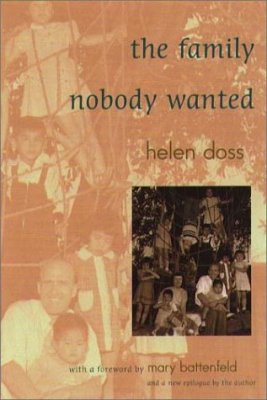
The Family Nobody Wanted, by Helen Doss

familynobodywanted

This is a memoir of quite a different type, although it touches on some of the same themes. Doss and her husband discovered as a young couple that they were infertile and that the demand for Caucasian infants to adopt was far greater than the number of babies available. So, in the 1940s and 50s, they built their family by adopting the unwanted children – children of mixed heritage who didn’t look “white” enough for mainstream American families to consider – and ended up with 12 children all together! The book is an honest look at their family life, addressing the racism directed at their children and family but mostly just full of hope and humor (I laughed out loud many times at the anecdotes Doss related – she is quite adept at capturing the funny side of disastrous moments as well as the dialogue of her young children).

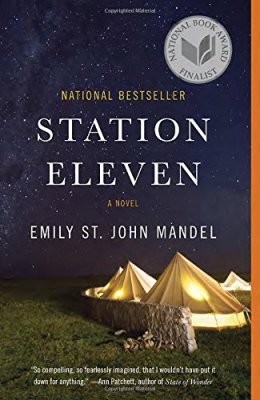
Station Eleven, by Emily St. John Mandel

stationeleven

After reading two memoirs, I decided to switch things up and chose this post-apocalyptic novel after seeing it on one of Modern Mrs. Darcy’s booklists (in general, that is a helpful site if you aren’t sure what book to read next!). I don’t normally read this type of fiction because it is dark and suspenseful and keeps me up all night, and this was no exception… The basic premise is that a strain of the flu wiped out the vast majority of the world’s population, disrupting civilization to the extent that people are living without electricity, without medicine, scavenging and hunting to survive, holding on to what scraps of art and culture they can salvage, and falling prey to cults and prophets who offer some explanation for why so few survived. Mandel’s characters are diverse in personality and background, and the different ways they experience the pandemic (as well as the years before and after it) feel very authentic. I particularly liked how the threads of theatre, music, and literature wound through the characters’ stories without devolving into preachy passages about the meaning and value of those things in a broken world; the novel is far more about what it means to be human, and how humanity survives and even perhaps recovers from an event so utterly devastating.

Half the Sky: Turning Oppression into Opportunity for Women Worldwide, by Nicholas Kristof and Sheryl WuDunn

halfthesky

Kristof and WuDunn examine the inequality of women in the developing world in a number of different arenas, including forced prostitution, rape (as a tool of shame or a weapon of war), maternal mortality and injury, and education. Each issue tackled is presented in light of the story of one or two individual women, spotlighting the problems involved as well as the complexities faced in addressing those problems; for instance, we see how difficult it is to truly free an underage girl from forced prostitution in the story of one young woman who returns multiple times to feed her drug addiction – which was in itself instigated by her captors and abusers. Some stories are inspiring; some are less so; and the statistics that they illustrate are often bleak. As a new mother myself, having experienced a labor (with my first) that would have resulted in death or serious injury without access to a surgeon, it is horrifying and saddening to read about women who have had similar experiences without the medical care available to me and others in the West. There is so much pain and death that could have been avoided. On the other hand, however, the book also shows us the stories of whole communities that have been improved by simple investments in education, or by deciding to take justice for women seriously. In addition to the stories and the statistics, a unique and valuable aspect of this book is the appendix listing specific organizations that are working in effective ways to address the issues faced by women in the developing world, to give the reader ideas of whom to support. I would encourage anyone – especially anyone who believes that things like rape and maternal care are only “women’s issues” – to read this book and see just how much communities can grow and heal when they come to realize that women, as in the eponymous proverb, “hold up half the sky.”

What have you all been reading lately? I’d love to hear your recommendations, since I have a short window of reading opportunity open right now!

Posted in family life

learning character from Dr. Seuss on a hard day

When your morning is characterized by yelling (from everyone), tears (from everyone), apologies (from everyone), toddler aggression (from both boys), strict boundary enforcement (from me), and overwhelming fatigue (probably from everyone but definitely from me), a blissful three hours at the library is a gift and an answer to prayer. Surely it wasn’t coincidence that we stumbled upon a Dr. Seuss book I’d never seen before, Bartholomew and the Oobleck, in which crisis is only averted by the remorse and sincere apology of the culpable character…

I am forever grateful for the forgiving love of my little children, even as they drive me up the wall, and I will forever try to pick up the pieces, start over, and love them as best I can in each moment. And when I lose it and they lose it and we’re all a wreck and the day feels ruined before it’s scarcely begun, we can remember King Derwin of Didd and admit our fault, say we’re sorry, and begin to rebuild together.

Posted in book lists, family life, Uncategorized

books for the youngest dinosaur lovers

When Rondel fell in love with dinosaurs this fall (with Limerick close on his heels, as always), I was at a bit of a loss at first as to how to feed this love with good books. I spent a lot of time searching through recommended book lists online, as well as combing through the library catalog, and ended up bringing home quite a few of various genres, lengths, and reading levels. While I think that all of the books we ended up trying out were good books, some were definitely better than others for a young preschooler and a toddler! Two important aspects that stood out to me were quality illustrations and accurate but accessible information. In other words, mediocre art or dumbed-down language made a book annoying to me and, what mattered more, less captivating or engaging for the boys. Drawings that captured the wonder and drama of the dinosaurs could keep them riveted, and detailed information at an accessible level answered their questions and gave them a foundation for their own imaginative dinosaur play. All of the books we ended up truly loving had at least one if not both of these attributes.

disfordinosaur

D is for Dinosaur: A Prehistoric Alphabet, by Todd Chapman and Lita Judge

This book was one of the best. The alphabet format allowed it to move through a wide range of dinosaur topics (some pages focused on types of dinosaurs, others on specific species, others on basic scientific concepts, and still more on fossil discoveries and paleontologists) without becoming overly long and unwieldy. Each page had a short poem to go with the letter and a well-crafted illustration to accompany the poem, but the unexpected bonus on each page was the extensive sidebar of supplemental information. I never read a full sidebar to the boys, but I almost always grabbed one or two sentences from them to give them more information about the drawings (which were incredibly detailed and thus led to detailed questions from the boys). This book also spent some time on extinction and what happened to the dinosaurs, which helped Rondel understand why he couldn’t just go out and find some real dinosaurs!

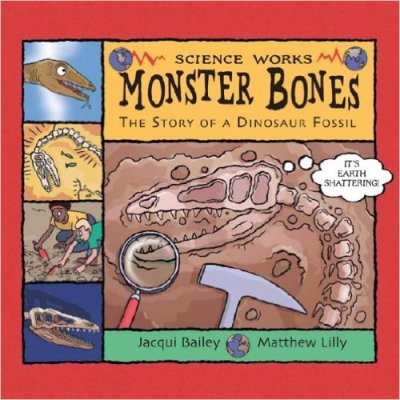
monsterbones

Monster Bones: The Story of a Dinosaur Fossil by Jacqui Bailey

This book tells the story of a dinosaur who comes to an untimely end, slowly fossilizes, and is eventually discovered and reassembled. The science is good (one section describes how bone turns into stone at a microscopic level!) and punctuated by humorous thought bubbles from the dinosaur himself; information is broken up into segments and sidebars so that the discerning adult reader can add more or less information and time to the story as is appropriate for the listeners’ attention span at the moment. Sometimes we read them all and sometimes we skipped most of them… But more than any other book we found, this book explained fossilization and described paleontology in a way that a very young child could understand and get excited about. And since it’s rather incomplete, at least in my opinion as a scientist, to just learn about dinosaurs without understanding how we’ve obtained that knowledge, this was an invaluable resource (not to mention that most other dinosaur books will just casually mention “dinosaur fossils” and expect the reader to know what that means). It was an enjoyable book for me to read aloud and surprisingly to me, since I thought it might be a few years beyond them still, it was enjoyable for the boys as well. They even asked for it at bedtime!

In addition to these books, we had a few Eyewitness/Atlas type of books that gave broad overviews of the dinosaur era; they weren’t the sort of thing we could read straight through, but they tended to have excellent illustrations and exposed the boys to the vast spectrum of dinosaur species that existed. We also borrowed the Wee Sing Dinosaurs CD from the library and Rondel begged for it every car ride to the point of tears… but while it was a huge success with him, it drove my husband absolutely crazy! The songs are cute but far from high musical quality, and they will be stuck in your head forever once you’ve heard them a few times…

The rest of the books we brought home were either over the boys’ heads or not really at the same level as the two above. I am looking forward to reading the Magic School Bus books with them when they’re older, as I loved them when I was a kid and the dinosaur one seemed quite good when I skimmed through it this time around, but so far the boys have very little interest in them. It would also be nice to find some decent dinosaur fiction! Rondel doesn’t need the storyline aspect to stay engaged, because the dinosaurs themselves are the draw and poorly done stories detract from that, but I would enjoy it and I believe Limerick would as well (and a book that appeals to both of them is always welcome).

So there is my very short list of excellent recommended books for the very young dinosaur lover! With these, some dinosaur atlases, and some dinosaur figurines (accurate ones of course!), you should be set. Even your one-year-old may go around saying things like “metriacanthosaurus” and correcting you if you don’t pronounce “parasaurolophus” correctly, and your three-year-old should be prepared for months of dinosaur pretend play involving such things as turning into a dinosaur fossil (by being buried under pillows and blankets for “millions of years”), hatching from a dinosaur egg, roaring like a giganotosaurus, being eaten by a T. rex, and ramming his head into everyone like a pachycephalosaurus. (Results not guaranteed).

Posted in family life

Library time!

I think I’ve finally figured out how to make the best use of our local library! We have always enjoyed visiting it, but finding good books to read there or take home with us was always fairly unpredictable and dependent on what other patrons had been leaving out – it’s hard to browse the shelves with two babies/toddlers wanting to get out and play and read RIGHT NOW MOMMY!

So over the past couple months I’ve been doing a lot of preliminary research online, finding 5-10 books at a time that fit a theme of interest to either myself or the boys, placing a hold on them all, and then making a trip to the library when they’re ready for pick up. The library gives me a week to pick them up after they’ve been set aside for me, which helps when some are ready earlier than others for various reasons, and gives me some flexibility with actually getting over there.

At the end of September we found 3 books on apples and apple pies to celebrate fall and complement our apple activities (apple-printing in the archives, apple-pie baking at Grandma’s house, and apple fizzy painting coming soon!), as well as 5 dinosaur books to accommodate Rondel’s recent enthusiasm. All the books lived on our new display shelf and so were pulled out constantly to be read, re-read, and thoroughly enjoyed during their 3-week stay.

(Have I shown you the new shelf yet? It is one of the best simple changes we’ve made to the house:

img_0363

It lets me get books off the bookshelf – where the boys can’t see them well or find what they’re looking for easily – into a visible space, and has encouraged significantly more read-aloud time! In fact, I liked it so much that we put a smaller one in the boys’ bedroom for their bedtime books.)

Today we took all of those books back to the library and were able to pick up another batch of books, mostly fall-themed this time, with a few extras that had caught my attention. Rondel especially is going to miss the books we had to return, but I’m hoping the excitement of the new books will help 🙂 This serendipitous timing did require me to be proactive enough to start finding and requesting new books about 5-7 days before the old books were due 🙂 I think a trip to the library just for returns would have left me with two very sad little boys, so I’ll need to continue to stay on top of the library cycle for this to keep working… we’ll see how that goes.

How do you all integrate the library into your family’s reading? Any great ideas you’ve implemented or challenges you’ve faced?

Posted in book lists

favorite books at almost-three

I think it’s time for another book list!

Rondel, about a week away from his third birthday, has discovered that subset of children’s books that have bears as the protagonists, and is completely in love with them. His favorites span quite a wide range of reading level (from board books to chapter books) but it seems like the bears are the appeal right now. So from easiest to most difficult, here are his current favorite bear books!

The Moonbear/Bear Books by Frank Asch

There are a lot of these books; Asch was a pretty prolific author! My parents have at least 12 of them (including 4 board books) from my brother’s toddlerhood, and Rondel loves them all. He’ll bring out the whole pile of books and contentedly rotate through them until the adult reader has to take a break! Some of our favorites include:

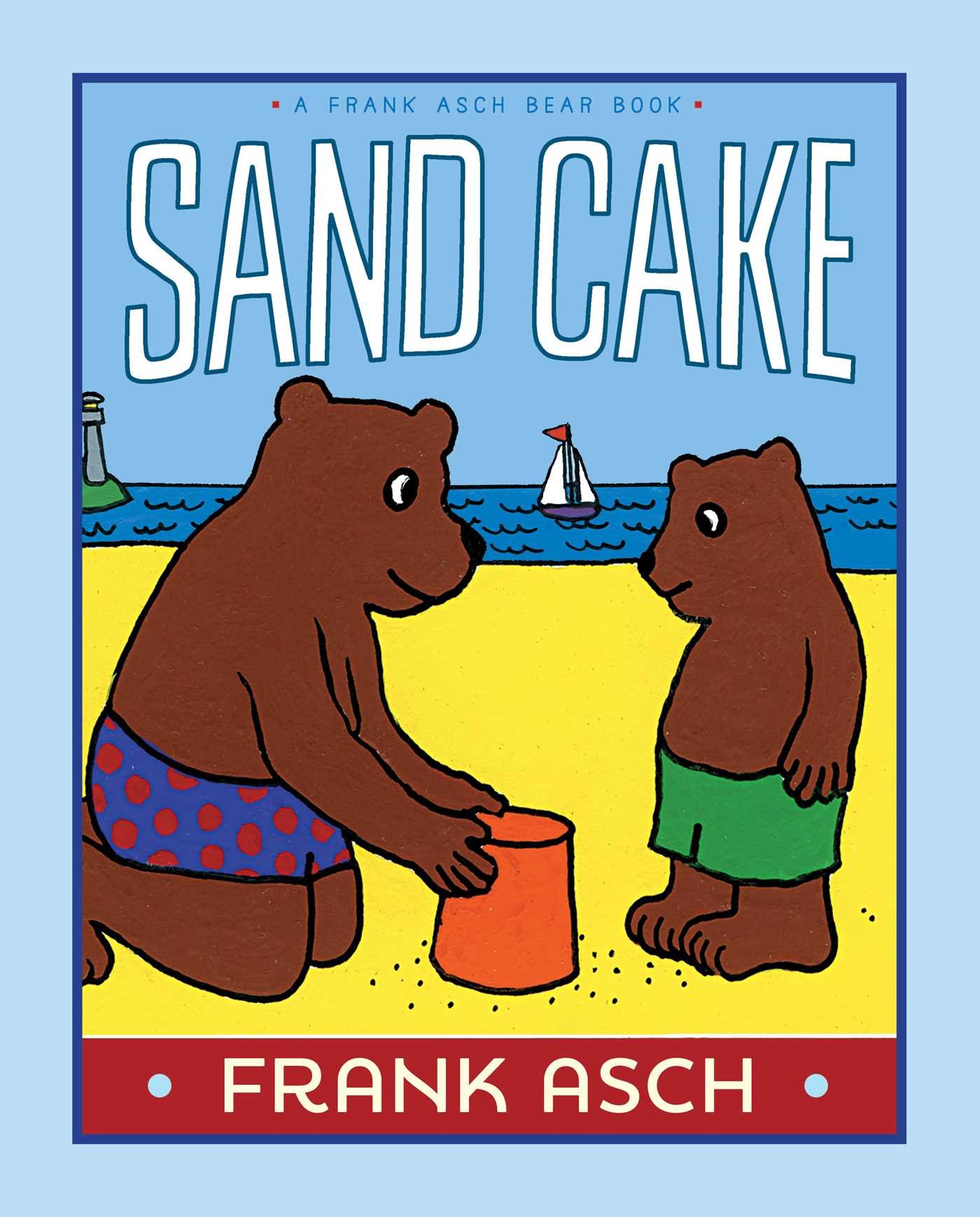
Sand Cake

In which a baby bear and his papa find a creative way to bake and eat a cake at the beach, even though all they can see is ocean and sand.

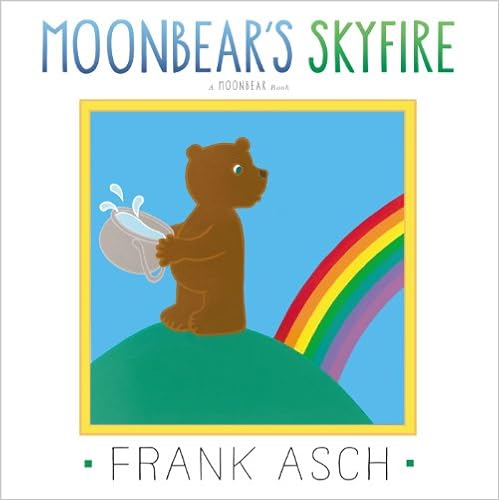
Skyfire

In which Moonbear worries that the sky is on fire when he sees a rainbow, and does his best to put it out despite Little Bird’s reassurances.

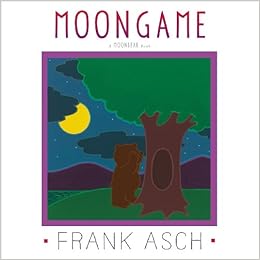
Moongame

In which Little Bird teaches Moonbear how to play hide-and-seek, and Moonbear asks the moon to play along.

But really, it is hard to go wrong with the Moonbear books. My personal favorites are Mooncake and Moondance! He is a very endearing character – not the brightest, which lets even little kids see the humor of the situations he gets himself into – but very genuine and open. He deeply cares about the things in his world, whether it’s the sky, the moon, the clouds, or his friends.

Don Freeman’s Bear Books

These two books aren’t part of a series (although one of them does have a sequel, which Rondel hasn’t read yet), but they’re by the same author and capture some of the same innocence and love.

Corduroywhich made it onto Rondel’s favorite book list a year ago, still holds a special place in his heart (and in mine!). We went to the mall this weekend and he saw and escalator for probably the first time and immediately wanted to ride up it because that’s what Corduroy Bear got to do in the book! So of course we did 🙂

Rondel’s new absolute favorite book, though, is another by the same author:

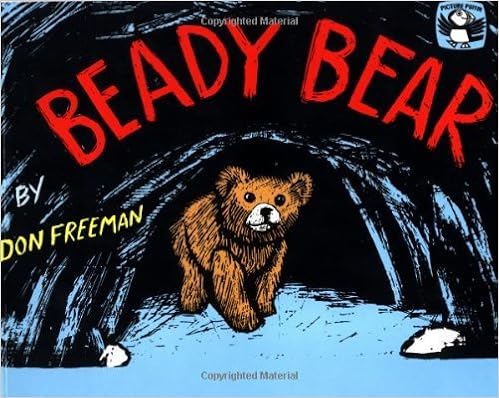
Beady Bear

In which a toy bear discovers in a book that bears ought to live in caves, and so sets out to find a cave and make it his own. The pull for Rondel in this book is when Beady’s friend Thayer comes and finds him and brings him back home with a big hug. After Thayer has found him and wound him back up, Beady asks Thayer, “If I need you, who do you need?” and Rondel always answers, delightedly, before I can turn the page, “Beady!” And then of course we have the perfect excuse for a hug of our own before reading the last few pages 🙂


And finally… A.A. Milne’s Winnie the Pooh Stories!

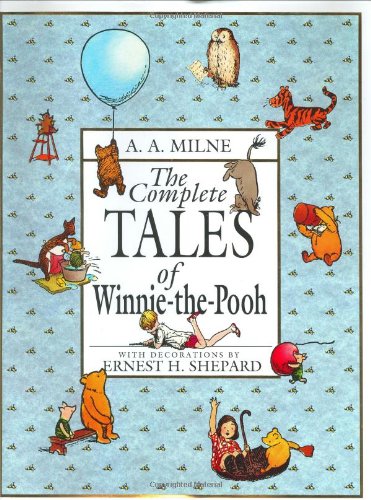
The Complete Tales of Winnie-the-Pooh

If you’ve never read these, you’re missing out. I think most of you, however, are already familiar with the bumbling, innocent, creative characters of Milne’s invention, and it has been a pleasure introducing Rondel to them for the first time. This is the first chapter book we’ve attempted to read aloud together, and I wasn’t sure how it would go, but he has sat captivated for each (long) chapter, asked questions about the stories, and referenced them in conversation afterwards. I’m sure a lot of it goes over his head, but how can you learn if everything you read is at or below the level you can understand already?

So there you have it, our current favorite bear books, courtesy of Rondel at almost-three 🙂

Posted in family life

rondel the storyteller

In the last few weeks Rondel’s imagination has really taken off, along with his storytelling ability, and all throughout each day I am treated to the most creative and hilarious stories about us, his toys, and characters from his favorite books.

At dinner, his broccoli becomes the apple tree from Harold and the Purple Crayon (by Crockett Johnson, 1955 – a book that deserves to be on our next favorite book list post), complete with a fierce dragon guarding it – but fortunately he eats it without waiting for the “apples” to turn red!

When “reading” one of his books, all the other literary figures he’s familiar with make their way into the current book to join the main character in his adventures, so that this afternoon If You Give a Mouse a Cookie (Laura Numeroff, 1985) became Tom and Pippo Eat Cookies and Chips with a Mouse, borrowing the delightful Tom and Pippo from Helen Oxenbury’s series and telling me on every page what they were doing with that incorrigible mouse.

His race cars crash and blow their tires and race like he’s seen in Pixar’s Cars movie, but they also take time to snuggle and nurse, and some special ones (his description) have extra seats to hold “big boys” and babies, along with the mommies and daddies needed to take care of them. Some of the race cars themselves are baby cars, who need extra help to do various stunts, while the big boy cars can do pretty much everything 😛

And the best part is the way he tells the stories! He typically starts off very serious and thoughtful, creating the scenario and carefully describing it – but as he picks up steam, he gets faster and faster and more and more ridiculous, until at the end we are both laughing hysterically together at the utterly nonsensical conclusion he’s reached. This is the creativity I’ve always assumed young children have, and which I’ve been waiting to see in my own kids, not being exactly sure at which age to expect it, and it is amazingly fun to watch it develop! I hope he is able to cultivate this ability to tell stories as he gets older, because one of my favorite childhood memories was listening to my dad tell stories (real and made-up) at the dinner table each night, and as I very painfully lack said talent myself it would be the next best thing to experience it again in this next generation.

Posted in family life, phfr

{pretty, happy, funny, real} – pretty much all real

I will be honest with you all, this was a rough week and a half. Last Tuesday we spend the morning playing at the park with the boys’ cousins – and by nap time Limerick was vomiting. And he didn’t stop for over 30 hours, most of that time losing it every 1-2 hours very violently. So then last Thursday he transitioned from one end to the other and Rondel started bringing everything back up. Both boys had low-grade fevers for a couple days and were essentially couch-ridden (I made them sick nests on the couches so they wouldn’t have to be upstairs in bed); Rondel slept for the majority of the day three days in a row, and I have never seen him that worn out and sick before in his life – which admittedly has been a rather short one, but still! It was a new mommy experience for me.

Yesterday was really the first day both boys were feeling (almost) back to normal – no diarrhea, no vomiting, and energy to get up and play for more than 10 minutes at a time. Through this whole week, I’ve been reminded of Auntie Leila’s rejoinder to consider this time of sickness as a time to sacrifice myself – my plans, my routines, my comfort – for the sake of these kids, to show them what Christ-like love is all about. As she puts it,

You know, when our children are sick, we have a wonderful opportunity to serve them in a completely different way from the way they are used to. We can take a break from all the demands of daily life — demands which include prying them away from love of self, encouraging them to serve others and take responsibility — and just take care of them. Rather than viewing this part of motherhood as a stressful chore that reveals our incompetence, we can see it as a real blessing.

It was very stressful for not to be able to clean the house, or have regular meals together, or get out of the house for the outside time that I need just as much as the boys normally do, (a lot more stressful than I would have anticipated!) and I had to keep telling myself that “love endures all things.”

Kind of humbling to realize how much of an emotional and spiritual challenge this week of sickness was to me… I’ve still got a long way to go to reach holiness! 😉

{real}

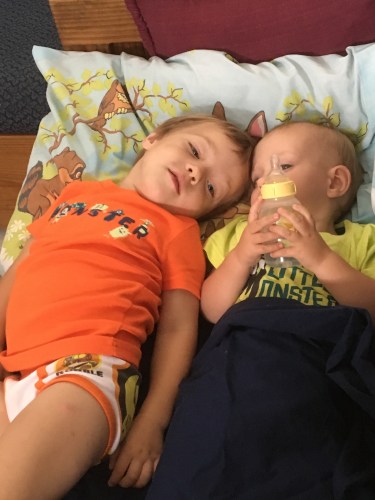
In the first days of the illness, Rondel was so concerned about his brother. He kept asking me when he would be feeling better, and what was wrong, and just wanted to comfort him with his presence. This is one of the beautiful side-effects of sickness, I think – the development of compassion in the sick child’s siblings.

IMG_0030

But all too soon he needed his own spot on the couch 😦 When Limerick started to feel better he seemed to find a lot of happiness in helping me take care of Rondel, especially when I would let him deliver a bottle to his brother, which was adorable and sweet.

IMG_0033.JPG

{happy}

One of the happy things that sustained us during the sick times (besides endlessly blowing bubbles for Limerick) was reading books. The boys like books well enough normally, but they also like to be moving and doing things – but when they didn’t have the energy to play, the books took them out of the moment and gave them something to think about. Limerick in particular has become far more excited about reading than he was before!

IMG_0034.JPG
demanding to read the Very Hungry Caterpillar

So there were some fun things in the middle of all the sickness – but all in all we are all extremely glad to have the blankets and sheets washed and off the couches, and a sense of normalcy and order restored to family life. I’m sure the boys are even more glad not to be hurting and sick anymore!

I really hope that you all had a better week than we did! And don’t forget to join me over at Like Mother, Like Daughter for the link-up today 🙂