Posted in family life, musings, quotes

different (a full review)

Sally and Nathan Clarkson’s book Different didn’t exactly live up to my hopes and dreams for it – that is, I suppose, it didn’t give me a checklist to follow or an instruction manual to read or even a set of principles to live by which would ensure success in the endeavor of parenting a unique and uniquely challenged child.

But that really wasn’t the point of the book. As Sally writes, “…don’t try to use our family’s experience as an exact template for your family. Every child is unique and requires a unique approach.”

And the story they told together, of struggles, pain, faith, and triumphs, was just as beautiful as I thought it would be. While they shared specific aspects of their personal lives, they made those intimate and individual stories relevant to a whole range of readers, drawing out empathy for both the challenging child and the challenged parent (or in other words, for both the different child and the parent who longed for normalcy). As there are in my close family many people on both sides of this dynamic, it spoke to me on a number of layers, and both encouraged and convicted me about several of my relationships.

(For example, it is easiest for me to apply the need for patience, acceptance, and understanding to my children, while failing to give that same grace to my husband, parents, siblings, or in-laws. Different, while primarily about that parent-child relationship, continually challenged me to scrutinize my motivations and intentions in my other relationships as well, and to try to bring them also into a more open, gracious, and loving posture.)

My primary take-away from the book in this season of my life is the value of making a home in which everyone in the family can feel at ease and accepted for who they are: a place where each one of us can truly feel that we belong. When my children are losing their tempers over trivial affronts, or melting down for inexplicable reasons, or refusing to answer a simple question when everyone else is waiting for their response, or taking out their frustrations on each other; when my husband is tired, preoccupied, or worried and speaks more sharply than typical; when I am moody and irritable and impatient – in those times, it is very hard to accept each other, to love each other, to give grace to each other. It is tempting to construct a narrative of the people in our family using only those negative moments, to focus on their immaturity or sinfulness, to attempt to fix and correct them with annoyance and frustration for their present state. But Sally addresses that temptation directly (emphases mine):

“…creating a welcoming home also includes the choice to accept the unique design of our families and the limitations of each family member. We have to learn to lean into life as something beautiful even if it is not exactly what we expected. Trusting that God works all things together for the good despite the challenges we face is a gift of worship we give to God. Acceptance with humility must eventually come to each of us if we are to please God and not always fight against the limitations of our own family pattern.

If Nathan had grown up in a home where he was constantly put down and corrected, I think the oxygen of God’s love would have been strangled from his heart, which needed a wide berth of unconditional acceptance. Love is the food our hearts need to grow, and so I had to figure out a way to give it in a way he could feel.”

I can choose to be impatient, irritated, frustrated with the imperfections I see in myself and my husband and the immaturity inherent in my young children – or I can choose to see the beauty and value of who we are and what we are building as a family. Only one of those choices will fill our home with the love our hearts need to grow, and the welcome we need to feel that here, at last, is a place where we – no matter how different – can truly belong.

Posted in book lists

Kristin and Antonia: learning from my literary sisters

Over the past month I read both Kristin Lavransdatter, by Sigrid Undset, and My Antonia, by Willa Cather, for the first time. I couldn’t help but mentally compare the two eponymous protagonists as I was reading, as both are Catholic women written by female authors, but are in temperament and circumstance very different.

91Hp6MKOiRL.jpg

Kristin Lavransdatter, despite being raised in a noble and loving family, enters adult life unprepared and unwilling to battle her passions and bosom sins, pursuing her own whims regardless of the shame and inconvenience it causes the people who love her and sacrifice for her. It is not until near the end of her life that she is sufficiently humbled and matured to look back with repentance rather than mere regret, and to make the hard changes in her own life that following God and living rightly demand of her. I often found it difficult to read Kristin’s story compassionately or even patiently, because her struggles and misfortunes were so frequently caused by her own headstrong will and lack of self-control, when she should have known better than to act that way! But in that judgmental stance I was often rebuked by the gentleness and guiding love of her old village priest and a monk from a neighboring city, who lamented her sin, prayed for her peace, and offered their comfort and wisdom (and sometimes their correction) in her doubt. Love her, they seemed to say to me, protect and pray for her, do not judge her. Judgment will not help to restore her soul and heal her brokenness. And they were right; the scorn and shame of her neighbors stung, but she could ignore it, and it wasn’t that weight that in the end brought her back to God and taught her how to truly love another person selflessly and without resentment.

The book is written with a tempestuousness that matches that of the protagonist’s character – in the medieval Norway of the book (accurately depicted from what I can tell – the author did a lot of research), successions are contested, old folk beliefs fight with Christianity, famines strike, arranged marriages are disputed, childbirth is incredibly dangerous, miscarriages and depression and poverty hover beneath the surface, and epidemics sweep through society. Kristin is most definitely not the only fierce and passionate individual here! Her story and its setting draw the reader in from the beginning, and hold one’s interest captive through towering heights and plummeting lows.

51KeFj9GIyL.jpg

My Antonia, on the other hand, is one of the gentlest and most peaceful books I’ve ever read. Antonia’s character and life are sketched out through the eyes of a man who met her when they were both children in Nebraska (she from Bohemia, he from Virginia) and watched her grow up to full beauty and maturity with the affectionate eyes of an old friend. Where Kristin is blessed with beauty, love, and wisdom in the parents who raised her but squandered it in her own impulsive and passionate way, Antonia is struck with the incredible tragedy of her father’s suicide coupled with the small-mindedness and paranoia of her mother, and yet still manages to blossom.

And yet, Antonia is a passionate woman just as Kristin is, full of strong and rich emotions that carry her with them. She is by no means a weak or mild individual; she is strong enough to work the fields with the men, beautiful enough (in action as well as appearance) to turn every head, fun-loving and spirited, brave and opinionated. What makes her different is the direction in which her passions led her. Kristin’s passions were bent, misguided, uncontrolled, turned away from the good and praiseworthy; Antonia’s were, while not perfect, aimed in general towards truth and beauty. As Jim, Cather’s narrator, puts it near the end of the book:

She lent herself to immemorial human attitudes which we recognize by instinct as universal and true […] she still had that something which fires the imagination, could still stop one’s breath for a moment by a look or gesture that somehow revealed the meaning in common things. She had only to stand in the orchard, to put her hand on a little crab tree and look up at the apples, to make you feel the goodness of planting and tending and harvesting at last. All the strong things of her heart came out in her body, that had been so tireless in serving generous emotions.

Reading both books in close succession made me realize how the choices we make and the emotions we obey shape our lives and even our children’s lives, by painting two very different possible paths down which a woman of passion, beauty, intelligence, and potential could walk. Goodness does not remove all difficulties, as Antonia found through her suffering, but neither does repentance restore what all that is lost or heal all that is wounded, as Kristin found through her suffering. And the suffering endured with passionate love for the good, for truth, and for beauty will leave a much different mark on the people around us than suffering we bring down upon our own heads through our sin and poor choices.

Posted in book lists

what I’ve been reading lately

After a rather long stretch of time in which I mostly reread my favorite fiction (Lord of the Rings and Harry Potter on repeat!) and kept up with the news and our church’s Bible-in-a-year plan, I have been diving back into the world of books. I realized that I have a lot of time in which I can read but not do much else (while Aubade is nursing, especially at night), but of course holding a book is complicated by said nursing… so I had been reading the news, surfing the web, and spending altogether too much time on Facebook, which was not helping my postpartum mood in the least. Then I remembered that all the libraries in my county have come together to create the Greater Phoenix Digital Library – meaning that more books than I have time to read are available on my phone, for free, with a simple app and the PIN from my library card. Honestly I’m not sure how I managed the boys’ newborn phases without this…

So, despite finding that a lot of the books on my wish list are checked out by other users of the library system, here are four books I’ve read this week that were completely new to me, in a variety of genres:

I Know Why the Caged Bird Sings, by Maya Angelou

cagedbirdangelou

This is of course a classic, and most people who haven’t read it are still familiar with some of Angelou’s poetry, at least (I knew of her mostly through her poetry, to be honest – Phenomenal Woman makes the social media rounds fairly frequently, and I love it every time I read it). But for me, who grew up in an educated, well-off, white family, it was eye-opening to see the deep personal and emotional impact of both intimate individual hurts (like parental divorce and sexual abuse) and systemic oppression (like the racism and poverty Angelou faced herself and saw affect her community). Someone’s story can be far more impactful than all the statistics and social study lessons in the world, especially when told with the simple power and unpretentious elegance of Angelou’s writing. It’s not an easy read, because of the painful topics it deals with, but it is definitely worth reading.

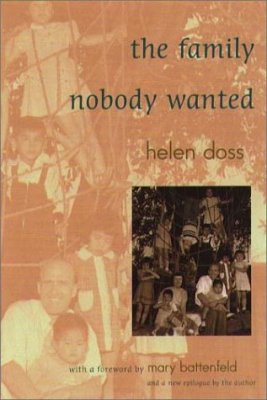
The Family Nobody Wanted, by Helen Doss

familynobodywanted

This is a memoir of quite a different type, although it touches on some of the same themes. Doss and her husband discovered as a young couple that they were infertile and that the demand for Caucasian infants to adopt was far greater than the number of babies available. So, in the 1940s and 50s, they built their family by adopting the unwanted children – children of mixed heritage who didn’t look “white” enough for mainstream American families to consider – and ended up with 12 children all together! The book is an honest look at their family life, addressing the racism directed at their children and family but mostly just full of hope and humor (I laughed out loud many times at the anecdotes Doss related – she is quite adept at capturing the funny side of disastrous moments as well as the dialogue of her young children).

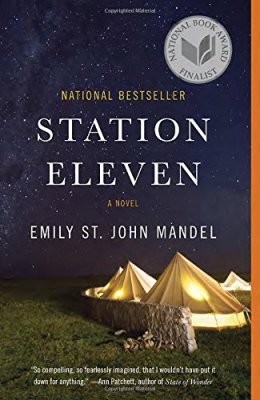
Station Eleven, by Emily St. John Mandel

stationeleven

After reading two memoirs, I decided to switch things up and chose this post-apocalyptic novel after seeing it on one of Modern Mrs. Darcy’s booklists (in general, that is a helpful site if you aren’t sure what book to read next!). I don’t normally read this type of fiction because it is dark and suspenseful and keeps me up all night, and this was no exception… The basic premise is that a strain of the flu wiped out the vast majority of the world’s population, disrupting civilization to the extent that people are living without electricity, without medicine, scavenging and hunting to survive, holding on to what scraps of art and culture they can salvage, and falling prey to cults and prophets who offer some explanation for why so few survived. Mandel’s characters are diverse in personality and background, and the different ways they experience the pandemic (as well as the years before and after it) feel very authentic. I particularly liked how the threads of theatre, music, and literature wound through the characters’ stories without devolving into preachy passages about the meaning and value of those things in a broken world; the novel is far more about what it means to be human, and how humanity survives and even perhaps recovers from an event so utterly devastating.

Half the Sky: Turning Oppression into Opportunity for Women Worldwide, by Nicholas Kristof and Sheryl WuDunn

halfthesky

Kristof and WuDunn examine the inequality of women in the developing world in a number of different arenas, including forced prostitution, rape (as a tool of shame or a weapon of war), maternal mortality and injury, and education. Each issue tackled is presented in light of the story of one or two individual women, spotlighting the problems involved as well as the complexities faced in addressing those problems; for instance, we see how difficult it is to truly free an underage girl from forced prostitution in the story of one young woman who returns multiple times to feed her drug addiction – which was in itself instigated by her captors and abusers. Some stories are inspiring; some are less so; and the statistics that they illustrate are often bleak. As a new mother myself, having experienced a labor (with my first) that would have resulted in death or serious injury without access to a surgeon, it is horrifying and saddening to read about women who have had similar experiences without the medical care available to me and others in the West. There is so much pain and death that could have been avoided. On the other hand, however, the book also shows us the stories of whole communities that have been improved by simple investments in education, or by deciding to take justice for women seriously. In addition to the stories and the statistics, a unique and valuable aspect of this book is the appendix listing specific organizations that are working in effective ways to address the issues faced by women in the developing world, to give the reader ideas of whom to support. I would encourage anyone – especially anyone who believes that things like rape and maternal care are only “women’s issues” – to read this book and see just how much communities can grow and heal when they come to realize that women, as in the eponymous proverb, “hold up half the sky.”

What have you all been reading lately? I’d love to hear your recommendations, since I have a short window of reading opportunity open right now!