Posted in giveaway

Differently Wired Giveaway!!!

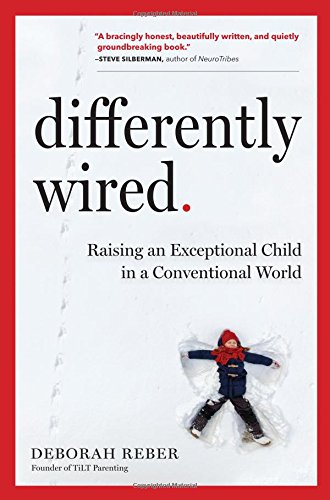
The Differently Wired launch date isn’t until the 12th, but guys, I got the book in the mail yesterday so we’re opening this giveaway now!

differentlywired

I did want to remind you that if you want the pre-order bonuses, you should order a copy of the book for yourself before June 12th. Personally I am most looking forward to the resources guide, a web page containing links to all the podcasts, articles, and experts referenced in the book. It won’t be available until the launch date, so I haven’t seen it yet, but I’m anticipating it will be exceptionally helpful. To see the full list of bonuses, visit here!

For those of you who are new to the blog, you can read my thoughts on Differently Wired, as well as some significant quotes I’ve shared, here, here, here, here, and here. If you just want the short and sweet version, Differently Wired is a book for parents of neurodivergent kids (including differences such as autism, ADHD, and giftedness), and approaches the unique challenges of raising these kids in a neurotypical society from a respectful and positive perspective. It manages to encourage and challenge parents without either minimizing their potential struggles or demeaning the children (and adults) who have these differences. The book is very practical, but I think the greatest thing about it is how it walks you, the reader and parent, through a paradigm shift via a series of Tilts in perspective and attitude. And since the pressure of mainstream society tends to be counter to these Tilts, I’m expecting this book to be one I refer back to again and again to refresh the way I look at my son, myself, and the way our family navigates life.

If you’re interested, our giveaway opens today and closes at the end of the day next Sunday! Just leave a comment on the post letting me know how neurodiversity has affected your life and/or what you are hoping to learn from the book if you win. If you follow my blog as well that will give you another entry into the giveaway, but only if you also leave a comment 🙂 I’ll use random selection (maybe have the kids draw a paper out of a hat, or something higher tech) to choose the winner, and then I’ll contact the winner to get their shipping address.

Good luck! This is an exceptional book and I am so glad to have the opportunity to share it with someone else.

Posted in family life, sqt

starting our summer strong

Because Rondel was in zoo camp every morning this week (which, by the way, was a major success – he absolutely loved it), I got to spend some more focused time with Limerick and Aubade, and they got to spend more time playing together. Normally, Rondel does most of the talking and directing when the kids are playing, so I was curious what would happen in his absence; what happened was that Limerick filled in the gaps quite easily and just about talked non-stop, especially towards the beginning of the week. And it was nice to have the chance to listen to him without having to simultaneously try to listen to Rondel… it can be a bit much when they are both talking to me (and demanding a response!) at the same time.

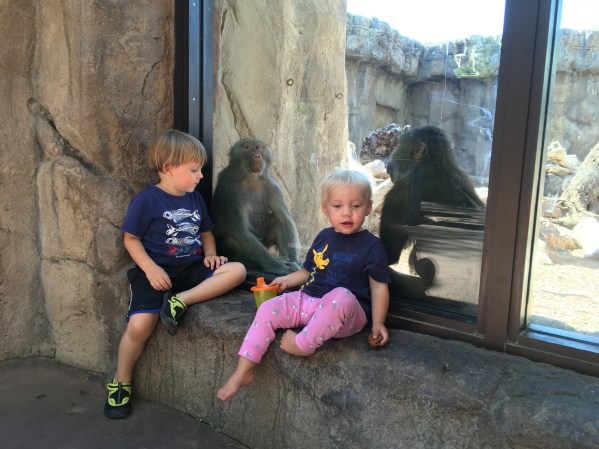
  1. On the first day, we stayed at the zoo and watched the Andean bears for a long time. Limerick decided he would be an imaginary creature called a buck bear, and spent at least thirty minutes describing this animal and its habitat to me while Aubade slept. (It is very much an atypical bear, as it has sticky feet like geckos and gills like a fish! Rondel never lets him get away with such aberrations from reality 😛 ). He also was brave enough to sit right against the glass next to the baboon! He’d been watching Aubade interact with her for a while, and had clearly wanted to see the baboon up close himself, but had been too scared to do so. I was proud of him for getting closer even though he was nervous.IMG_3386
  2. On the second day, we came home and just hung out together. We cleaned, we read books, we played with stuffed animals – it was relaxed and fun. (Also, that night we received Rondel’s official diagnosis of autism, after several weeks of waiting.)
  3. On the third day we did more of the same, but stopped in Downtown Mesa on the way home to explore the musical instruments in front of the IDEA Museum. We used to visit there all the time when we lived within walking distance, when Rondel and Limerick were Aubade’s age, but she hasn’t gotten to experience it very much, and judging from her reactions she was very glad we went!

    Yes, I let her choose her own clothes and accessories… apparently oversized T-shirts pilfered from her brothers and metal chain VeggieTales necklaces are in fashion in the 18 month old set these day 🙂 She is so opinionated about what she wears – and always ridiculously cute in it, no matter how off-the-wall it may seem at first.

  4. On the fourth day of camp we rested in the morning but took Rondel with us down to IKEA in the afternoon! IKEA may be a store, but my children seem to think it is a giant playground. Every couch needs to be sat upon, every pillow smushed, every stuffed animal hugged, and every bed snuggled in. We were just there for some curtains, but we lingered everywhere (and let Aubade take a nice long nap in her carseat in the shopping cart en route!). Then I kept my momentum going long enough to hang and hem the curtains, and make a curtain and valance for the kitchen sink window with some fabric I found in my stash.IMG_3475Here they are all pulled back! Those are south-facing windows… and it’s summer in Arizona… so the curtains haven’t been spending too much time open like this. Even just the white fabric over the sink made a noticeable difference when I first hung it up. And I impressed myself (and probably my husband too) by managing to actually complete a project!
  5. The last day of zoo camp I missed out on drop off, pick up, and sweet time with the littles because it was my husband’s day off and my day to go in and work. Not quite as fun, or not fun in the same way, but I did get to consult with a colleague from a different core facility and develop a project and sample tracker for their instruments and workflows, which was both interesting and satisfying. Since I’ve started working such limited hours, and partly from home, my position has shifted a bit away from the biology lab work to the information systems behind the lab work, and I’m finding it really engaging.
  6. It feels like we began the summer at a sprint, and I think it is just going to keep on this way as we have swim lessons and a visit from my sister in June, and my parents are funding a second session of zoo camp for Rondel as a birthday present in July. But honestly the heat is so intense that having planned activities helps prevent me from doing nothing but lounging around the house eating ice cream! Not that ice cream is a bad thing, necessarily… I finally jumped on the nice cream train this summer, one night when Rondel was emotionally collapsing over the absence of ice cream in our house and I knew there were tons of frozen bananas just calling to me. The plain vanilla flavor isn’t my favorite, but the chocolate peanut butter version tastes like decadent chocolate ice cream, with the added bonus of being healthy enough that I can serve it to the kids for lunch and become the coolest mom ever. I don’t really have a recipe, but in essence I just blend up frozen banana chunks in the food processor, with a bit of milk if necessary, and then add in a huge scoop of peanut butter and a couple tablespoons of cocoa powder. We’ve made at least three batches in the past two weeks, and would have made more if we hadn’t run out of bananas and had to buy more, wait for them to get nice and overripe, and then wait for them to freeze! My skepticism regarding this whole concept has been removed by the goodness of nice cream.
  7. And zoo camp itself? Well, every morning Rondel cooperated with me to get dressed and eat his food, he ran ahead into the group to participate, and he greeted me back at the end with endless excitement, ready to tell me about everything he did. He got to pet, hold, and feed a huge variety of animals (from bunnies and boa constrictors to sting rays and giraffes); he drew pictures; he played games with other kids; he got to bring home a sting ray tooth that he sifted out of the sand in a pool; and he got to see so many animals that he loves. In short, he got to practice social skills and adaptability while also being in one of his favorite places in the world, getting to spend time focused on animals without any distractions. I just wish I had pictures!

What are your favorite ways to deal with the heat, especially with little kids? They don’t approve of me just lying in the sun soaking it up, but running around when it’s 100 degrees outside gets tiring fast! And do you have any awesome plans for the summer?

Linking up with Kelly at This Ain’t The Lyceum today!

Posted in family life, information, musings

responding to an autism diagnosis

We received Rondel’s clinical report today, with his official diagnosis of autism spectrum disorder. It was definitely not unexpected, and in many ways it is a huge relief to finally have it on paper with a physician’s signature and notes.

But it is also very hard to read through the report and take in the medical assessment of my child, who I see in all his brilliance and originality and intelligence, and who is being evaluated in light of his struggles and deficits. It is the very embodiment of the pathology paradigm, particularly given the list of recommendations at the end of the report that includes ABA, a therapy that is consistently attacked by autistic adults who experienced it as children. It reminded me of why we used the NODA app for diagnosis in the first place: so that Rondel wouldn’t need to be exposed to the pathology mindset, but would still be able to obtain a diagnosis for support, self-advocacy, and understanding. I just forgot that I as the parent would still have to deal with all of that negativity on his behalf, and buffer him against it.

In an ideal world, doctors could still assign the autism label without calling it a disorder. There are definite differences between the way the autistic mind functions – in the way it perceives the world, in the way it processes information, and in the way it prefers to interact with other people and objects – and the way the majority of minds (neurotypical minds) function. What people often miss, including doctors and therapists, is that the autistic wiring comes with its own unique strengths as well as its own unique weaknesses. A diagnostic process that sought to exist within the neurodiversity paradigm rather than the pathology paradigm could look for examples of both these strengths and these weaknesses, to generate a complete picture of the individual, and to help develop specific plans of support for the individual. In other words, for example: you have autism, and so you struggle with sarcasm and implied humor, you have difficulty reading facial expressions, social interactions and small talk take a lot of energy because of how hard you have to work to keep up and fit in, and certain noises and smells make you want to curl up into a ball or run away – but you also have a mind like a steel trap, the ability to make connections between information and ideas, unique ways of solving problems, and intense loyalty towards the people you are attached to. How can we craft your daily routine to take advantage of your strengths without putting too much pressure on you in your areas of weakness? That would be useful and practical support, without pathologizing the condition.

The pathology paradigm shows up in other places than the medical profession, though. Even a shift in the diagnostic process would take a while to seep through the culture – and until the culture changes, a diagnosis of autism is still going to be met by attempts to sympathize over the tragedy of it, doubt (because your child doesn’t look like he has autism), pseudoscientific “cures”, and even blatant disbelief.

What I wish I could tell everyone I know is that I am not sad or upset at all by Rondel’s diagnosis. His mind is different, and it is different in a beautiful and wonderful way. Will he struggle in a neurotypical society because of those differences? Probably so. But with love and practical support, he can also flourish and give to the world using his unique gifts and talents. He has the focus and the interest to immerse himself deeply in a topic and absorb everything there is to know about it. He has the imagination to see past the status quo and envision new ways of being and doing. And he has support around him to help develop his emotional awareness and executive functioning (two things that were a struggle for me well into adulthood).

What I wish everyone knew is that autism doesn’t just look like one thing. It might look like a mostly non-verbal ten year old communicating in one or two word phrases, dumping out every toy box and taking apart every Duplo tower, standing with the outdoor curtains blowing against his cheek to calm his body down, dancing to his favorite music videos, wanting to be part of the social action around him even as it overwhelms him. It might look like a very verbal twelve year old swinging endlessly because the sensation is so enjoyable, singing the same made-up song over and over again because the repetitive loop is comfortable and fun and transitioning to something else is hard, identifying what day of the week any date falls on, and communicating the love of God in profound and beautiful words. It might look like a four year old melting down because the color he used on his picture doesn’t look the way he expected, talking nonstop to manage auditory input, mimicking the meter and pattern of books and songs in his own games with new characters and situations, wanting a parent to snuggle with him every night at bedtime, or demanding animal documentaries at every possible moment. It might look like an adult struggling to focus on assigned tasks at work because their mind is stuck on other less-prioritized projects, getting into arguments with their spouse because of missed non-verbal cues, falling apart at movies because the emotions and sensations are just too strong and overwhelming, crying because they are running fifteen minutes later than they wanted, or developing a new system of project tracking for their lab from scratch and becoming a source of expertise without formal training because of their analytical skills and desire to learn.

Labeling all of those individuals as autistic helps them to obtain the support they need for the shared weaknesses that accompany the condition (weaknesses partially but not entirely due to living in a neurotypical society), but it doesn’t predict what they will do with their strengths and how their lives will play out. We are just as unique as neurotypical individuals in that regard! I believe – and this is why I think the neurodiversity paradigm is so critical – that if we can stop thinking of neurodivergence as disordered we can create better conditions for autistic and other neurodivergent individuals, a culture where all people can receive support in their areas of weakness and be given the opportunity to explore, develop, and contribute in their areas of strength.

What I wish everyone could see is that the autistic way of seeing and perceiving the world is also beautiful. That a person’s thoughts and feelings are equally valid whether they prefer to speak them, write them down, sign them, or use an assisted communication device. That the same processing circuits that cause us to flap our hands or scratch our arms or chew on our clothes to stay regulated are the same ones that allow us to retain incredibly detailed information and connect seemingly unrelated data in relevant and insightful ways. That the honesty and authenticity that keeps us from betraying or lying to the people we love makes up for our tendency to laugh at the wrong moments in a conversation or our inability to pick up on all your sarcasm or implied humor. That while we may experience and exist in a different way than you do, our differences do not make us less than you.

As an autistic adult (without an official diagnosis yet) raising an autistic child (now with an official diagnosis, hooray!), my plan for “treatment” consists mostly of helping Rondel to understand himself and to understand the world around him, cope with the things that are difficult and embrace the things that give him passion and fulfillment; and of prizing the wonderful individual that he is, and giving him the support he needs (right now, practically, speech therapy and mindfulness practice) to keep his areas of weakness from overshadowing and hindering his talents and strengths. It does not and will never include considering him to be disordered because his mind doesn’t function within that narrow range deemed “normal” or “typical” by the DSM.

Posted in family life, musings, quotes

presence

“Asher picked out a rocket Popsicle while I parked the bike and looked for a spot in the sun, eventually setting on a rainbow-colored, oversized hammock. We climbed in and lay next to each other, his head cradled in the nook of my arm, and we swung slowly, gazing up at the giant sycamore trees, new green leaves silhouetted against the blue sky. It was the first time in recent memory that I’d stopped moving, thinking, planning, working, or teaching and done nothing but be in that moment. A moment, I might add, in which Asher stopped talking about Minecraft and Plants Versus Zombies. Instead, as we lay there gently swaying, we talked about spring. And homeschooling. And beauty. And peace and contentedness. And how nature can be a kind of religion. And how important it is to notice and appreciate. And about how sticky hands get when Popsicle juice drips on them.

“[…] When we’re not living in presence, we miss the little things – the bright spots that are there, even when we have to search hard to find them. The tiny growth spurts. The moments of brilliance. The sparks of joy. To experience these things we have to fully be here, open and present.” – Debbie Reber, Differently Wired

It’s tempting for me to be always immersed in my phone, or a book, or a coloring sheet, or even just my to-do list for the day. But I’ve noticed that when I actively engage with my children, when I am present in their games and conversation (even if I am just observing while making dinner or cleaning), their imagination is sparked, their reactions are more positive, their responses are more mature, and their smiles are brighter.

IMG_9404

(Also, they tend to be much more accepting of time apart if our time together is truly a time of connection and presence, which allows me to have more space for deeper renewal and refreshment when I need it.)

It isn’t just me, the parent, who benefits when I choose to be present – my children benefit as well. My presence assures them of my love. It demonstrates that they are worthy of authentic attention and connection. It gives them confidence in the value of their ideas. It gives them the opportunity to learn from any experience and wisdom I may have.

And it is in all the moments, silly and stressful, happy and hard, that a deep and lasting relationship can grow between us. If I choose to be mentally elsewhere for those moments, I choose to stunt rather than nurture that relationship. But if I choose to be present, I am choosing to water and fertilize that relationship, and to weed out all the other trivial things that compete with my children for my attention, emotional energy, and time.

IMG_9450

Being present means playing peek-a-boo with Aubade when she hides her face in her hands.

Being present means talking in a baby voice for hours because the mommy animals in the house want me to be their baby elephant.

IMG_9447

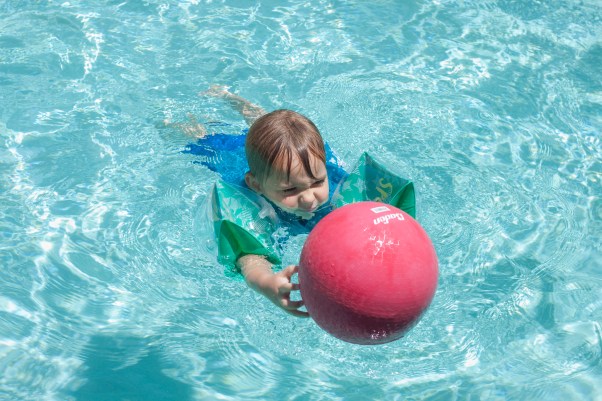
Being present means getting to cheer Limerick on when he chases a ball around the pool and finally manages to grab it, instead of staying oblivious to his persistence and success.

Being present means laughing when Rondel jumps into the pool and totally soaks me with the splash, instead of perceiving it as an interruption of my more important business.

IMG_9429

Being present means noticing how Limerick observes and investigates the world around him, constantly soaking up knowledge with his thirsty pattern-loving mind.

And most of all, being present means mutual openness, a sharing of happiness, and a fostering of love. Yes, I need space and time alone – but when I am with my kids, I am going to try to be fully present as much as possible.


If you liked the quote from Differently Wired, read my brief review of the book here and check back in June for the giveaway!

Also, check here for a list of some awesome pre-order bonuses you can receive for no additional cost if you order the book before June 12th!

Posted in family life, sqt

{sqt} – our random happenings

For the quick takes link up this week, some moments and thoughts that were really too small to make up a whole post on their own 🙂

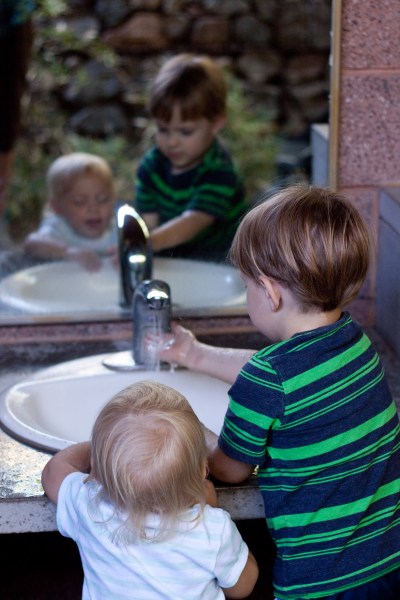
  1. As Aubade grows older, her relationship with Limerick is really beginning to flourish and deepen. He took a while to adjust to having a younger sibling around, but recently he has taken on the older brother role more consciously. If he sees her lying down he will lie down next to her and snuggle; if she is playing with something he will join her; if she is struggling with something he will try to teach her or help her. He will also tell me how cute she is and how much he loves her, and will describe to me all the things she does that make him laugh. She in turn follows him around, wrestles and dances with him, randomly comes up and hugs him, and wants to play with everything he is playing with.

    IMG_9361
    Aubade and Limerick using an automatic sink, backs to the camera, faces reflected out-of-focus in a mirror behind the sink
  2. Non-toy items are apparently the best things to play with these days. Currently, all the forks are spread out on the kitchen table as a herd of fork monsters. They use their long sharp teeth to fight each other to establish dominance, I’ve heard.
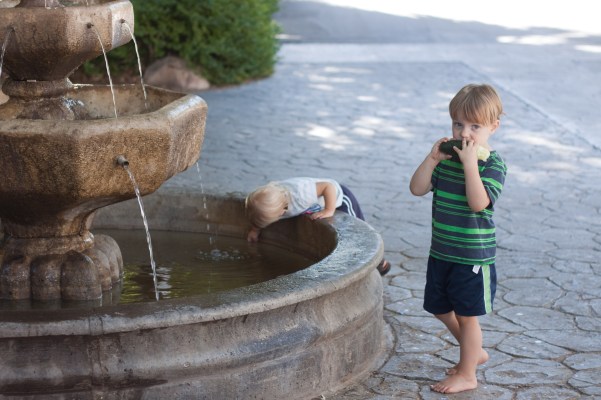
  3. Limerick has a significant dislike for shoes, which is somewhat inconvenient now that the pavement is too hot to touch every afternoon. He has one pair he will tolerate when necessary but he takes them off every chance he can find (such as at the zoo, until a zoo volunteer told us it was against zoo rules).
    IMG_9388
    Aubade is leaning into a large stone water fountain; Limerick, next to her, is looking at the camera while taking a bite out of a cucumber.

    Also, he likes to eat cucumbers like most people eat apples. I’m not going to try to persuade him otherwise!

  4. Rondel’s hair is so long. As in, almost shoulder length! I’m going to be sad when he finally asks to have it cut, I think.
  5. Our anniversary was this weekend! Seven years so far, with four homes, three kids, two jobs, and one degree along the way. We celebrated by having dinner as a family and spending most of it apart with one of us handling a meltdown and the other feeding the two remaining kids. How is that for real life? We are planning on doing something together when my parents are available to babysit, however 🙂
  6. I should not be allowed to go shopping on my own with the kids: I can’t resist when they ask for certain things. In other news, we now have a child-sized floating stuffed turtle that can double as a pool raft that will be living (and swimming) at Grandma’s house…
  7. A couple nights ago I was putting the boys to bed and they both plastered themselves up next to me, to the point where I started to feel panicky. Little kids have high physical touch requirements, and that can definitely be hard for me sometimes. But at other times I think to myself, when will I ever again have the opportunity to give and receive so many hugs and kisses and snuggles every day? And the spontaneous exuberant hug of a toddler is hard to match.

Head on over to This Ain’t The Lyceum for the rest of the {sqt} link-up today!

Posted in musings

parenting towards inclusion

Inclusion begins with honesty.

If I gloss over the differences between people, my child will be confused by the discrepancy between what he sees and what he hears from me, and will intuit that difference is something shameful, something not to be spoken of.

Inclusion begins with knowledge.

Last week we watched a friend’s three children for a few hours at our home, one of whom is severely autistic. One of his favorite things to do is to take things apart (things like Duplo creations)… which was understandably frustrating for Rondel, who is very particular about his creations and gets worked up if anyone even gets too close to them. They were building together when the inevitable happened, and when I separated them Rondel told me that he didn’t like his friend “at all.”

But when I explained to him why his friend was behaving that way – that his brain was developing differently and he was in a lot of ways similar to Aubade as far as impulse control and the kinds of activities he enjoyed – it made sense to him, and he was able to adjust the way he played to accommodate those differences. Having that knowledge helped him to more fully include his friend.

Inclusion begins with presence.

One of the reasons I offered to watch my friend’s children (besides the fact that she needed someone urgently at the last minute) was that I want my children to spend time with people who aren’t like them: people of different ethnicities, people with physical disabilities, people with neurodivergences, people of different ages. It isn’t actually inclusive to sit around and talk about equality and opportunity and diversity if you aren’t living it out by filling your community with all types of people. I want my children to know from lived experience that even people who face incredible physical and mental challenges are just people, with their own needs and preferences and personalities, with their own unique strengths and weaknesses and quirks.

Inclusion begins with me.

Because my attitude and my choices determine the environment in which my children grow up, I have to shape it into one of acceptance and love. This is not necessarily easy for my introverted self, but I believe it is critically important for the future of our society and communities for inclusion to become part of the fabric of our everyday life and personal relationships. It begins here, in my home and in your home.

“So far we’ve talked about getting out of our limited thinking and envisioning how we’d design our ideal day if we knew we would be successful. We explored letting go of our own emotional baggage, recognizing them our personal triggers have been provoked, and committing to parenting our children from a place of possibility instead of fear. But for this last Tilt, I want to talk explicitly about fully leaning in to the power of our personal choice and using it as a foundation for creating what our child needs. Because the truth is, what our child needs may not exist yet. But why should that stop us?” – Debbie Reber, Differently Wired


If you liked the quote from Differently Wired, read my brief review of the book here and check back in June for the giveaway!

why should that stop us?

Posted in family life, musings

love

Love is such a difficult thing to describe; it is impossible to quantify. Rondel and Limerick have been attempting to articulate how much they appreciate or enjoy something by telling me they love it “even more” than they love something very special to them, including people (so one would say he loved Grandma more than Mommy, and the other one would state the opposite, or they would say they loved a new type of popsicle even more than swimming). They have also asked me a few times who I loved the most – talk about a question with no right answer!

What I’ve been explaining to them, and how I answered their question, was that I love all of them in different ways, because they are different people and our relationships are likewise different. I love them all just the same amount, but it looks different; in a sense, my love for each of them is a different color, but each color blazes with the same intensity, beauty, and brightness.

If they asked me which color represented my love for each of them, this is how I would respond…

Continue reading “love”

Posted in family life

holding open doors of possibility

Rondel loves the zoo. I think he would want to go there almost every day (some days have to be for Grandma’s house) if possible, and he never wants to leave no matter how long we’ve been there. There are always more animals to see, more wonders to explore, more facts to learn. As much as he enjoys the splash pad, he always asks to see another exhibit instead, despite the heat, until I mandate a water break on behalf of his siblings.

So I thought to myself, I wonder if the zoo is doing any summer camps? Rondel will probably still be too young, but I can still see what’s available. Blithely thinking these things, I went onto their website and discovered that Rondel is not too young by any means, and would be eligible to attend a half-day camp focusing either on animal stories or animal art.

Part of me leaped up in excitement! He loves the zoo! What a great opportunity! How awesome would it be to get to spend that much time at the zoo, talking about animals, looking at animals, surrounded by people who also love animals! What a chance to try to integrate with a group of peers, in an environment without a parent, to stretch his comfort zone and expand his social skills! And oh… what about dealing with loud groups, bright sunlight, the challenges of speech articulation delays, and the anxiety of the unknown? This is, after all, the boy who struggles in a typical Sunday school classroom even with a personal aide, and the boy who cries at the park if he turns around and can’t see me – even if I haven’t moved from where he left me. Would a summer camp be an adventure or a nightmare?

My husband had the wisest words about this dilemma, about the dichotomy between excitement and fear: that if we, as Rondel’s parents, make a decision for him based on our fears of what might happen, based on what we think his limitations and struggles might be, than we are placing that limitation on him instead of giving him a chance to grow and soar and potentially surprise us all with his abilities. We would need to plan well for it, obviously, to give him the best possible chance to succeed and to give him a way out if it proved to be too much, but it would be foolish – especially in the long-term – to simply close this door because we fear he will fail.

It reminded me of a passage from (you guessed it!) Differently Wired. (Reber really seems to have covered everything. I promise I didn’t begin writing this post trying to sneak a quote in!)

“Choosing fear equates our child with their diagnosis, rather than seeing them as creative beings who are here to shake up the world in their own magnificent way. Choosing fear is the very thing that keeps us stuck. Choosing fear creates a culture of apprehension and anxiety in our families, and affects the way our children, many of whom are already highly sensitive and anxious, feel about themselves. Operating from fear leads to more limited thinking and fearful energy, which both we and our child will feel, and less chance of our child’s uncovering and experiencing their extraordinary possibilities. It’s the epitome of a self-fulfilling prophecy.”

Instead of choosing to direct my child away from opportunities and experiences because I’m afraid they’ll be too hard for him, I am choosing to present him with the options and let him come to his own informed decision – and then, I am choosing to support him through the results of that decision, even if they prove to be difficult or unpleasant. That is the process that will help him grow in self-awareness and confidence, that will help him develop autonomy and independence, and that will therefore help him grow into greater possibilities instead of holding him back in a box created by my own anxious and limited imagination.


If you liked the quote from Differently Wired, read my brief review of the book here and check back in June for the giveaway!

Posted in book lists, sqt

{sqt} – what we’re reading now

We finally made it back to the library to return our old set of books (renewed at least three times because we kept forgetting to bring them back) and pick up a new set! We’re missing some of the old ones, but loving some of the new ones, as well as finding classic favorites from our own shelves and Grandma’s house. These seven are some of our current most-read titles.

  1. Make Way For Ducklings, by Robert McCloskey – This one is of course a classic. I had a copy as a child, but the one we have now I managed to find at a thrift store for $1.99, hardcover in perfect condition. I still can’t believe it… Published in the 1940s, it was a classic when I was a child and I wouldn’t be surprised if both my mom and grandma grew up with it. The Boston of the book is probably quite different from the Boston of today – but the story is timeless and the illustrations are absolutely beautiful. The humor is subtle but still has both the boys laughing every time (it’s the rhyming names for the ducklings that really get them). It has the added advantage of being a book I will never grow tired of reading aloud.
  2. Marti and the Mango, by Daniel Moreton – This is another book that I grew up with, although I doubt it is nearly as widely known. We are currently borrowing it from my mom. It tells the story of a mouse who is supposed to find a mango to take to dinner at his friend’s house, but who doesn’t know what a mango is! On each page he asks a different animal if the fruit they have is a mango, and they give him a different point of reference as to why it isn’t. What makes it really enjoyable to read is the alliteration for each animal-fruit pairing as well as the repetition of the mango identification hints on each page, as they accumulate. It is a simple story with the attention to detail (in both words and pictures) that makes it interesting for both parent and child.
  3. How Does a Dinosaur Eat All His Food? by Jane Yolen – This book is from our new library haul, and is I suppose nominally about table manners and dinosaurs, but is really just hilarious as the dinosaurs exhibit every type of horrible, atrocious, behavior. The boys basically fall over laughing every time we read it.
  4. Hello Hello, by Brendan Wenzel – This is another book from our latest trip to the library, and one I didn’t expect the kids to enjoy nearly as much as they have. I had actually noticed it on the display and put it back because I thought they wouldn’t like it – but Rondel also noticed it, had me read it at the library, and then put it in out stack of books to bring home, and all three of the kids have requested it since we’ve had it. The words are very simple and sparse, but the illustrations are bright and bold, as the author takes you through pages of different animals and says hello to them (by category, not by name – the actual species of each animal is in a list in the back, however). Even Aubade will sit through the whole book looking at the animals, and Rondel and I will peek at the back to find out what some of them are that we can’t easily identify (although he’s quite good at remembering all the animals from the documentaries he loves… I probably need the identification key more than he does!)
  5. Tiny Little Fly, by Michael Rosen – This is one of the books we just returned, by the author of We’re Going On a Bear Hunt. It has a similar pattern of repetition and rhyme, beautiful illustrations (this seems to be theme with these books), and a little fly who manages to irritate all the huge animals and get away with it unscathed. The boys were starting to copy the rhythms of it into their conversation and pretend play, which was neat to hear!
  6. Usborne Big Book of Colors – This book has no story; it is just a book naming colors, with a color wheel in the back. But it’s beautiful, with thick not-quite-board-book pages, and the boys and I – especially Limerick – like to sometimes just go through it together enjoying all the gorgeous colors and finding our favorite shades of each. It also sparked a conversation on idioms that link emotion with color, which was interesting for me to think about in depth and a great opportunity to discuss metaphor with Rondel. And why is it that no one is ever described as being “orange” with some emotion?
  7. There’s a Wocket in My Pocket, by Dr. Seuss – This is Aubade’s favorite book right now (in board book form). She will ask us to read it multiple times per day, and multiple times per sitting. I’m not sure what she loves so much about it, but my hunch is that it’s the silly words and silly pictures combined. The book is basically just playing with the English language, and that’s a great way to come at it when you’re still beginning to learn that language.

Head on over to This Ain’t The Lyceum for the rest of the {sqt} link-up today!