Posted in musings, quotes

a brief thought on contraception

“Only by the hypocritical ignoring of a huge fact can any one contrive to talk of ‘free love’; as if love were an episode like lighting a cigarette, or whistling a tune. Suppose whenever a man lit a cigarette, a towering genie arose from the rings of smoke and followed him everywhere as a huge slave. Suppose whenever a man whistled a tune he ‘drew an angel down’ and had to walk about forever with a seraph on a string. These catastrophic images are but faint parallels to the earthquake consequences that Nature has attached to sex; and it is perfectly plain at the beginning that a man cannot be a free lover; he is either a traitor or a tied man. The second element that creates the family is that its consequences, though colossal, are gradual; the cigarette produces a baby giant, the song only an infant seraph. Thence arises the necessity for some prolonged system of co-operation; and thence arises the family in its full educational sense.” – G.K. Chesterton, What is Wrong With the World

Nowadays we have the promise of contraception to hold back these “earthquake consequences” of the intimacy between a man and a woman – the ability to prevent the occurrence of a baby tying the two together and piling upon them that shared responsibility. So a man and woman can share their moment of love and not fear that a baby will come to demand their cooperation and attention, and they can afterwards abandon each other for new love without a corresponding betrayal of the new person they’ve created.

But do we avoid this treachery against our potential children by betraying our own selves? Do we avoid the creation of splintered families by splintering our own souls? When we set aside the natural purpose of an act that we might solely pursue our own pleasure, or even the pleasure of another, we do ourselves a great disservice, and sin against ourselves; beyond that, we frustrate the great powers that could work through us and in us for the redemption and beautification of the world.

It is good not to beget a baby only to abandon him. It is good not to form a family when there is no intention or desire to endure with and labor for the good of that family. But it is not good to pursue the pleasure that is meant to accompany the formation of the family while simultaneously refusing the family; it separates the act from its purpose, like the ancient Romans vomiting so that they could continue to enjoy the pleasures of the table. It damages our souls like prolonged vomiting damages the body – slowly, subtly, but surely.

(caveat – there is so much more to be said on this topic and this isn’t intended to be a complete argument – it is just a thought, a consideration, a part of the bigger picture of human dignity and sexual ethics.)

Posted in quotes

Learning

” ‘The best thing for being sad,’ replied Merlyn, beginning to puff and blow, ‘is to learn something. That is the only thing that never fails. You may grow old and trembling in your anatomies, you may lie awake at night listening to the disorder of your veins, you may miss your only love, you may see the world about you devastated by evil lunatics, or know your honor trampled in the sewers of baser minds. There is only one thing for it then – to learn. Learn why the world wags and what wags it. That is the only thing which the mind can never exhaust, never alienate, never be tortured by, never fear or distrust, and never dream of regretting.'”

T. H. White,  The Once and Future King

Posted in musings, quotes

today and only today

12341513_1040906235939980_3356965022193605550_n

Depression feeds into regret – it reminds me of everything I’ve done that I could have done better, makes me feel guilty for every misspoken word or careless act, piles the past onto my head in a tornado of accusations and reminders of failure. And yet, despite all of that focus on the past, it never helps me change anything for the better in the present. All it does is feed me lies and hold me captive in the dungeon of my own mind.

Anxiety feeds into worry – it whispers in my ear all the potential things that could go wrong, catapults my mind to the worst possible conclusion when faced with hints and partial knowledge, makes me cower in fear of the unknown future, promises that I will fail again and something I cherish will be lost forever. And yet, despite all of that focus on the present, it never gives me a practical solution that I can start living out in the present. All it does is feed me lies and hold me captive in the dungeon of my own mind.

A quote like this one won’t free someone from anxiety and depression, but it can be a reminder to me now, when I’m not struggling with those illnesses like I have in the past, that I don’t need to keep listening to the lies they told me then. I can get up each day and do my best. I can pick myself up each hour, ask for forgiveness if necessary, and start again. I can present each minute to God as my gift, regardless of how I failed in the last minute or may fail again in the next minute.

Posted in musings, quotes

thoughts on the principle of “respect for persons”

I’m doing my human research ethics refresher training at work this week and ended up rereading parts of the Belmont Report (the flagship document on the ethics of human subjects research in the United States, written in the 1970s in response to some of the atrocities uncovered during the Nuremberg trials as well as some of the horrors unearthed in our own history). The section of “Respect of Persons,” deemed a “Basic Ethical Principle” by the authorial committee, particularly stood out to me:

“Respect for persons incorporates at least two ethical convictions: first, that individuals should be treated as autonomous agents, and second, that persons with diminished autonomy are entitled to protection. The principle of respect for persons thus divides into two separate moral requirements: the requirement to acknowledge autonomy and the requirement to protect those with diminished autonomy.

An autonomous person is an individual capable of deliberation about personal goals and of acting under the direction of such deliberation. To respect autonomy is to give weight to autonomous persons’ considered opinions and choices while refraining from obstructing their actions unless they are clearly detrimental to others. To show lack of respect for an autonomous agent is to repudiate that person’s considered judgments, to deny an individual the freedom to act on those considered judgments, or to withhold information necessary to make a considered judgment, when there are no compelling reasons to do so.

However, not every human being is capable of self-determination. The capacity for self-determination matures during an individual’s life, and some individuals lose this capacity wholly or in part because of illness, mental disability, or circumstances that severely restrict liberty. Respect for the immature and the incapacitated may require protecting them as they mature or while they are incapacitated.” (emphasis added)

I wish this principle was applied more broadly in our society, and not merely codified into our human subjects research policies. Can you imagine what it would look like if, instead of shunting the homeless and mentally ill to the back or our minds and the sides of our communities, we considered them to be fully human agents able to make decisions and entitled to protection, not neglect or abuse, when incapacitated through disease or lack of opportunity, education, and health care? Maybe it would pave the way for people to reintegrate into society; maybe it would end some of the isolation and stigma surrounding people and their loved ones who are going through a situation in which they need help and aren’t fully able to advocate for themselves.

Can you imagine how the next generation would live if we raised our children with these principles of respect? If we valued their autonomy, took seriously their opinions and decisions, gave them the freedom to try and fail and learn and succeed, and equipped with the information and logical skills to choose wisely? If we stopped viewing them as possessions and status symbols and means to our own self-fulfillment, and instead truly considered them to be autonomous agents (immature and in need of our guidance and protection, yes, but not for us, or belonging to us, for our pleasure or our reputation)? We wouldn’t have the wounds of a child who can no longer live up to his parents’ expectations and feels like he’s going to bring their whole world crashing down, or of a child who is scared to try because he’s scared to fail and doesn’t believe he has the ability to think and act for himself, or of a child who is abused or neglected by parents thinking only of their own pleasure or convenience. And we wouldn’t have all those old wounds festering in the hearts of the adults who are leading our country, our businesses, our churches, and our families…

Can you imagine what the tender and vulnerable bookends of life could become if we viewed those people as entitled to our protection? Instead of the womb being a place where life only continues at the whim of another person, where the vulnerable human who cannot yet speak for himself or make his own decisions isn’t even given the basic protection of his own life, maybe it could become a place where the vulnerable are valued and protected with gentleness and love, preparing the baby within for the autonomy that will grow and mature within him. Instead of the last years of illness, frailty, and dementia being felt as a burden on the greater society, and the less autonomous being pressured to end their lives to reduce the strain on the community’s resources, maybe it could become an opportunity for the healthy and strong to learn love and sacrificial service in protecting and comforting the sick and dying.

Research isn’t the only thing that needs to be governed and informed by basic ethical principles.

Posted in family life, musings, quotes

labels vs. true understanding

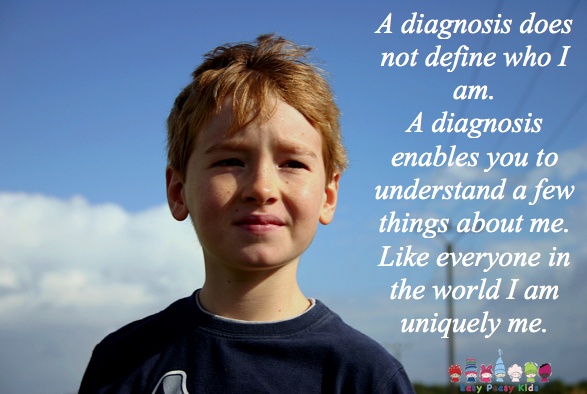
I found this meme on Pinterest (and couldn’t find the original source, unfortunately) while looking for another quote I half-remembered, and thought it was very true:

Diagnosis Meme

One of my close family members has several diagnoses attached to him, and while they have helped me understand things about him – how he thinks, how he reacts, how he processes information and stimuli – it would be incredibly reductionistic of me to think of him solely in terms of those diagnoses. Thinking of them as tools to help me understand and love him better, instead of as labels to describe him, define him, “excuse” him, or write him off, is the best way for me to respond to the fact that he has those diagnoses. And when I interact with him, in my mind, he is simply himself first and foremost – with all his quirks, his profound depths, his dry humor, his skills and interests, and all the other little things that accumulate together to make him who he is. The alphabet soup the doctors use to describe the way his brain works (or struggles to work) doesn’t usually cross my mind at all. I love him for who he is, and I will always love him for who he is. I’m thankful for the words and terms that have helped me understand him better – but unless I pair that understanding with true relationship, it will become mere labeling and categorization rather than the deep personal knowledge of love and presence that I want to characterize our relationship.

Posted in musings, quotes

on being weak

My energy levels have been quite low yesterday and today because I took my last thyroid hormone pill on Friday morning and didn’t pick up the refill from the pharmacy until Monday night – so I missed three of my daily doses. I don’t normally think about it, but the rapidity with which my hypothyroid symptoms returned made me realize how dependent I really am on those little green tablets.

There’s a part of me that’s almost angrily frustrated about my need to take daily medication. I have this strong internal desire to be independent, self-sufficient, and essentially perfect, and here I have a daily reminder that on a basic physical level I’m rather more dependent and less self-sufficient than the average person: that a part of my body is incurably broken and I’ll be stuck treating the symptoms for the rest of my life. Every now and then I wonder if I could go off the medicine and miraculously have my thyroid kick back into gear, but every time I try I’m catapulted right back into the medley of incredible fatigue, poor memory, lack of concentration, and cold that define my hypothyroid experience. So dependent I am.

The silver lining is that I can see a few ways in which God might be using this defect in my body to bring about a greater good in my own life. I don’t think He caused it, because I don’t think He’s the author of disease and disorder, but I think He’s incorporating it into His redemptive work. At least, I hope He is, because I hope that He’s doing exactly that with every evil and broken thing in this world!

Maybe He’s using my physical weakness to teach me humility – because my intelligence, academic success, and mental quickness have left me prone to arrogance and pride, and this tangible flaw in my body (not just its appearance but its function, in some very crucial areas) serves as a reminder that my strengths and gifts are not of my own making, and that so much of who I am and what happens to me is outside of my control.

Maybe He’s using my physical need and dependency to teach me gentle patience – because it is so easy to become frustrated with my body, and that same part of me that reacts with frustration and impatience to my own needs is the part of me that responds to the needs and slowness of others with that same irritated reaction. If I could learn to treat my own body with grace and patience, taking its weaknesses into account and meeting its needs with kindness, it might be the first step toward treating my children with patience and kindness when they have inexplicable, irrational needs, or toward giving my coworkers time to process at their own pace instead of snapping at them for not understanding instantly.

Maybe He’s using my daily medicine to teach me daily gratitude – because life would be so radically different for me if I didn’t live in a time and a place where synthetic thyroid hormone replacement was readily available, or if I didn’t have the money to fill my prescriptions or visit my doctor. The chances are slim that I would have been able to become pregnant or carry pregnancies to term, and my impaired functionality would have hurt my career prospects and relationships as well. If I remembered that every morning when I swallowed that small pill – how everything I love and live for I could have missed out on without it, and how others who need it aren’t able to obtain it – it would make it hard to approach my life with resentment or indifference. The aura of genuine gratitude would suffuse it with beauty.

Without this physical brokenness (and this is probably even more true of the depression I struggled with off and on through high school, college, and especially during the first couple years of my marriage), it would be easy for me to rely solely on my intellectual strengths and never develop a heart of compassion or an attitude of tenderness toward the weak and needy. I can see the power of that temptation for me, and I’m glad for the events in my life that have showed me that it is a temptation, and not a good path to take. I’m reminded of a quote from the end of the book The Chosen, by Chaim Potok (and I don’t have the book myself so I had to find it on the internet, so hopefully it is correct!):

“‘I went away and cried to the Master of the Universe, “What have you done to me? A mind like this I need for a son? A heart I need for a son, a soul I need for a son, compassion I want from my son, righteousness, mercy, strength to suffer and carry pain, that I want from my son, not a mind without a soul!”‘”

If I’m going to be formed in the image of Christ, and carry on the task that He left us of reconciling the world to God, then like Him I’m going to need to live with compassion, righteousness, mercy – and most importantly, strength to suffer and carry pain. If I’m going to be loving people like Jesus loved them, then I’ll have to enter into their pain and their suffering and carry it for them as much as we can. How can I gain that ability unless I learn to meet my own suffering with humility and patience? I hope and pray that even though my suffering has been quite small in the greater sphere of things, it would still work to shape me in this way.

Funny how much can come from thinking about just one small daily pill 🙂

Posted in musings, quotes

pro-life

“America needs no words from me to see how your decision in Roe vs. Wade has deformed a great nation. The so-called right to abortion has pitted mothers against their children and women against men. It has sown violence and discord at the heart of the most intimate human relationships. It has aggravated the derogation of the father’s role in an increasingly fatherless society. It has portrayed the greatest of gifts–a child–as a competitor, an intrusion and an inconvenience. It has nominally accorded mothers unfettered dominion over the dependent lives of their physically dependent sons and daughters. And, in granting this unconscionable power, it has exposed many women to unjust and selfish demands from their husbands or other sexual partners.” – Mother Teresa

Mother Teresa could say these words with both humility and courage because she radically lived out the principles behind them. She was not merely anti-abortion; she was, perhaps more than any other single person in recent history, intimately concerned with the whole life of every person, from the rich and famous to the outcast and marginalized. She did not seek merely to address the individual moral concern of each choice for or against abortion, but fought against cultural and systemic ways of viewing and treating some people as less than, or as somehow deserving of fewer rights. Are we who claim to be pro-life following in her footsteps, or is our “passion” and “conviction” limited to signing online petitions and righting self-righteous rants about a sin to which we have never personally been tempted? I pray that it would be the former, ever more and more, in our churches and our culture, until the whole contours of our society have changed.

Posted in family life, quotes

ring-a-ring-a-rosy

“Because children have abounding vitality, because they are in spirit fierce and free, therefore they want things repeated and unchanged. They always say, “Do it again”; and the grown-up person does it again until he is nearly dead. For grown-up people are not strong enough to exult in monotony. But perhaps God is strong enough to exult in monotony. It is possible that God says every morning, “Do it again” to the sun; and every evening, “Do it again” to the moon. It may not be automatic necessity that makes all daisies alike; it may be that God makes every daisy separately, but has never got tired of making them. It may be that He has the eternal appetite of infancy; for we have sinned and grown old, and our Father is younger than we.” – G.K. Chesterton, Orthodoxy

I thought of this quote the other night after I showed Rondel how to play ring-a-ring-a-rosy… we must have spun around and fallen down at least 30 times! He definitely has a vitality and freedom and intensity of spirit that age has dulled in me. The joyous repetition of early childhood is a much more beautiful and wonderful thing than the mechanical repetition of tedious grown-up work though, that is certain. Maybe I can find more joy in the sustaining, continuing, daily tasks of home and work by approaching them with this attitude of continually renewed delight and wonder, instead of as chores on a list…

Posted in musings, quotes

from darkness to darkness

Migration is not a new problem in the world. How could it be, when sin and hope both spring eternal in the human heart, in this valley between Eden and Paradise? There have always been evils to flee; there have always been havens of peace or places of freedom to seek. And for as long as there have been migrants, there have been doors slammed shut, walls erected, opportunities denied, and the ones who suffer the most are the innocent.

I remember the stories I grew up learning in the history books of the Irish immigrants to the US in the 1800s, fleeing unjust British landlords and the blight of the potato famine, who endured the cramped, unsanitary, steerage traveling quarters across the Atlantic at the hands of unscrupulous ship-owners; the dehumanizing ordeal of Ellis Island, running the gauntlet of rules and officials indifferent to human dignity or family unity; and the oppressing poverty and bigoted exclusion offered them in those big American cities that had promised from afar to be places of hope and potential.

Living relatively near the US-Mexico border, I remember the stories I’ve read in the news and heard from friends of the Mexican immigrants smuggled across that invisible boundary from one land to the other, facing heatstroke, thirst, and starvation under the fierce and wild desert sun, leaving loved ones, communities, and everything familiar behind, willing to forego the fullness of the benefits offered only to citizens – the health insurance, welfare, college opportunities, and most well-paying, skilled employment – because even the crumbs that fall from the table are, to them, worth the pain and the risk of the journey.

And now, from the other side of the world, the stories are coming of the refugees from Syria, escaping ISIS with maybe only the clothes on their back, their communities already shattered, their culture and traditions surviving only in the tenuousness of diaspora; the refugees from the civil wars of Africa, escaping terrorists and oppression, longing for the freedom to speak freely, to write freely, to think freely, without fear of death or imprisonment; all of them funneling through that historic sea, small in volume but great in its significance to so many civilizations and individuals, risking their own deaths and the deaths of the people they love most in all the world in the hope of a new home, a new life, a new freedom.

None of these immigrants ever asked for their homelands and communities to be torn apart; none of them desired to be oppressed, beat down, closed off from freedom and opportunity. They are human people, like you and like me, yearning for peace, for the love of family, for the solidarity of community, for the freedom to think and speak and act with authenticity and integrity and without fear, for the opportunity to both embrace our traditions and reach for the future. And their peace has been stolen from them; their families splintered; their communities devastated; their freedoms squeezed and shrunk; their ties with the past shaking like a weak thread; and their futures – if we shut our doors in their faces – destroyed. They risk their lives because the slim hope of a better future in a faraway land is the only thing they have left. The policies that make the journey more dangerous do not turn them away; they simply cause more death along the way.

Are we hypocrites for becoming passionate and incensed about other nations’ response to a refugee crisis on the other side of the world, when we turn a deaf ear and a blind eye to the cries for justice and hope in our own neighborhoods and on the other side of our border fences? Probably yes. But it is not hypocritical to care about the Syrian refugee crisis and the deaths on the Mediterranean and simply not know how to respond to either that migration crisis or the issues more close to home. It is not hypocritical to weep for the lives lost, the hopes shattered, the dreams destroyed, wherever the loss took place. On the contrary, to scroll past the images of what is happening with a dry eye and a complacent heart may be the signs of a cold and calloused conscience. May God give us the grace to mourn with those who mourn, and begin the labor of redemption and hope with tears and laments for what has already been.


Back in 2013 Pope Francis gave a message for the World Day of Migrants and Refugees that is still relevant in light of the escalating immigrant crisis. You can read it in its entirety here, but I particularly love these words of hope near the end:

“Every human being is a child of God! He or she bears the image of Christ! We ourselves need to see, and then to enable others to see, that migrants and refugees do not only represent a problem to be solved, but are brothers and sisters to be welcomed, respected and loved. They are an occasion that Providence gives us to help build a more just society, a more perfect democracy, a more united country, a more fraternal world and a more open and evangelical Christian community. Migration can offer possibilities for a new evangelization, open vistas for the growth of a new humanity foreshadowed in the paschal mystery: a humanity for which every foreign country is a homeland and every homeland is a foreign country.”

Where there is sin, where there is pain, there also is room for God’s grace and healing to come, through His people, to the broken world, for its restoration and redemption.


If you want to know what can be done to help with the Syrian refugee crisis specifically, Ann Voskamp did an excellent job compiling a list of ideas, organizations, and resources here. The pictures she’s compiled there, also, are heart-rending. Maybe if we open our hearts and move past our complacency, we can help make these migrants’ journey one of hope, ending with a better future, instead of the voyage from darkness to darkness that it all too often has become.

Posted in links, quotes

love with courage

One of my favorite parenting posts ever – this article encapsulates eloquently my core philosophy when it comes to raising my sons (and daughters, if I ever have them).

“We’ve always been told to love conditionally- to offer love, affection, and kindness only when children are doing what we like.

What would our world look like if we parents became the givers of unconditional love at all times? We worry that, if we soothe the crying baby, she’ll never learn to sleep. We worry if we give attention to a tantruming child, he’ll learn to throw fits for attention. We worry if we don’t punish the child who hits, he’ll end up violent. We worry if we don’t squash that bad attitude, she’ll get out of control. We worry if we don’t come down hard on his bad decisions, he’ll end up behind bars.

Worry is based in fear. And where there is fear, love cannot thrive.”

Unconditional love does not mean permissive love; it simply means that the love does not decrease or fade away when the boundaries are pushed, the rules broken, and the standards unmet. Unconditional love does not mean approval of every behavior or agreement with every choice; it simply means that the home and the heart and the listening ear are always open, no matter the degree of rebellion or disagreement.