Posted in musings

thoughts on humanity

The single most important thing about any person is their humanity.

No matter what other characteristics define them – their race, gender, age, neurotype, health, sexual preference, career, level of education, immigration status, religion, whatever – every single person is human, and by virtue of being human they are entitled to respect and dignity.

Years ago, I stumbled across a few MRA and white supremacy outposts online; I remember reading through their blog archives in a kind of shocked daze, disbelieving that people could actually hold the opinions presented there. Authors attempted to use social and biological science to prove racist tenets, or to claim the superiority of the “alpha male” type over women and more “feminine” men (often just decent and courteous men). Careful rational examination of their source material could show where they were wrong, but the sheer volume of output would make that a full-time job – with little or no reward, given that they’ve already shown their disregard for real science or actual facts.

Since then, the hidden (and not-so-hidden) biases against the old and sick (e.g., assisted suicide), the LGBTQA community, the homeless (e.g., park bench design), illegal (and often legal) immigrants, and Muslims have risen and fallen through the headlines of the news cycle. Every time there is a group of people who try to make themselves appear and feel superior and, more malevolently, entitled by virtue of that superiority to demean, belittle, and discriminate against groups they deem inferior. We, the employed, do not wish to see or even think about the unemployed; we can provide for ourselves, they cannot so they must be lazy and shiftless, and thus do not even deserve to sleep on a bench where we might see them. We, the citizens, obviously deserved to be born in this nation with all the opportunities we have; those immigrants who were so stupid as to have been born elsewhere shouldn’t be allowed to come here and steal our opportunities. We, the heterosexual, are so uncomfortable with trans and homosexual individuals that we must clearly be the only natural and moral beings here – never mind our promiscuity and infidelity, we are the ones following God’s sexual plan for humanity, and those who disagree should be silenced and kept apart from each other.

And recently, as I’ve been reading through the online communities dedicated to respectful parenting and disability advocacy, I’ve begun to encounter childism and ableism in all their ugliness.

This week, when the horrible story of the Turpin family came to light, the comments I read on the New York Times were straightforward and predictable: this is why homeschooling should be prohibited, or, at least, more strictly regulated. My own coworkers have made the same comments in response to the simple fact that Arizona requires no academic testing of homeschooled students. Similarly, in the past, when horrible stories of bullying or sexual abuse perpetrated by teachers have surfaced, or when poor curriculum choices are exposed, the comments in the homeschooling community are equally predictable: this is why you should never send your children to public school! The issue at the heart of many of these comments is: who is entitled to control children. Does the state get to control children’s activities, in an attempt to create productive future citizens? Or does the family get to control their children, as the creators of and providers for those children during their development? In other words, both sides are coming from a position of childism, even as they claim to have children’s best interests at heart.

The whole philosophy of unschooling, in contrast, rests on the premise that children are not partial persons, or potential persons, but full persons deserving of the same respect and autonomy as adult persons (recognizing of course their individual needs and limitations). As fellow humans, they should have freedom to pursue their own interests and develop their own talents, instead of being forced into a one-size-fits-all standardized education or into the molds envisioned by their parents. They should have the liberty to use their time as they choose, to eat the foods they like when they are hungry, to sleep when they are tired, to play outside learning to control their own words and actions instead of sitting inside following adult directions all day.

(If you instantly picture children running wild, gorging on junk food, playing violent video games, watching stupid cartoons, and staying up all night, you may have some internalized childism or an incomplete understanding of unschooling. Children who are exposed to beauty and goodness, and given the opportunity to develop maturity and moral character, will resonate with those things just like adults will, since they are equally made in the image of the God of beauty, righteousness, and truth.)

But even in the unschooling community, there is uncertainty when it comes to children with special needs. Since my son most likely has autism or another developmental disorder, I noticed the number of parents commenting that they were unsure of how to maintain that level of freedom and respect while making sure that their children accessed all of the “services” and therapies needed to help them fit in and appear neurotypical. I noticed it even more in the public school setting, where an extremely strong emphasis was placed on accessing services now so that my son would be “caught up” to his peers in time for kindergarten. I picked up on it in the special needs ministry at my church, when the parents’ support group had a meeting about “grieving” over your child’s autism diagnosis as if there was some loss to you in not having a neurotypical child. And I discovered it for myself when I found a thousand support groups for parents of autistic children but hardly any communities for autistic adults. Their voices went unheard.

And in some dark corners of the Internet, some people made it even worse by painting adults with Asperger’s/autism as narcissists and psychopaths, incapable of parenting without emotionally neglecting or abusing their children, and inherently capable of committing the next mass shooting. Maybe they vented some frustration or boosted their own sense of self-worth by saying these horrible and untrue things about others, I don’t know. But I don’t really care. I think of Morenike, the autistic mother of autistic children who loves and advocates for them fearlessly and tirelessly, and who almost had her children removed several years ago, and I wonder what role this type of ableist stigma played in her situation.

And I am thankful beyond words for Ally Grace, another autistic mother of autistic children, who is an unschooler on top of that, and whose stories have helped give me the courage to let my children develop at their own pace and in their own way, with the pressure of needing to conform to some external, arbitrary, socially-defined metric – as well as the courage to be an unschooling parent despite my own social limitations.

I think as all the different “-isms” of discrimination come to light, society will slowly be forced into being more respectful and more accepting of those who are different, of those who may need more help or accommodation given the way the world is set up, but in the meantime there is a fairly vicious backlash of those who seem to think accepting the other somehow diminishes their own status or worth. They are the ones who create the websites in the dark underbelly of the Internet, and they are wrong. To receive another human being with dignity and respect, with courtesy and kindness, regardless of the differences between you and them, allows your own humanity – the image of God within you – to shine forth in beauty and power, even as it elevates their humanity. We can ascend together; we do not need to climb to the heavens on the downtrodden backs of the other.

Posted in musings

how does the soul survive?

Modern fiction brings out the evil in domestic lives, ordinary relations, people like you and me […]

Once evil is individualized, becoming part of everyday life, the way of resisting it also becomes individual. How does the soul survive? is the essential question. And the response is: through love and imagination.

– Azar Nafisi, Reading Lolita in Tehran

It’s easy to see evil as something distant, or something belonging to people “not like me;” it’s been especially easy, I think, in a politically polarized era to attempt to push our perception of evil off onto politicians or political enemies, the political and cultural “others”, instead of recognizing the sin that cuts through each and every individual heart. We ignore accusations of immorality against those whose ideology aligns with ours, or who benefit us in some way, while jumping at every hint of wrongdoing in those who disagree with us.

But a good novel will show us the hidden depths of goodness and humanity in even the people we dislike and disagree with, while exposing the foolishness and flaws within the people we most admire and who are most like us. By drawing us in emotionally through the story, it relaxes our defenses and allows new, unpleasant, or inconvenient truths to seep in. Our empathy for the characters can engender empathy for real people whom we may have overlooked, avoided, or misunderstood – and the realities that we see more deeply and completely by the light of imagination can spur us to resist the daily evil and pour out the daily labor of love in our own mundane lives.

In other words: let us go read great books so that our hearts and minds can grow in love and understanding – and maybe, as a result, evil need not win each hourly battle in our thoughts and interactions.

Posted in musings

freedom in learning

What is the goal of education? Or, for that matter, what is the goal of parenthood? Is our aim to shape the children in our care into a certain type of person, to give them specific skills, to qualify them for certain careers, to prepare them for expected circumstances? Do we envision their future selves as the complete products toward which we are currently laboring, and the ends which justify all the unpleasant activities we must force upon them in their childhoods?

IMG_8272

Or do we see our role as parents and educators to be one of providing opportunities to explore and grow, while allowing our children to choose the direction, rate, and nature of that growth? Are they like plants which we tend with loving care – providing soil, water, and space to flourish – but over which, ultimately, we have no true control? I remember one year planting peas, all in a row in a single garden bed; I watered them and fertilized them synchronously, and yet some sprouted days before their neighbors, and some grew to twice the height of others, lanky stems reaching up to the sky much farther in between each set of leaves and tiny tendrils. Nothing I did caused or could have eliminated the differences between those plants (though I certainly could have affected their development negatively by forgetting to water them, in which case the height difference may not have been so noticeable…).

IMG_8265

Perhaps it is the same way with children. Some will shoot out intellectually, reaching with insatiable desire towards the skies of knowledge and academic learning, constant thirst for the sunlight of information driving them onward. We could stunt that growth by neglect or empower it by attention, but we cannot create (and can only with great difficulty destroy) the passion that motivates it. Others may grow in more embodied ways, developing craftsmanship and skill in professions such as music, art, or manual trades, and pursuing the creation of tangible beauty rather than the acquisition of knowledge. While we can offer the opportunity to learn those skills to all children, not all will desire to hone them to mastery, and it is most likely counterproductive to attempt to force it.

The knowledge and skills that align with a child’s natural talents and inclinations will be the easiest for them to develop, as well as the ones most likely to bring them joy and success throughout their lives – regardless of how “one-sided” it may make them appear now.

IMG_8242

We may fear that, if children are allowed to choose the direction of their learning, they may choose incorrectly.

Does a tree choose the wrong place to grow a branch?

Does the blackberry bush extend its vines the wrong way?

Hardly.

To paraphrase C. S. Lewis (I believe from Mere Christianity), the tree and the bush are following the rules of their nature and are not wrong or incorrect in doing so, although they may be quite inconvenient indeed for us!

And while it is quite fine to trim back a plant for the sake of our comfort and convenience, it is not at all fine to trim back the growth of another person for the sake of our own convenience. Providing a trellis to support their growth is one thing; stunting or restricting that growth simply because it doesn’t fit our idea of what their growth should look like is quite another.

Children are human too, after all. And humans, we believe, in fundamental democratic terms, are entitled to life, liberty, and the pursuit of happiness (always being aware of how our actions infringe upon the rights of others, of course).

Coercive education – forcing a child to learn something in which he has no interest, for no purpose at all except the nebulous expectations of adult society, at the expense of time and energy that could have been devoted to the unique and explorative learning that his heart desires – seems to me to be quite far from those exalted human rights.

IMG_8240

We can attempt to control, and set ourselves and our children up for disappointment, failure, and bitterness – or we can let our children provide the directing and motivating force while we provide the rich and nourishing environment in which they can flourish in beauty and individuality. We can give them the gifts of freedom, acceptance, and support, and marvel at the different ways they blossom before our wondering eyes.

Posted in family life, musings

in pursuit of peace

Genuine peace grows in the rich soil of vulnerability and grace, fellowship and forgiveness, community and compassion. It involves an honest coming together of people, flaws and oddities included, followed by the bending and reshaping of everyone involved to accommodate the needs, quirks, and broken aspects of everyone else. Consequently, it also requires the humility of the strong, healthy, intelligent, confident, and well-prepared: those who can shift and sway the most are called to humble themselves in service to and love for the weak, sick, insecure, and foolish.

IMG_8052

Sometimes peace means taking the time to show others how things work, instead of losing patience with their ignorance or clumsiness; sometimes it means admitting our own inabilities and weaknesses and being open to learning something new.

Peace means setting other people before either efficiency or self-sufficiency; putting harmony and mutual respect above pride.

IMG_8092

Peace means making the alterations and accommodations needed to fit our ideals, visions, or traditions to the needs of the people around us – the people in our community, our family, neighbors, and friends. It may look like learning to cook new foods so that friends with food allergies or neighbors from different cultures can join us at our table. It might involve giving up time with our extended family to make sure we spend time with our spouse’s family. It means offering a helping hand instead of judgmental sideways glances at Thanksgiving dinner or on Christmas morning, when excited kids aren’t acting the way more staid adults expect. It means showing others – from the oldest to the youngest, from the richest to the poorest – the courtesy and respect we would like them to offer to us.

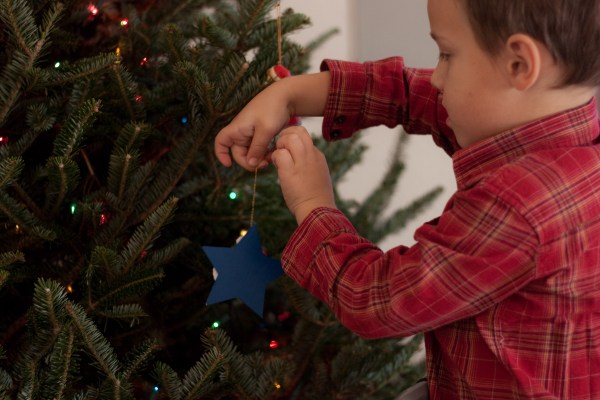
Sometimes, peace means we hang the breakable ornaments higher on the tree, leaving the more durable ones down low, so that even the youngest and most inexperienced people among us can enjoy the Christmas tree in their own way.

IMG_8063

Peace is when everyone does their best to love each other, and forgives each other when that love is imperfect; when everyone is willing to compromise, and reconcile, and try again, and give others the chance to try again as well.

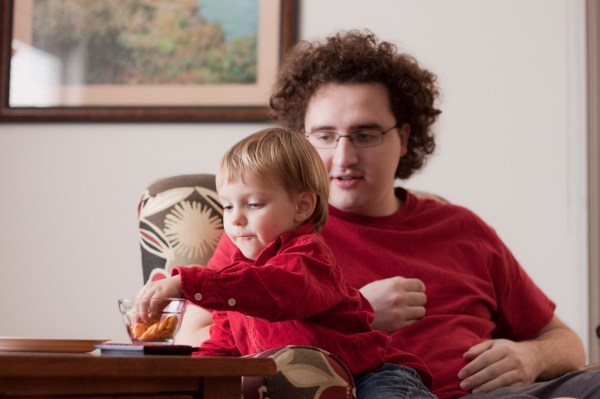
Peace is when someone sits in the chair you thought was yours, because it was the only chair from which you could reach your snack, but you don’t make him move, and he doesn’t exclude you, and together you both find happiness. Maybe you both find even more happiness in the compromise, this new solution to things, than you would have if either one of you were sitting alone.

IMG_8053

Peace requires willingness to try, and fail, and try again. People are complicated, and the situations of life are complicated, and harmony – any kind of success, really – is rarely instantaneously achieved. Peace necessitates our dedicated, persistent, patient, and flexible pursuit. If one solution doesn’t work, peace says, let’s try something else. Let us leave no stone unturned in our efforts to create communion in this place, between these people.

IMG_8086

And of course pursuing peace is more difficult than hanging an ornament on a tree, though it shares the same requirements for patience, persistence, flexibility, and creative thinking. The ornament and the tree are inanimate partakers of the process; every person in a community is involved in the process of peace-making, and brings with them a unique will, opinions, emotions, and experiences. Sometimes, peace fails.

The promise of Advent is that someday peace will fail no longer. The selfishness and anxiety that hamper it in even the best of us will be healed in Christ; knowing each other without the sin of objectification or the response of fear, we will be able to build a more glorious peace than any our world has yet known.

Posted in musings

the virtue of hope

One of things I have learned from my depression is that hope, while certainly made easier by pleasant circumstances and positive emotions, is most emphatically a virtue. It is possible to cling to hope with raw and reddened hands, eyes blinded by night and storm, refusing to release that slender line though every fiber of one’s body and every echo in the tempestuous wind is shouting out the futility of holding on.

Hope is not a wish list for Santa Claus, or a fantasy of a perfect airbrushed future. Hope is a conscious choice to endure, a moment-by-moment fight to persevere, a decision to stay the course despite all odds and appearances.

Hope does not aim for a peaceful and indulgent future, where every want is satiated and every inconvenience eradicated: it could not derive its lasting power from such a weak and flimsy foundation. Hope is anchored in the everlasting love of God, looking towards a future in which every pain and sorrow will be redeemed, made beautiful, and given purpose.

Hope impels one’s feet forward through the valley of the shadow of death, to which no end can be seen.

Advent, in focusing our attention on hope, does not attempt to sugarcoat the suffering of the world with carols and cookies, but rather endeavors to give us the strength and the vision to press on through that suffering without giving in to despair or bitterness. With hope, we may be as small and weak as the one isolated candle flame that flickers in the darkness this first week of the season, but we are at the same time enervated by the raging and glorious power of unleashed fire. No icy cold can put out our light so long as our wick reaches deep into the wax that is Christ in us and for us.

In answer to the hope of the world, He came. To give us the hope to endure to the end, He came. In His coming, in the Christmas manger, in the weakness of a newborn baby, is all the strength we need.

Posted in musings

this day

some day, I won’t need to calm myself down with deep, measured breaths before making a routine phone call.

some day, I won’t feel insecure about my son’s differences and be afraid to take him places where he might stand out in a negative way

some day, I won’t build walls every time I get the chance to make a friend

some day, I will knock on a neighbor’s door even though it isn’t Halloween

I believe that I can change, and I believe that I will change, in the same way that a tree changes as it mature from a sapling to a giant – shaped by the primal clashing of the environmental forces around it with its own fierce urge to live and grow. I believe this because I have changed before…

this day, I no longer believe that a mistake makes me a failure as a person

this day, I no longer feel that I am personally to blame for every heartache or frustration in the people I love

this day, I advocate for my son the way he is and seek accommodations that will help him learn and grow

this day, I choose to swallow my fears and lean into community despite the challenges and inconveniences and anxieties that come with it

this day, I am stronger and braver and wiser than I was before, and some day I will be stronger and braver and wiser than I am now

what matters is not the speed at which I travel, but the direction of the path I take.

Posted in musings

when tools come with tainted memories

I grew up hearing horror stories about public schools.

Every time we drove past one, my dad would comment on the chainlink fences, the buzzing alarm bells, or the thick small-windowed walls. He would tell us about Mrs. Weinstein, his fourth-grade teacher, who was so nasty as to apparently have burnt a traumatic scar into his memory. He would regale us with the tale of how in elementary school he would ask for a bathroom pass and just scream in the bathroom at the top of his lungs because he was so bored/pent up/overwhelmed by the classroom environment. He would call them “jails for kids” (although my mom would always gently reply that it was hyperbolic to go that far).

My mom didn’t have nearly so many negative things to say, but I knew that she dropped out of high school and worked her way through community college and university to get a master’s in engineering, and considered self-directed, intrinsically-motivated learning to be far more valuable and efficient than teacher-dictated, extrinsically-demanded education.

After I met my husband, I learned how he had been bullied through elementary school, to the point of being anxious, angry, depressed, and aggressive as even a young child – his innate friendliness met with rejection, and his self-confidence and self-esteem dealt crushing blows that he still sometimes struggles to overcome.

And so when the supportive, understanding, encouraging women in the special needs ministry at my church encouraged me to seek an evaluation through the public school district, to see if Rondel qualified for any free services, I was apprehensive, wary, and unsure. Now that his evaluation is past and I know that he does qualify – now that the registration and enrollment paperwork sits in front of me on the table – I am still all of those things.

The woman who would be his teacher is, from what I can tell, an energetic, passionate, and intelligent person, who deeply cares about her students and all their unique ways of being (of which there are certainly many in a special ed preschool!). Her classroom and schedule are well-designed, full of all the things young children enjoy and all the activities that strengthen and challenge their developing skills. She even told me that based on my description of Rondel she would ask the OT to do a sensory consult for him in class and potentially give him access to occupational therapy for his sensory difficulties and their emotional sequelae. My concerns do not rest with her, but with the whole philosophy of standardized, forced education in general.

During our IEP meeting, the evaluators kept mentioning that this or that skill would be “necessary for kindergarten next year.” To succeed in kindergarten, Rondel would have to learn to sit and pay attention, to be quiet and listen for the majority of the time, to participate in group activities instead of sitting on the edges doing his own thing, to hold a pencil or crayon with enough finesse to write letters and numbers, to respond to directions, and to speak intelligibly. And critically, he would need to learn all of those things by August. To succeed in life, it will be useful and courteous to know how to sit quietly and pay attention to other people; it will be beneficial for forming friendships to be able to engage in group activities and respond appropriately to social cues; it will be helpful to be able to write and draw, but not necessary in an increasingly technical world; and it will be of great importance to speak so that others can understand, particularly for a child who loves to talk as much as he does! But there wouldn’t be any deadline on his acquisition of those skills. Without the impending shadow of kindergarten hanging over him, there would be no rush for him to develop those abilities in his own way and at his own pace – with the exception of his speech.

And it is because of the integrated speech therapy that I am considering preschool as a viable option for Rondel at this point, despite the negative backstory I have for public schools, and despite my plan to homeschool. No matter where the rest of his life takes him or what learning and education look like for him, he will be able to do better, with less frustration and fewer tears, if he can communicate his needs and ideas with the people around him. I want to give him this opportunity now to learn the skills he will need to do that, while he can still do “school” for only 7.5 hours a weeks instead of being expected to fit his life around an all-day, every-day schedule of external demands and schedules. If he grows in his other areas of weakness along the way (especially in social and sensory areas) – so much the better! One fewer hurdle to overcome later!

And if it triggers his sensory issues to the point where he has increased anxiety and meltdowns, we can pull him out. Trying the system out, in an attempt to help Rondel, does not mean we are tied to it forever – or for any arbitrary length of time, honestly. It is all about what works best for him, at this moment, in this context. If to him it feels like a “jail”, if all he wants to do is run away and scream, if it feels like his heart is being crushed – well, unlike my parents and my husband, he won’t have to stay in that environment for years while it molds his character and personality. For us, it can be just another tool in our toolbox.

Posted in book lists, family life, musings

Charlotte’s Web

Fern loved Wilbur more than anything… Wilbur loved his milk, and he was never happier than when Fern was warming up a bottle for him. He would stand and gaze up at her with adoring eyes.

For the first few days of his life, Wilbur was allowed to live in a box near the stove in the pitch. Then, when Mrs. Arable complained, he was moved to a bigger box in the woodshed. At two weeks of age, he was moved outdoors. It was apple-blossom time, and the days were getting warmer. Mr. Arable fixed a small yard specially for Wilbur under an apple tree, and gave him a large wooden box full of straw, with a doorway cut in it so he could walk in and out as he pleased.

“Won’t he be cold at night?” asked Fern.

“No,” said her father. “You watch and see what he does.”

Carrying a bottle of milk, Fern sat down under the apple tree inside the yard. Wilbur ran to her and she held the bottle for him while he sucked. When he had finished the last drop, he grunted and walked sleepily into the box. Fern peered through the door. Wilbur was poking the straw with his snout. In a short time he had dug a tunnel in the straw. He crawled into the tunnel and disappeared from sight, completely covered with straw.

Rondel and I have begun reading Charlotte’s Web, by E.B. White, together, our first attempt at a legitimate chapter book. We’re proceeding slowly, at about one chapter a day, but already the story has captured his imagination.

He has commandeered Aubade’s pack and play to be his own little pig pen, where he can be alone and covered up with a blanket like Wilbur covers himself up with straw, but where his adoring and beloved friends (Fern in the book; Limerick and Aubade in reality; a mommy and baby bear in Limerick’s pretending) can sit and watch him through the mesh on the sides. Like Wilbur, he announces that he loves the bears “so much” because they love him and come visit him in his pig pen.

He was captivated by the tender and beautiful illustrations, courtesy of the one and only Garth Williams, of Fern holding Wilbur and feeding him from a bottle, and of Fern pushing Wilbur in a baby stroller with her doll. Wilbur’s special place in Fern’s heart, and the great love she gives to him and inspires from him in return, seem to make up his major impression of the book so far.

And for two consecutive nights now he has asked for me to move the pack and play into his bedroom so that he can sleep in there instead of in his bed, because, as he says “you are a little pig and this is your pig pen!” He can’t even stretch out all the way in there, which should serve as some indication of how absorbed he is by Wilbur’s world.

When a child’s imagination is so easily caught by a simple, gentle, well-told story, there is no need to be so anxious (as I often am, and as parents in general often are) about that child’s education and ability to learn. His mind is open and eager to learn, explore, create, and imagine – and new worlds, new information, and new friends to explain the world through their lives and adventures are only as far away as the pages of a good book.

Posted in book lists, family life, musings, Uncategorized

celebrating St. Francis

I feel like the holidays come fast and furious once fall arrives! They are such a fun way to introduce or remind myself and my kids of the great men and women of God, and to help direct our own hearts back to Him as well.

St. Francis of Assisi’s feast day falls on October 4, less than a week after Michaelmas, providing a beautiful foil to the Michaelmas stories and themes of dragons, knights, and (spiritual or otherwise) battle. For of course, St. Francis is one of the gentlest saints in the liturgy: a man who gave up wealth and power; who befriended the outcast, the poor, and the sick; who rejoiced in the beauty of nature and loved animals as well as people with tenderness and understanding. While Michael illustrates the bravery and glory of fighting against evil, Francis illustrates the courage and beauty of seeking redemption and reconciliation.

(Of course, due to sickness and poor planning on my part, we didn’t actually celebrate until the 11th… better late than never I suppose!)

To introduce the boys to St. Francis, I checked out two books that seemed to have good reviews and were actually available at our local library. First:

St. Francis and the Wolfby Richard Egielski

francisandwolf

This is a legend, retold in a way that is satisfyingly scary for a younger audience, without being over the top, and while retaining an emphasis on Francis’s message of peace and love. It shows how the obvious solution to something scary, dangerous, or disliked – trying to get rid of it or destroy it – isn’t always as effective as trying to communicate and make peace. And really it is just a well-told, fun story. Rondel has asked for this book many times since we borrowed it, and enjoys acting out the various characters as well!

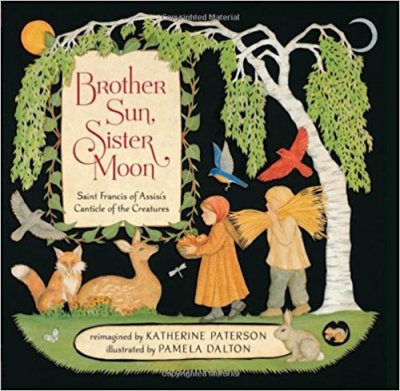
Brother Sun, Sister Moon, by Katherine Patterson

brothersunsistermoon

This book is an illustrated retelling of St. Francis’s canticle of the creatures in words that are accessible for small children, yet still retain the beauty and majesty of the original. The illustrations are exquisite as well, with every page showing how the aspect of creation in question (sun, moon, fire, wind, and so on) touches and blesses our world, as the words describe how those things reflect and honor their Creator. I was concerned that this book would be too advanced for the boys, but they have asked for it several times and are always held captivated by the beauty of its poetry and art. It makes a good counterpart to the more “fun” story above, also!

In addition to the books, we tried to make a sun-and-moon window hanger, but ran out of steam partway through due to the aforementioned illnesses; if we had more energy, I would have also had us make a bird feeder so that we could practice kindness to the animals around us as well (there aren’t many other animals besides birds in the middle of a city, since we don’t have pets…). While we don’t have the cold weather that makes feeders a perfect gift for the birds in October in other parts of the world, there are many native birds that benefit from feeders targeted at their unique needs and adaptations. Ah well, maybe next year 🙂

In the meantime, my goal is to emulate St. Francis’s compassion and gentleness, beginning in my home with my family but hopefully spreading outward to the other people with whom my life intersects! I also hope that, like him, I would have the courage to do what is right regardless of how strange it looks to the people around me. He somehow managed to care deeply for people without being a people-pleaser – a combination which strikes me as both a worthy and a difficult goal.

Posted in family life, musings

holding Limerick through a meltdown

Tonight Limerick had a meltdown. He doesn’t have them as often as Rondel, but when he’s tired his big emotions can overwhelm him, and little things will push him over the edge. It’s par for the course when one is almost three years old!

When the meltdowns occur, there are two ways I can respond. First, I can try to reason with him in an attempt to make him feel better and stop crying. I have to admit that this is my default reaction, especially if other kids are awake, because I tend to be a logical problem-solver rather than a savvy emotional guru. However, it almost never accomplishes anything, especially with Limerick. He isn’t the most reasonable person at the best of times, and when he’s tired the sheer strength of his emotions renders his logical mind inaccessible.

The second response, which I’ve learned from parenting experts and cannot take credit for, but which I’ve found through experience to be far more effective, is to simply be present and available. With Rondel that typically looks like pulling him to me and hugging him until he calms down, because physical touch is one of his main ways of communicating love, but (as I’m discovering) with Limerick I usually need to sit a few feet away from him – say, on the floor beside his bed if he is in bed – and let him know that I’m there for him and that he can come sit with me if he wants. Slowly, as the emotional storm passes, he’ll scoot closer and closer until at last he is ensconced on my lap, rocking in my arms, restoring peace in his heart.

It’s becoming more instinctual to respond the second way, instead of remembering it only after I’ve reached the point of frustration and anger myself (I think the Zoloft helps me take that moment to stop and remember who I want to be as a parent, for which I am quite grateful!), and it is so rewarding.

Few things in parenting feel worse than going to bed having yelled at your exhausted and irrational toddler for acting out his exhaustion and developmental state, knowing that you’ve fallen so far short of your parenting ideals that it’s as if you ended up in a pigsty when you had intended to aim for the stars. But few things feel better than holding that toddler in your arms as he sniffles and hiccups away his final tears, gazing up at you as if you were their only solid ground in the middle of a buffeting ocean. No one enjoys a meltdown, but through it one can build deeper trust and connection than play and happy moments can provide on their own.