Posted in hikes

hiking: old fossil creek dam (bob bear trailhead)

For our anniversary a few months back, Paul and I went up to Payson and hiked Bob Bear Trail down to the Old Fossil Creek Dam in the Fossil Springs Wilderness. Neither of us had been there before, and both of us would gladly go back!

The Fossil Springs Recreation Area is a permit area; due to its popularity, it had been completely closed down several years ago, and reopened in limited capacity following a time of rehabilitation. Bob Bear Trailhead is one of the less popular parking spots in the area, and it was early in the summer, so we were still able to reserve a parking pass just a few days before our trip. While a portion of the parking lots can only be accessed from Camp Verde, the Bob Bear Trailhead can only be reached from Strawberry, which worked out well for us!

As we began, we were greeted by multiple warning signs. Combined with the trailhead map letting us know this was an 8 mile round trip with a 1500 foot elevation change… and the brochure from the forest service telling us this was one of the most strenuous hikes in all of Tonto National Forest… this was a bit alarming. But we’d both done longer hikes before, so we weren’t too concerned. In retrospect, however, I do recommend taking the warnings seriously. If you are not an experienced hiker, start with something else and work up to this one.

The majority of the hike is through a region of arid high desert – there is very little shade, the air is thin, the sun is hot, and the grade is steep. The views, however, are gorgeous.
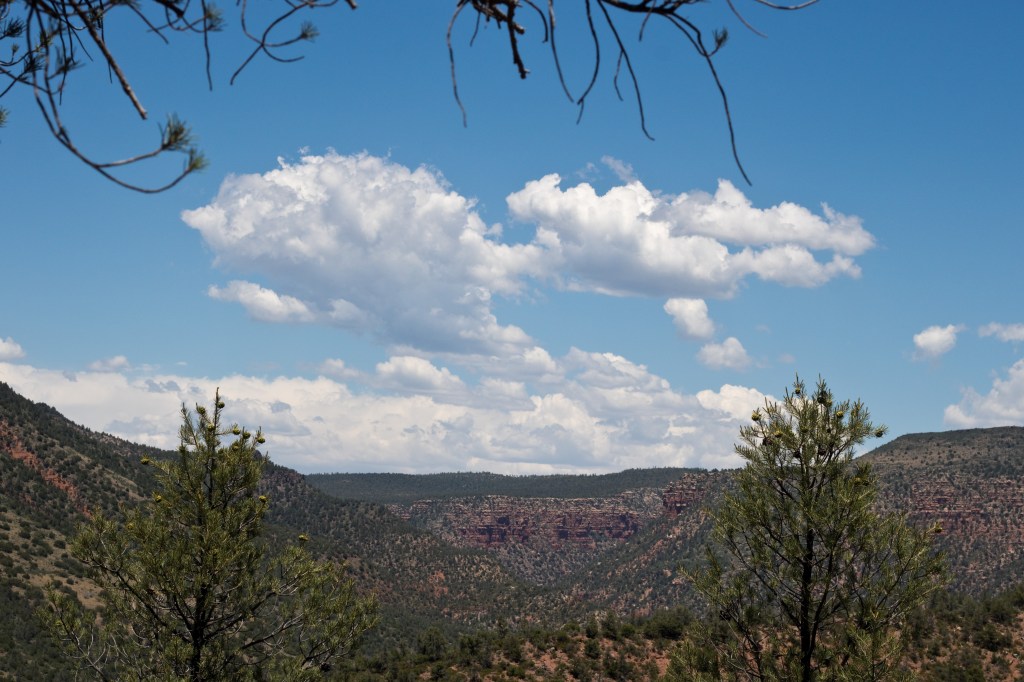
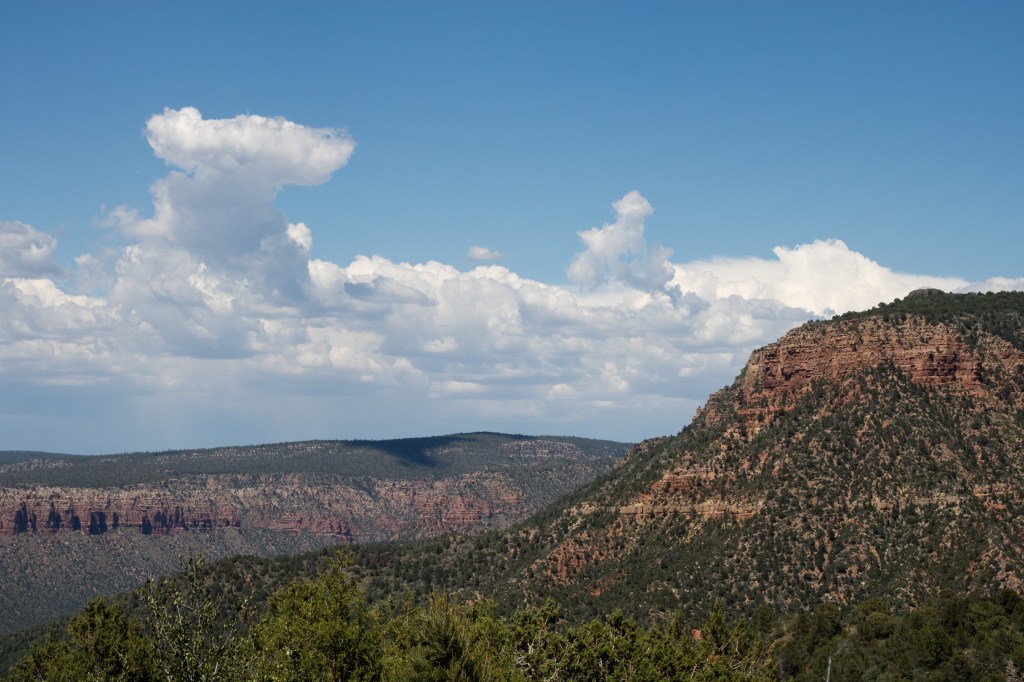
When you finally get to the first crossing over Fossil Creek, at a shallow ford, you’ve finished the hardest part of the descent and have about a mile of cool, lush, riverside hiking left.

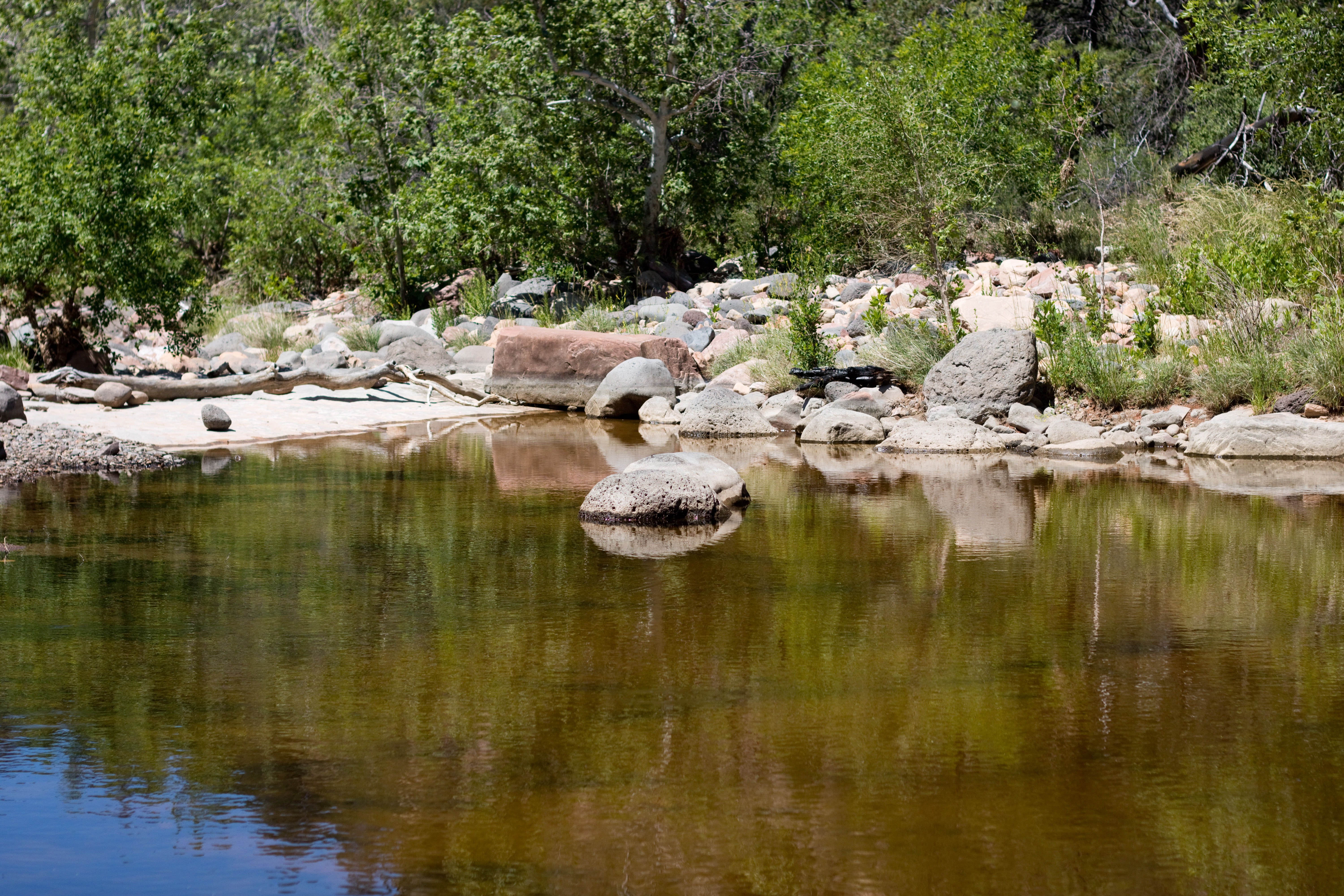
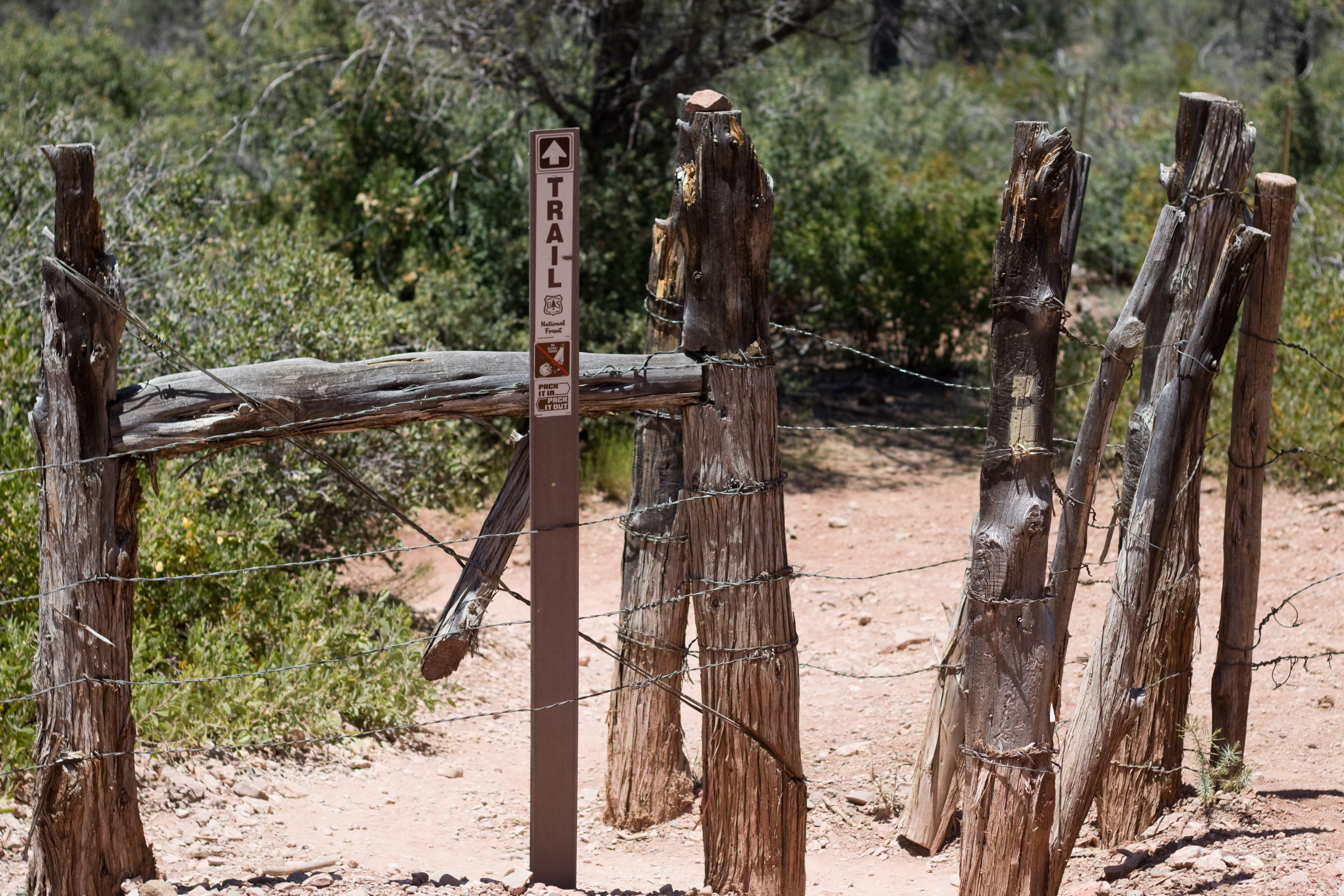
The trail is well-marked, from the cattle fence up in the mountains, to the rocky river crossing, through the undergrowth, and down to the dam itself. At some point along the river there will be option to continue to the spring or to the dam; while neither will take you to the famous Fossil Creek Waterfall, hiking to the dam will take you to a waterfall that is still quite spectacular.

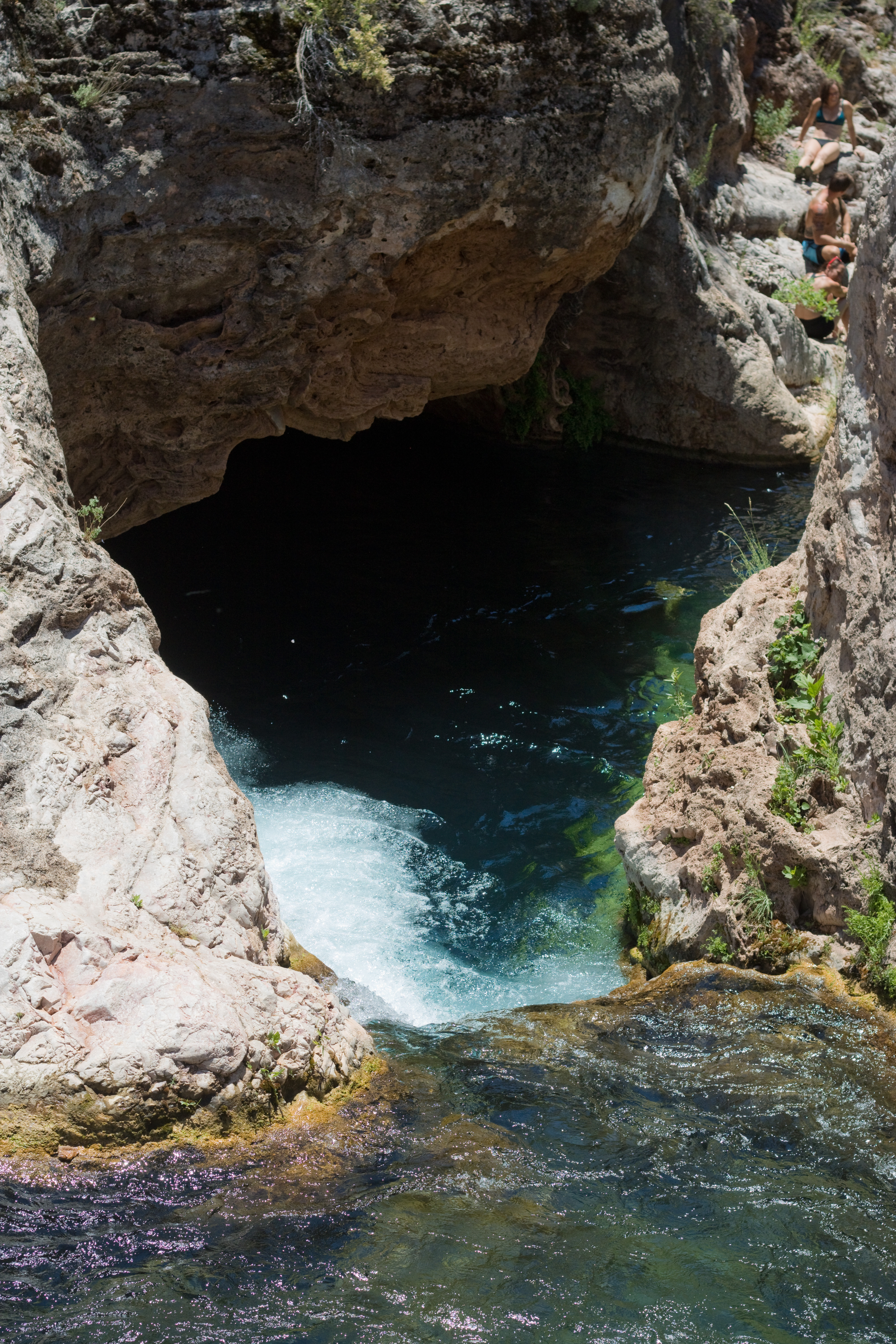
We could hear the waterfall roaring down over the old dam before we reached it; the trail led us around a blackberry thicket to the top of the falls, and we clambered down the rocky canyon sides to the deep pool at its base. The river here was far wider than I’d imagined, and the sheer volume of water cascading over the dam was a stark contrast to the miles of desert we’d walked through to get here.

This is looking down at the falls from the top of the canyon around the pool; you can really only see the bottom half of it, as I brought the wrong camera lens and couldn’t zoom out to get the wider angle.

It had taken us about an hour and a half to hike the four miles down (I think it is really more than four, as the dam is a bit further down river from the spring where the trail map ends), and we spent about an hour just enjoying the water. I tried to swim close enough to the falls to touch the rock through the falling water, but it was far too deep to stand in and the current was strong – I had to swim as hard as I could just to make a small amount of headway, and was pushed about six feet back as soon as I stopped fighting against it. Paul got closer than I did, but even he had trouble dealing with the current.

It may be hard to see, but that is Paul’s head at the base of the falls! He told me it was hard to keep his head out of the water that close to the waterfall.

Outside of that area of turbulence, however, the pool was calm, clear, and cold. I was content to just sit and relax, enjoying the beauty (and the company!), and I could have stayed even longer there than we did. Of all the places I’ve been in Arizona, this is one of the more special and unique – and the cold water is a good reward for the long hike in the heat!

Hiking back out again, however, is when the trail really shows its difficulty. The steep grade of the trail, nothing more than an inconvenience for the knees on the way down, makes the hike up incredibly strenuous. As I didn’t yet have my POTS diagnosis, I wasn’t wearing a heart rate tracker – but there were quite a few times when I had to stop and rest because my heart felt like it was racing so fast it was almost fluttering. Paul wasn’t any better off, the elevation and exertion combining to completely exhaust him. We wore off the chill of the creek by the end of the first mile, and I ran out of water with at least a mile to go (fortunately Paul had extra, since his pack was bigger).
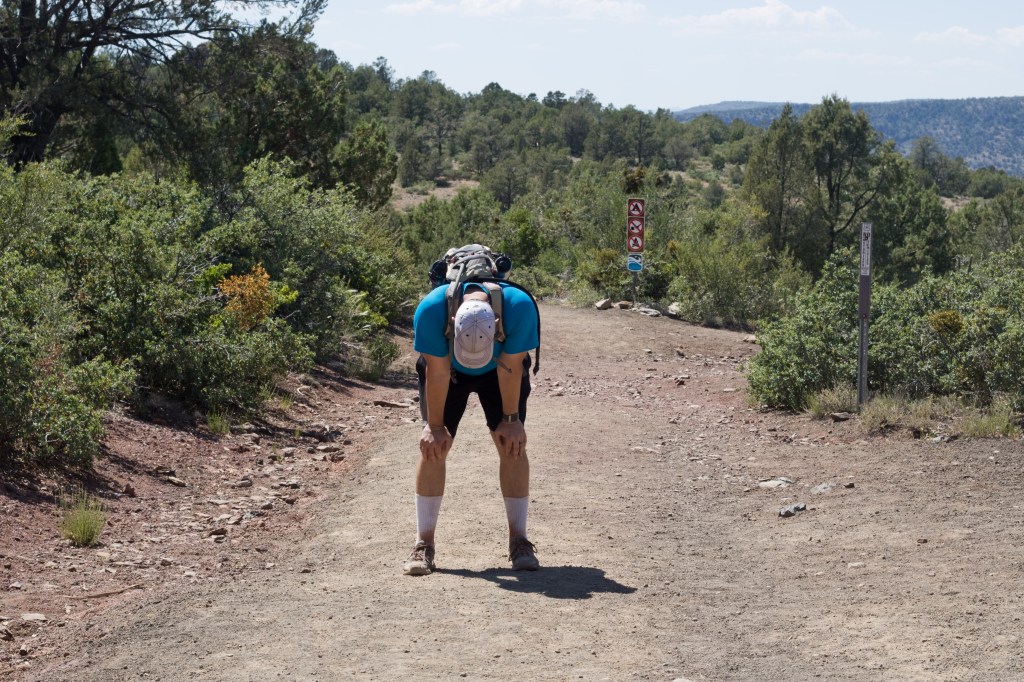
I do better with steep inclines than Paul, possibly because I’m lighter, but I honestly didn’t feel much better than this when we finally made it back up.

Despite the difficulty, I highly recommend this hike and would go back in a heartbeat if I had the chance. The waterfall at the bottom makes everything worth it. I would, however, carry more water…

How to get there: from Payson, drive 18 miles north on the US-87 to Strawberry, then turn left on to Fossil Creek Road. The Bob Bear Trail parking area will be on the right in about 5 miles.

Permits: Parking permits must be purchased in advance from the Bob Bear Trailhead page on Recreation.gov, April-September. The trails have had limited availability through the pandemic but were still open when I last checked.

Posted in information, musings

POTS: adding another diagnosis to the stack

Shortly after things closed down for the pandemic back in March, I was biking on the stationary bike in the garage (since I was no longer biking to commute to work, since I was now working from home) when I started feeling very lightheaded, shaky, and queasy. It was similar to, though more severe than, the times I’ve had low blood sugar events, so I decided to eat something and rest; I don’t think the eating helped very much, but the rest certainly did.

I would have written this off as dehydration, not eating enough, biking at too high of an intensity, or so on if it hadn’t initiated chronic lightheadedness, dizziness, and fatigue. On good days, I would get a rush of lightheadedness when standing up; on bad days I would have lightheadedness just from sitting upright, reading aloud, or singing, and fatigue from just walking around the house interacting with the kids. But I could always just argue that it was one or two bad days, and that it isn’t that abnormal to get dizzy when standing up. Maybe it was just the hot weather arriving and I needed to drink more water… but I didn’t seem dehydrated otherwise.

My family finally convinced me to see a doctor after this had continued for just over a month, and because my EKG at the primary care office had an abnormality (and all my lab work was normal), I ended up seeing a cardiologist who ran a variety of tests and diagnosed me with Postural Orthostatic Tachycardia Syndrome (POTS for short).

I’d never heard of it before, so I’m guessing most of you probably haven’t either. Here’s how it works (in abbreviated terms!). Normally, when a person stands, the brain triggers the autonomic nervous system to constrict blood vessels in the lower part of their body to help blood return to the heart, and at the same time tells the heart to beat faster to help pump that blood against gravity up to the brain. In POTS, the heart beats faster like it should, but the something goes wrong with the autonomic nervous system and the blood vessels don’t constrict the way they should. The brain, not getting the oxygen it expects, continues to send out ever more frantic messages to the heart and the nerves – and so the heart ends up beating faster and faster since the nerves aren’t responding.

What does that look like for me? Well, on a good day, my heart rate will go from mid 70s when sitting to 100-110 when standing, and stay that high even after the initial rush of lightheadedness passes. On a bad day, it will go up into the 150s just from standing. It makes standing very tiring… cooking a meal for the kids or washing dishes after a meal can be one of the hardest parts of the day because of the time spent just standing in the process. Interestingly, walking can be easier to handle than standing, because the movement of the leg muscles helps push the blood back to the heart despite the lack of assistance from the ANS. In addition to the tachycardia, which is the primary symptom that defines the syndrome, I may have chest pain, lightheadedness, dizziness, fatigue, headaches, nausea, body aches, tingling arms and/or legs, and feelings of clumsiness and/or muscle weakness.

Unfortunately, medicine hasn’t yet determined the cause of POTS or a reliable treatment for it. The primary recommendations are to wear compression socks/stockings (to help push the blood back up), exercise (to strengthen the skeletal muscle that can help push the blood back up), and drinking tons of water and eating lots of salt (to avoid dehydration and also increase overall blood volume). There are also a lot of medications that can be prescribed off-label that help some people, but while my cardiologist prescribed one for me he didn’t realize it was contraindicated by other aspects of my medical history so for now I’m trying to manage with the home remedies.

So, the last few months I’ve been mentally processing this during my free time, instead of spending my extra energy thinking and creating and writing for the blog. It doesn’t help that the amount of extra energy I have has been depleted both by the POTS itself as well as by trying to learn a new dance of pushing toward growth without triggering a crash. In a way, it’s similar to the balancing act of living with autism in a neurotypical world, but with a new set of triggers and symptoms (as well as some overlaps; bad POTS days definitely make me more sensitive to sensory input). But I think I’m finally ready to emerge from this hibernation! I’ll probably write a few more articles about POTS, as this is really just a brief introduction, but I also have so many amazing hikes to tell you about from this summer, and so much learning to share as the kids have started our homeschool program for the year. Thanks for still being here to share this little corner of the Internet with me 🙂