Posted in book lists, family life

literary explorations – traveling the world with picture books!

Inspired by the great resource Give Your Child The World, a globally-inspired picture book anthology by Jamie C. Martin, as well as by Rondel’s fascination with animals from around the world, we had a sort of Africa focus in our home a couple weeks ago. Martin is actually hosting a virtual book club spending one week on each world region over the summer, which I’m attempting to keep up with, but I’m woefully unprepared for Asia this week…

Anyway, Africa was a great place to start since most of Rondel’s favorite animals live there, and it was a natural connection to then begin reading stories involving those animals and the people who live near them. We also experimented with some African recipes (there is a huge variety of cuisines across the continent, so we were barely able to explore any of it and it still felt like a lot!) and crafts (but my kids don’t do so well with directed crafts). Of the books we could find from Martin’s recommendations at our library, two really stood out as our favorites: Bringing the Rain to Kapiti Plain, a Nandi folktale retold by Verna Aardema; and Wangari’s Trees of Peace, a brief pictorial biography of Wangari Maathai, a Kenyan Nobel Peace Prize laureate who helped restore land degraded by irresponsible logging (and in the process helped maintain peace and prevent poverty in her home country), by Jeanette Winter.

The biography of Wangari is written at a level that even Limerick, at 3.5, can understand and follow along with, so many of the details of her life have obviously been omitted – this is just the general arc of her story. But those spare elements have been woven together, with the help of beautiful images, to create a compelling narrative. Every time we read it (which was often, since Limerick kept requesting it), Rondel would be devastated when Wangari returns to Kenya after studying abroad to find the forests cut down, the village women walking miles for firewood and food, and desert encroaching upon the arable land. The boys’ eyes would widen, riveted on the book, when Wangari stands “tall as an oak” to protect the remaining forests, when the government officials beat her and jail her for protesting their course of action. And at the end, when millions of trees spread across Kenya again, the boys would be all smiles and laughter, imagining the birdsong in the forest. So I would highly recommend it as a brief introduction to Wangari and modern Africa for young children.

In addition, it has given me a point of comparison when talking with the boys about current events in our own country. When Wangari is jailed, the book tells us that “Right is right, even if you’re alone,” and the whole story demonstrates how the right thing to do can sometimes be the opposite of what the government or people in authority want to do. So when the boys heard our president talking for a few minutes before I changed the radio station (I usually only listen to talk radio when I’m alone in the car), and asked questions about what he was saying, I could explain his position and then also explain how I thought it was wrong, morally wrong if not legally wrong, and how his power and authority didn’t make all of his beliefs or actions morally right and good. And I was able to tell them that unlike Wangari, people like us would be able to peacefully protest those wrong things without fear of imprisonment, because our nation makes space for differing opinions and protests (ideally, of course, but since they’re 3 and 4 they get the idealized version on some things still).

Wangari cared deeply about her country – she loved it – and that’s why she was able to work for its improvement with such persistence, devotion, and passion. She started with small things she knew she could do (like physically planting new trees to replace the harvested ones), and let her love guide her into bigger and bigger forms of activism. And when I look around me and see people cynically apathetic about this country, it makes me want to instill in my children a love for their country and a passion to make it better, in small personal ways and perhaps even in big political ways. It is only with the love and dedication of people like Wangari that we can heal our culture, our environment, and our world; I’d much rather my children be like her than like the enforcers of government authority who beat and imprisoned her.

At this point I’m doubtful that any other picture book we find for this book club will influence our family quite as much as this one has! But every one we’ve managed to find so far from Martin’s anthology has been worth a second read at least; we’ve learned a lot, and we’ve laughed a lot, and we’ve filled our home with beautiful pictures and stories, and there isn’t much more to ask for from a picture book 🙂

At the time of posting, Amazon has Give Your Child the World available on Kindle for only $0.99! It is a resource worth far more than that.
“So yes. It had flaws, but what does that matter when it comes to matters of the heart? We love what we love. Reason does not enter into it. In many ways, unwise love is the truest love. Anyone can love a thing because. That’s as easy as putting a penny in your pocket. But to love something despite. To know the flaws and love them too. That is rare and pure and perfect.” – Patrick Rothfuss, A Wise Man’s Fear

loving despite

Posted in giveaway, sqt

{sqt} – differently wired

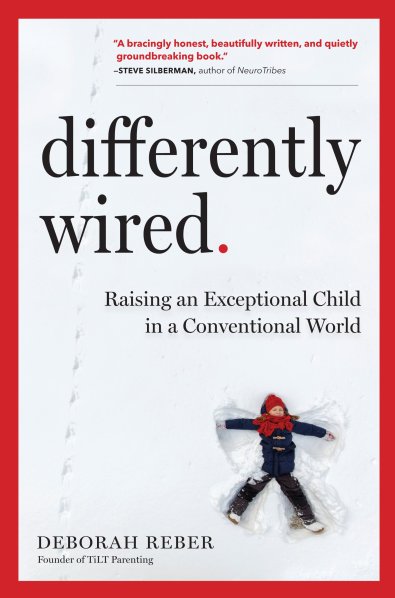
As we’ve navigated Rondel’s diagnostic process, one of the most helpful resources has been Deborah Reber’s podcast Tilt Parenting – and as a dedicated bibliophile, I have found her book Differently Wired to be equally if not more encouraging and challenging. It is currently the bestselling book in Amazon’s Disability Parenting category, and #18 in their overall Parenting list, and in my opinion (having read an early release copy) it deserves that top spot.

In fact, I think this book is important enough that I purchased an extra copy to giveaway, and that giveaway is live now! Head over to the official post to comment for an entry… I think my publicizing of it hasn’t been very effective so you have a good chance of winning 😛

Continue reading “{sqt} – differently wired”

Posted in giveaway

Differently Wired Giveaway!!!

The Differently Wired launch date isn’t until the 12th, but guys, I got the book in the mail yesterday so we’re opening this giveaway now!

differentlywired

I did want to remind you that if you want the pre-order bonuses, you should order a copy of the book for yourself before June 12th. Personally I am most looking forward to the resources guide, a web page containing links to all the podcasts, articles, and experts referenced in the book. It won’t be available until the launch date, so I haven’t seen it yet, but I’m anticipating it will be exceptionally helpful. To see the full list of bonuses, visit here!

For those of you who are new to the blog, you can read my thoughts on Differently Wired, as well as some significant quotes I’ve shared, here, here, here, here, and here. If you just want the short and sweet version, Differently Wired is a book for parents of neurodivergent kids (including differences such as autism, ADHD, and giftedness), and approaches the unique challenges of raising these kids in a neurotypical society from a respectful and positive perspective. It manages to encourage and challenge parents without either minimizing their potential struggles or demeaning the children (and adults) who have these differences. The book is very practical, but I think the greatest thing about it is how it walks you, the reader and parent, through a paradigm shift via a series of Tilts in perspective and attitude. And since the pressure of mainstream society tends to be counter to these Tilts, I’m expecting this book to be one I refer back to again and again to refresh the way I look at my son, myself, and the way our family navigates life.

If you’re interested, our giveaway opens today and closes at the end of the day next Sunday! Just leave a comment on the post letting me know how neurodiversity has affected your life and/or what you are hoping to learn from the book if you win. If you follow my blog as well that will give you another entry into the giveaway, but only if you also leave a comment 🙂 I’ll use random selection (maybe have the kids draw a paper out of a hat, or something higher tech) to choose the winner, and then I’ll contact the winner to get their shipping address.

Good luck! This is an exceptional book and I am so glad to have the opportunity to share it with someone else.

“So far we’ve talked about getting out of our limited thinking and envisioning how we’d design our ideal day if we knew we would be successful. We explored letting go of our own emotional baggage, recognizing them our personal triggers have been provoked, and committing to parenting our children from a place of possibility instead of fear. But for this last Tilt, I want to talk explicitly about fully leaning in to the power of our personal choice and using it as a foundation for creating what our child needs. Because the truth is, what our child needs may not exist yet. But why should that stop us?” – Debbie Reber, Differently Wired


If you liked the quote from Differently Wired, read my brief review of the book here and check back in June for the giveaway!

why should that stop us?

Posted in book lists, sqt

{sqt} – what we’re reading now

We finally made it back to the library to return our old set of books (renewed at least three times because we kept forgetting to bring them back) and pick up a new set! We’re missing some of the old ones, but loving some of the new ones, as well as finding classic favorites from our own shelves and Grandma’s house. These seven are some of our current most-read titles.

  1. Make Way For Ducklings, by Robert McCloskey – This one is of course a classic. I had a copy as a child, but the one we have now I managed to find at a thrift store for $1.99, hardcover in perfect condition. I still can’t believe it… Published in the 1940s, it was a classic when I was a child and I wouldn’t be surprised if both my mom and grandma grew up with it. The Boston of the book is probably quite different from the Boston of today – but the story is timeless and the illustrations are absolutely beautiful. The humor is subtle but still has both the boys laughing every time (it’s the rhyming names for the ducklings that really get them). It has the added advantage of being a book I will never grow tired of reading aloud.
  2. Marti and the Mango, by Daniel Moreton – This is another book that I grew up with, although I doubt it is nearly as widely known. We are currently borrowing it from my mom. It tells the story of a mouse who is supposed to find a mango to take to dinner at his friend’s house, but who doesn’t know what a mango is! On each page he asks a different animal if the fruit they have is a mango, and they give him a different point of reference as to why it isn’t. What makes it really enjoyable to read is the alliteration for each animal-fruit pairing as well as the repetition of the mango identification hints on each page, as they accumulate. It is a simple story with the attention to detail (in both words and pictures) that makes it interesting for both parent and child.
  3. How Does a Dinosaur Eat All His Food? by Jane Yolen – This book is from our new library haul, and is I suppose nominally about table manners and dinosaurs, but is really just hilarious as the dinosaurs exhibit every type of horrible, atrocious, behavior. The boys basically fall over laughing every time we read it.
  4. Hello Hello, by Brendan Wenzel – This is another book from our latest trip to the library, and one I didn’t expect the kids to enjoy nearly as much as they have. I had actually noticed it on the display and put it back because I thought they wouldn’t like it – but Rondel also noticed it, had me read it at the library, and then put it in out stack of books to bring home, and all three of the kids have requested it since we’ve had it. The words are very simple and sparse, but the illustrations are bright and bold, as the author takes you through pages of different animals and says hello to them (by category, not by name – the actual species of each animal is in a list in the back, however). Even Aubade will sit through the whole book looking at the animals, and Rondel and I will peek at the back to find out what some of them are that we can’t easily identify (although he’s quite good at remembering all the animals from the documentaries he loves… I probably need the identification key more than he does!)
  5. Tiny Little Fly, by Michael Rosen – This is one of the books we just returned, by the author of We’re Going On a Bear Hunt. It has a similar pattern of repetition and rhyme, beautiful illustrations (this seems to be theme with these books), and a little fly who manages to irritate all the huge animals and get away with it unscathed. The boys were starting to copy the rhythms of it into their conversation and pretend play, which was neat to hear!
  6. Usborne Big Book of Colors – This book has no story; it is just a book naming colors, with a color wheel in the back. But it’s beautiful, with thick not-quite-board-book pages, and the boys and I – especially Limerick – like to sometimes just go through it together enjoying all the gorgeous colors and finding our favorite shades of each. It also sparked a conversation on idioms that link emotion with color, which was interesting for me to think about in depth and a great opportunity to discuss metaphor with Rondel. And why is it that no one is ever described as being “orange” with some emotion?
  7. There’s a Wocket in My Pocket, by Dr. Seuss – This is Aubade’s favorite book right now (in board book form). She will ask us to read it multiple times per day, and multiple times per sitting. I’m not sure what she loves so much about it, but my hunch is that it’s the silly words and silly pictures combined. The book is basically just playing with the English language, and that’s a great way to come at it when you’re still beginning to learn that language.

Head on over to This Ain’t The Lyceum for the rest of the {sqt} link-up today!

Posted in book lists, information, links

differently wired: an introduction

I don’t remember when I first discovered Debbie Reber’s podcast, TILT Parenting, but I do know that I immediately went back and binge-listened to the entire archive, and have assiduously awaited each new episode since. It is a mix of practical advice and principled encouragement, of understanding acceptance and useful support; it encourages parents through their struggles while maintaining the worth, dignity, and humanity of their neurodivergent children. Almost all of the episodes are interviews – some with experts in the field, like Steve Silberman (author of Neurotribes) and Dr. Ross Greene (author of The Explosive Child and found of the non-profit organization Lives in the Balance); others with life coaches and parents of neurodivergent children, sharing their stories and offering real-life suggestions; still others are with Reber’s son Asher, giving the perspective of a neurodivergent child a huge platform and helping parents understand where their children might be coming from.

So when she announced that she was writing a book, I was incredibly excited! When she asked listeners to consider joining her advance book team, I signed up as soon as possible – so I’ve gotten to answer polls about book publicity options, mostly, and should be helping publicize the book’s publication when it launches in mid-June. But unexpectedly, and wonderfully, Reber convinced her publisher to let all hundred-odd people on the team have access to an advance e-copy of the book. I was walking on clouds when I got that news…

81kY4hn+d6L

And now that I’ve read Differently Wired: Raising an Exceptional Child in a Conventional World, I want to share it with you, because it exceeded all my expectations.

Reber is a skilled author, adept at blending storytelling, science, principles, and pragmatics into a unified whole. In the first part of the book, she explains the problem: the failure of a system that is “good enough” for neurotypical individuals to accommodate the increase in neurodivergent individuals, trying to force them to change instead of offering supports that would allow them to flourish as they are. In the second part, she outlines eighteen “Tilts” – shifts in perspective that enable change – along with action items for putting each one into practice in some small way right away.

My plan is to share some of my favorite quotes and themes from the book with you over the next two months, and then, when the book launches, to give away one copy here on the blog! Maybe you are feeling frustrated and stuck, wanting to connect with your child more deeply but not sure how; maybe you are feeling hopeless about your child’s future and want to rekindle optimism and find a path forward; maybe you are worn out from fighting for your child’s needs and need encouragement on your journey. Reber’s book can help with all of that – and it is one of the only parenting resources I have come across that (as a neurodivergent individual myself) doesn’t leave me feeling “othered” and uncomfortable.

So keep checking back – I’ll be sharing content from the book, and will open the giveaway as soon as I receive the hard copy sometime in June. If you care for a child who processes, thinks and behaves outside of what people consider to be “normal,” this isn’t a book you’ll want to miss.

Posted in book lists, musings

zombies, democracy, and the definition of humankind

Having made my first foray into the world of zombie fiction, I am struck by the idea that zombies are the end product of dysfunctional democracy.

In a democracy there is rule by the many, leading to decisions that may be good for individuals in the majority but not so good for individuals who are part of minority groups. As social structure and community connectedness decreases, more and more people feel that democracy is failing them by its inability to address their needs (since, as people splinter away from each other, almost everyone is bound to end up in the minority with regards to at least one significant issue in their lives). They observe society crumbling and blame the vast hordes of their fellow citizens – not without reason, as those vast hordes are the decision-makers of a democracy!

Similarly, in the zombie apocalypse, society breaks down (in very dramatic ways) at the hands of the vast masses of humankind. We, the reader, identifying with the main characters of the book or film, see ourselves as the rational few who still cling to sanity and good judgment, while the rest of the world is wildly destroying itself around us. And since our democracy is so huge (at least here in the US) that there isn’t much we can do to tangibly alter its course, zombie fiction allows us an escape into the lives of people who are even more horribly stuck – but who aren’t limited to polite social mores in their methods of dealing with their frustrations and problems!

Of course, I have no idea if this idea has any basis in reality, but it was interesting to me 🙂

If you’re wondering how I decided to make entry into the world of zombies, I did it by reading The Girl With All The Gifts, by M.R. Carey, on the recommendation of my boss. The introduction is brutal, mysterious, and haunting; the end is absolutely perfect. The middle feels rather stereotyped or trope-ish: you have the tough and experienced military man, the disposable underling, the obsessive and unethical scientist, and the bleeding-heart who is sympathetic to the zombies’ plight. However, I still definitely enjoyed it! As a science nerd, I particularly enjoyed the description of the source of the zombie plague (for reference, Cordyceps is a fungus that attacks ants, infiltrates their nervous systems, and controls their behavior for the purpose of spreading its spores; most species of Cordyceps are specific to a single species of ant):

“At some point a Cordyceps came along that was a lot less finicky. It jumped the species barrier, then the genus, family, order, and class. It clawed its way to the top of the evolutionary tree, assuming for a moment that evolution is a tree and has a top. Of course, the fungus might have had a helping hand. It might have been grown in a lab, for any number of reasons; coaxed along with gene-splicing and injected RNA. Those were very big jumps.”

It made me happy that they acknowledged the implausibility of the fungus mutating that much on its own – but also the possibility of some scientist designing it to do so. It reminded me of the professor of my senior capstone class, who told us that we now knew everything we needed to create a bioweapon that would devastate humanity, and were responsible to conduct our science ethically. If humanity is wiped out by some pathogen, I won’t be surprised to learn that humanity had created that pathogen to begin with.

I also appreciated that this book was not overly graphic (this is the reason I’ve avoided zombie films in particular). It allowed me to enjoy the concept and implications without having to deal with excessive violence and gore! So I recommend it for anyone wanting an action novel that will, if you permit it, also raise the question of what it means to be human.

Posted in musings

how does the soul survive?

Modern fiction brings out the evil in domestic lives, ordinary relations, people like you and me […]

Once evil is individualized, becoming part of everyday life, the way of resisting it also becomes individual. How does the soul survive? is the essential question. And the response is: through love and imagination.

– Azar Nafisi, Reading Lolita in Tehran

It’s easy to see evil as something distant, or something belonging to people “not like me;” it’s been especially easy, I think, in a politically polarized era to attempt to push our perception of evil off onto politicians or political enemies, the political and cultural “others”, instead of recognizing the sin that cuts through each and every individual heart. We ignore accusations of immorality against those whose ideology aligns with ours, or who benefit us in some way, while jumping at every hint of wrongdoing in those who disagree with us.

But a good novel will show us the hidden depths of goodness and humanity in even the people we dislike and disagree with, while exposing the foolishness and flaws within the people we most admire and who are most like us. By drawing us in emotionally through the story, it relaxes our defenses and allows new, unpleasant, or inconvenient truths to seep in. Our empathy for the characters can engender empathy for real people whom we may have overlooked, avoided, or misunderstood – and the realities that we see more deeply and completely by the light of imagination can spur us to resist the daily evil and pour out the daily labor of love in our own mundane lives.

In other words: let us go read great books so that our hearts and minds can grow in love and understanding – and maybe, as a result, evil need not win each hourly battle in our thoughts and interactions.

“In all great works of fiction, regardless of the grim reality they present, there is an affirmation of life against the transience of that life, an essential defiance. This affirmation lies in the way the author takes control of reality by retelling it in his own way, thus creating a new world. Every great work of art, I would declare pompously, is a celebration, an act of insubordination against the betrayals, horrors and infidelities of life.”

– Azar Nafisi, Reading Lolita in Tehran

insubordination